 PoshanSense
Is brown rice healthier than white rice? The whole plate matters
Brown rice can add whole-grain fibre, but Indian and Iranian trials do not make it a guaranteed blood-sugar or weight-loss fix. Understand the grain, portion and meal.
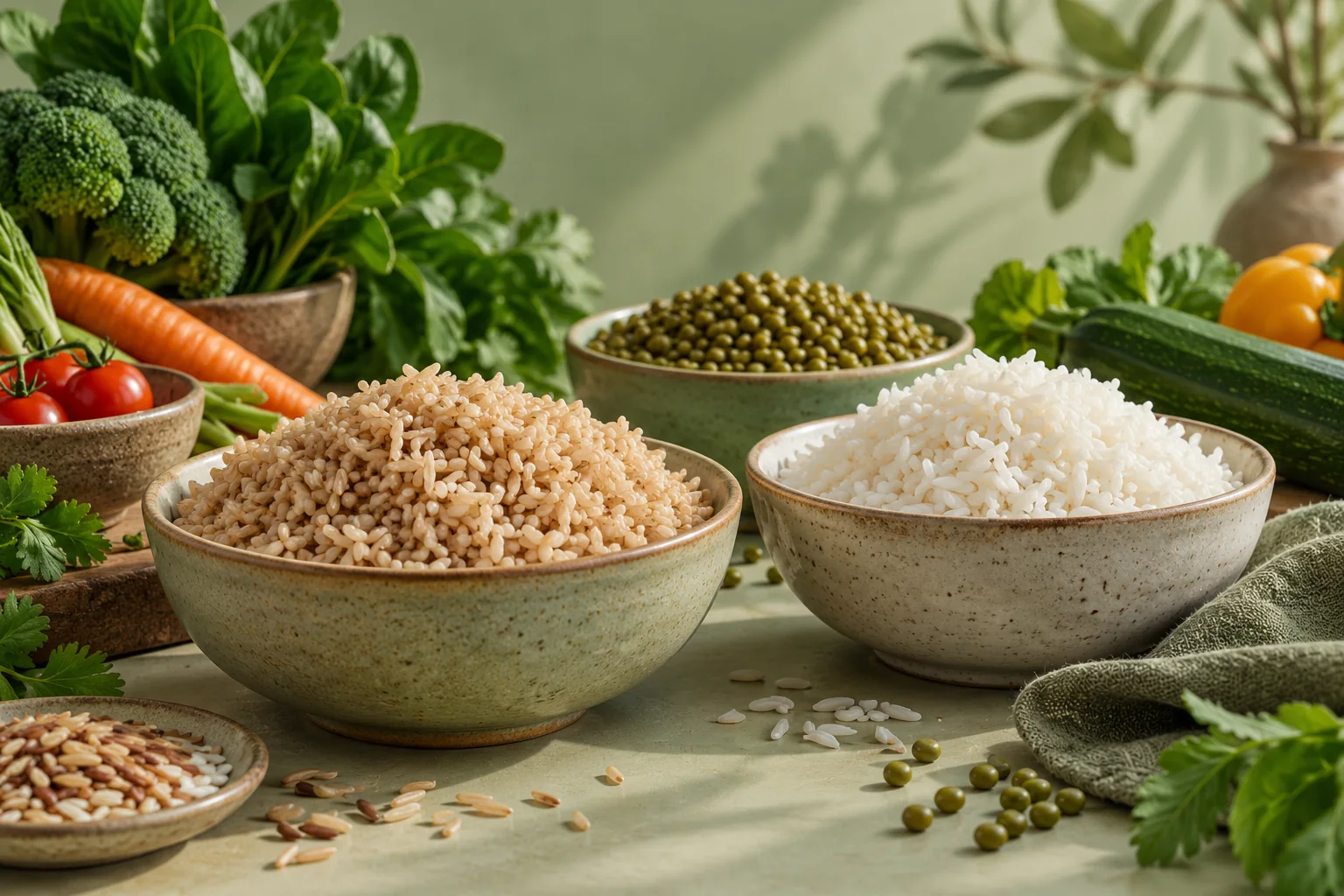
Complementary human studies · Published 2014 & 2019
A rice packet says “brown”; your family says “white tastes better”. The real question is not which colour deserves a health halo. It is whether a change you can maintain improves the plate you actually eat.
What does brown rice change?
Brown rice keeps more of the outer grain layers that polishing removes. It can therefore contribute more fibre and other grain components. That is a sensible reason to consider it—not a reason to ignore the serving, oil, accompaniments or total meal.
A bowl of rice with dal, vegetables and another protein source is a different meal from a very large bowl eaten mostly on its own. Changing the grain and changing the whole pattern are two separate decisions. Keeping that distinction helps avoid expecting one supermarket swap to do all the work.
The larger Indian trial gives a measured answer
In the Chennai trial, brown rice did not significantly improve the main glucose or lipid outcomes across the whole group. Some subgroup results were more favourable, but they do not turn an overall uncertain result into a guarantee. The trial also had substantial dropout, and participants could eat the provided meals freely.
The comparison changed more than colour: the brown rice was parboiled while the white rice was not. The researchers used the same rice strain, but processing still differed. This matters when a headline is applied to every brown-rice brand, every basmati variety or every home recipe.
Three questions before judging a rice meal
The grain
Variety, polishing and parboiling differ.
The serving
A grain name does not set portion size.
The plate
Dal, vegetables, protein sources and added fats are part of the meal.
Why can another trial sound more positive?
A smaller Iranian experiment reported favourable changes in several measures, including weight and waist, with brown rice. However, participants were women following a weight-reducing diet, and the study did not find clear differences in fasting glucose or blood lipids. It was not the same intervention or population as the Chennai trial.
We use that study to widen the picture, not to average incompatible results into a promised effect. A person changing rice while reducing energy intake is answering a different question from a person swapping rice at freely eaten meals.
Does “lower GI” mean unlimited rice?
No. Glycaemic index describes the response to a standardized amount of available carbohydrate from a tested food. It is not a rating of every portion or a complete mixed meal. Serving size still determines how much carbohydrate you eat. Cooking and the foods alongside the rice can also alter the experience.
In practical terms, replacing a familiar serving is easier to interpret than doubling it because the new rice sounds healthier. Consider whether the dish is plain rice, pulao, fried rice or risotto; the same grain name can sit inside very different meals.
What if your family prefers white rice?
There is room to work with the existing meal. Notice the bowl you use, the number of servings and what accompanies them. This is not a demand to weigh every lunch forever. A few representative portions can reveal whether “one bowl” is actually consistent.
If brown rice is acceptable and affordable, try it in dishes where its texture works, or experiment with a gradual mix for preference. That is a cooking choice, not a trial-proven medical protocol. If you dislike it enough to abandon the meal plan, its theoretical advantage will not help you build a lasting routine.
What should you take from the research?
The useful answer is a whole-grain option with realistic expectations. Do not label white rice poisonous, and do not use brown rice as permission for extra servings. Compare the grain, portion and meal rather than deciding from colour alone. A journal can help you see those choices together; it cannot predict your individual glucose response or replace diabetes care.
Evidence context: the Chennai work reported NIH and Harvard support. The Iranian paper declared no conflict; dedicated funding was not identified in its accessible text. Neither trial establishes diabetes prevention or a universal rice prescription.
Sources & further reading
Study years differ from this article’s publication date. We reviewed full primary papers and relevant supporting material; access limitations are kept out of efficacy claims. Original illustrations and diagrams; no publisher figures reproduced. Educational writing, not clinical review.
Published 11 October 2026 · Sources checked 11 October 2026. Suggest a correction.