 PoshanSense
Is an electric toothbrush better than a manual toothbrush?
Electric brushes reduce plaque and gum-inflammation scores more on average, but a good daily routine matters and tooth-loss prevention was not proved.
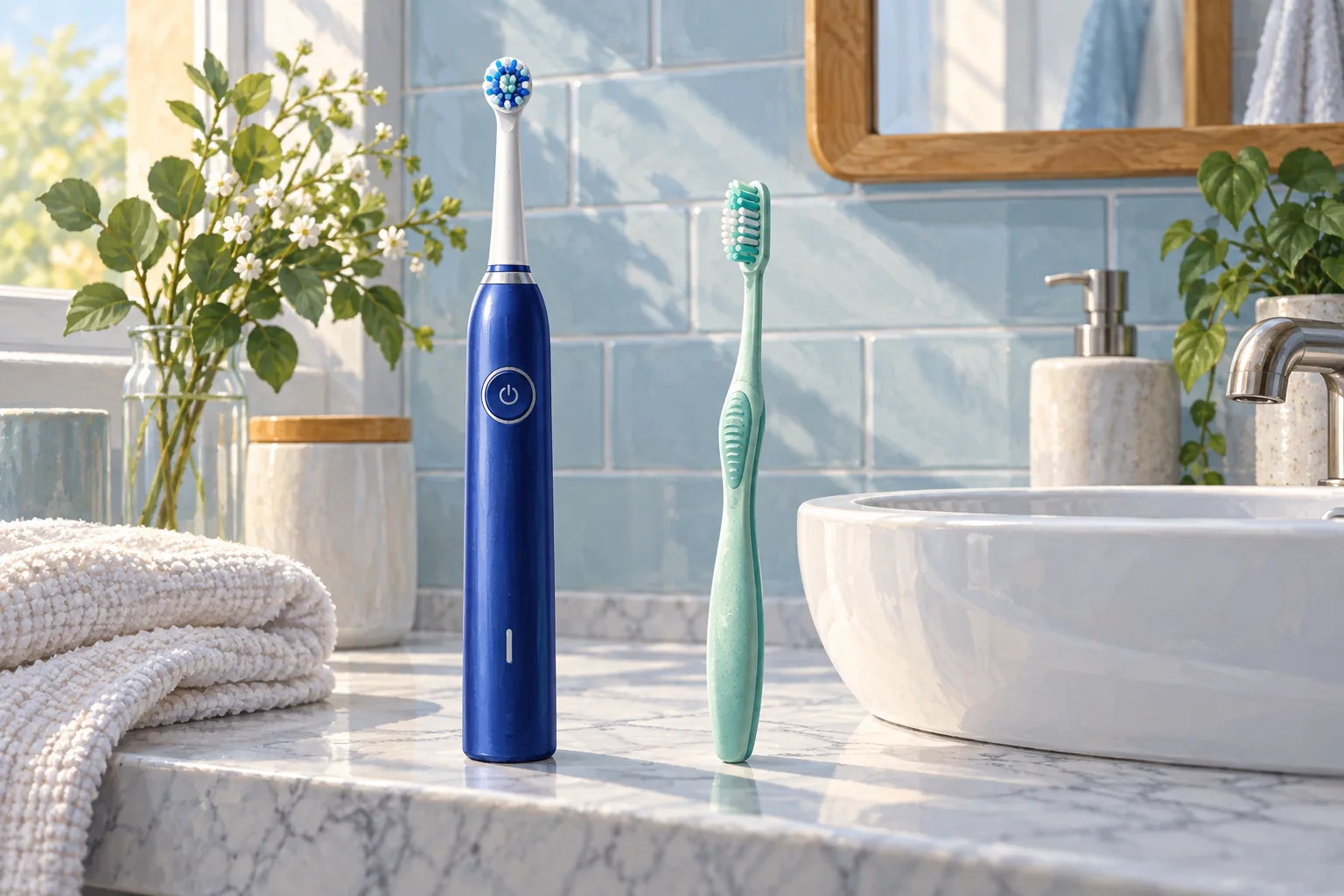
Research explained · Published 2014
Standing in front of a shelf of toothbrushes can feel unexpectedly complicated. There are different heads, motors, timers and prices. The research supports a modest average advantage for powered brushing, rather than a rule that everyone needs the most elaborate device.
What is the advantage actually about?
It concerns plaque and gum-inflammation measurements. Those are useful outcomes, but they are not identical to avoiding cavities, preserving every tooth or curing established gum disease.
The 2014 review found an average powered-brush advantage. Its authors could not establish the clinical importance of those score changes. Trial settings included North America, Europe, India and Israel.
Most studies had unclear risk of bias, and different motor designs did not have equally consistent evidence. The review is an older synthesis, not a head-to-head ranking of the latest products.
Should you replace a manual brush immediately?
There is no need to treat a manual brush as useless. NHS guidance says both manual and electric brushes can work well when all tooth surfaces are cleaned properly. It recommends twice-daily brushing for about two minutes with fluoride toothpaste.
The practical question is whether a different tool helps you do that job. If you struggle to cover all surfaces, it is reasonable to ask your dental professional to watch your technique and help you choose an appropriate brush.
That conversation is more informative than assuming a price tag describes how well your own teeth are being cleaned. It can also prevent you buying features that do not address the actual problem.
Choose a routine, not just a motor
Evidence
Powered brushes improve average plaque and gum scores.
Manual option
A manual brush can still clean effectively.
Daily use
Technique, coverage and regular use matter.
Clinical care
Persistent bleeding needs dental attention.
What should you compare before buying?
Think about the whole routine: whether the handle is comfortable, the head is manageable, replacement heads are affordable, and you will use the brush consistently. These are personal usability considerations, rather than clinical benefits demonstrated for every model.
Ask the seller what a claim means. “Better cleaning” should specify its comparator and measured outcome. A result from one kind of powered brush does not automatically validate every device using electricity.
Also distinguish a useful reminder from an outcome guarantee. A timer can remind you to spend time brushing; it does not know whether every surface has actually been covered.
What about bleeding gums?
NHS gum-disease guidance recommends dental assessment for symptoms such as bleeding gums. Switching brushes is not a substitute for finding out what is happening.
Keep the everyday decision and the clinical question separate. The first is choosing a tool you can use properly. The second is whether symptoms require diagnosis and treatment. An article or product review cannot examine your gums.
A regular oral-care routine also includes cleaning between teeth as appropriate; ask for guidance on a device and technique that fit your mouth. The brush type is only one part of that routine.
A reasonable expectation
Choose an electric brush if its practical advantages suit you, and keep expectations proportional. The meaningful goal is a routine you can maintain, with dental advice where needed—not a promise that a motor prevents every future dental problem.
Some review authors disclosed Braun-funded research or consultancy. Educational article; not clinically reviewed.
Sources & further reading
- Powered versus manual brushing review (2014)
- NHS daily tooth-cleaning guidance
- NHS guidance on gum disease
Study years differ from this article’s publication date. We reviewed full primary papers and relevant supporting material; access limitations are kept out of efficacy claims. Original illustrations and diagrams; no publisher figures reproduced. Educational writing, not clinical review.
Published 11 October 2026 · Sources checked 11 October 2026. Suggest a correction.