 PoshanSense
Does reading on a screen before bed affect sleep?
Light-emitting screens can delay bedtime, but the device, content and setting matter. A small controlled tablet study helps separate timing from time asleep.
Complementary human studies · Published 2018
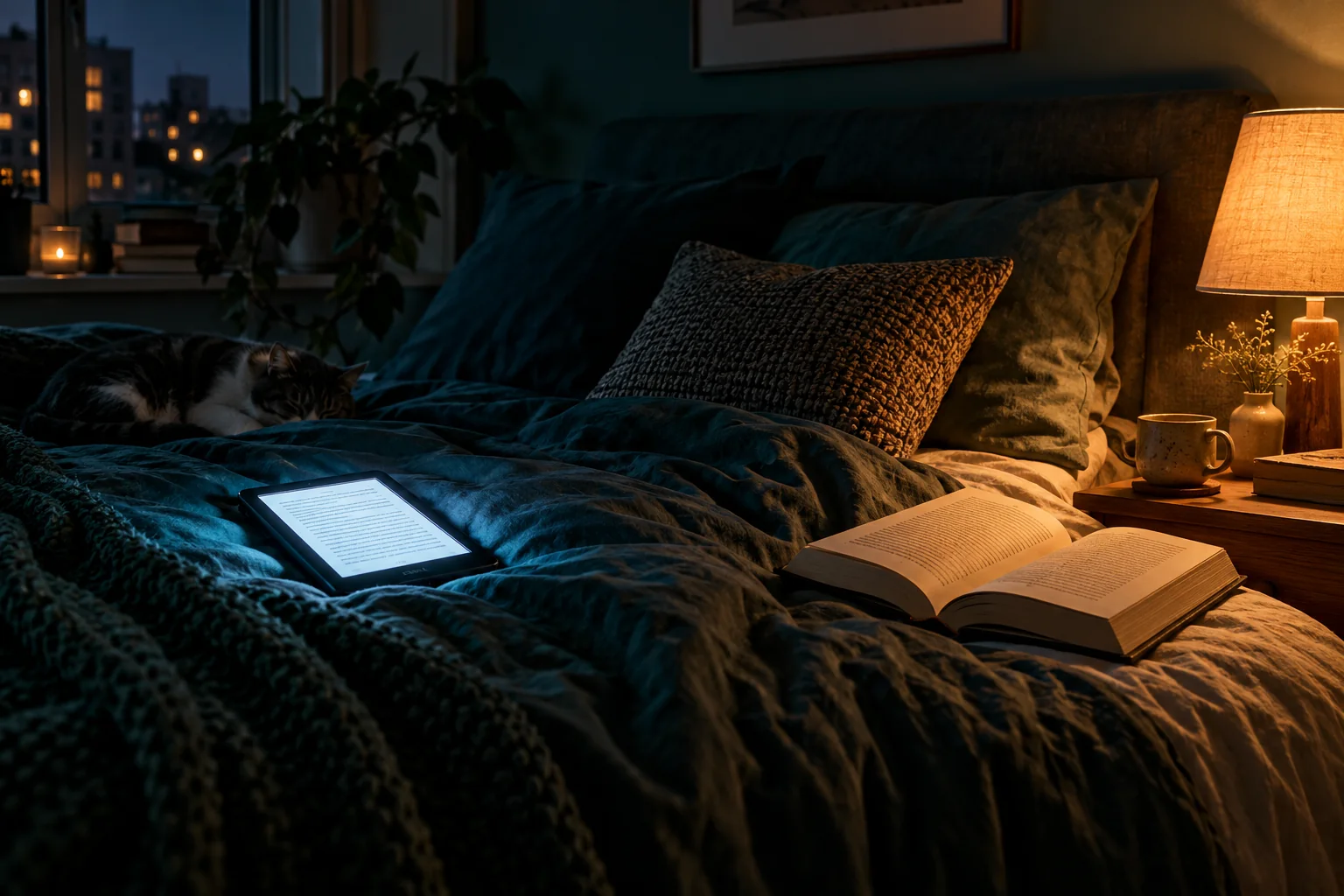
A chapter before bed feels like a quiet habit. But on a tablet, the chapter can turn into a message, a link and another video. Is the problem the glowing screen, the extra half-hour, or the fact that the book quietly became something else?
The answer depends on what “reading” means
Start with the device and the evening around it. A light-emitting tablet, a reflective reader with no light, and a paper book do not create identical light exposure. Brightness, room lighting, distance and how long you keep using the device also change the situation.
Content matters too. A finished chapter offers a stopping point; an inbox or endless feed may not. Research that lets people do different activities on a tablet can assess the whole experience, but cannot attribute every effect solely to screen colour.
What actually changed in the experiment?
In the 2018 US study, participants chose bedtime about 31 minutes later on tablet evenings than on print evenings. They also reported more sleepiness the next morning, and measures of melatonin timing shifted later.
That is a useful signal about evening timing. It is not the same as showing a clear reduction in total time asleep: the fifth-night recordings did not find a statistically clear difference in total sleep duration or the time taken to fall asleep after lights-out. Avoid turning “later bedtime” into a larger claim than the measurements support.
Why this cannot settle the question for every phone
Nine participants are enough to study a tightly controlled comparison, but not enough to describe everybody's bedtime. They were healthy young adults in a lab, with dim room lighting, restrictions on daytime device use and a fixed morning wake time.
Technology and habits vary outside that room. The tablet allowed reading, games, video, email and internet use, while the other condition used print. The experiment therefore does not separate the light from the stimulation or appeal of those activities. Nor was it a test of current automatic brightness or warm-colour settings.
Four details hidden inside “screen before bed”
Light-emitting or reflective?
A lit tablet is not the same exposure as unlit paper or every e-ink reader.
Reading or scrolling?
In this experiment, tablet use included varied activities, not identical reading.
Later bedtime or less sleep?
These are separate outcomes; one does not automatically establish the other.
A filter or a routine?
The trial did not test night-mode settings as a solution.
Will night mode solve it?
This paper cannot promise that. Changing a setting does not automatically create a stopping point or give back time spent awake. If your main problem is that reading turns into scrolling and bedtime slips, thinking only about a filter may miss the part of the routine you can actually notice.
That also means there is no reason to declare all digital reading unacceptable. For many people, accessibility settings, text size and a convenient device make reading possible. The useful question is whether this particular evening habit leaves room for the sleep you intended.
A practical way to interpret your own evenings
Distinguish being unable to fall asleep from continuing to use a device instead of trying. Those experiences may feel similar the next morning, but they point to different questions. Notice when you stop, when you actually try to sleep and whether your reading becomes another activity.
You do not need to turn the bedroom into a laboratory. A simple stopping point and a routine that fits your obligations can be easier to sustain than chasing the perfect screen specification. Persistent sleep problems deserve appropriate help rather than confidence that a new gadget will fix them.
Evidence context: NIH and institutional funding supported the study. One author disclosed extensive commercial relationships, including with technology and sleep-related companies; the paper lists them in full. This is an adult laboratory experiment, not evidence of long-term disease or a child-specific recommendation. Educational article; not clinically reviewed.
Sources & further reading
Study years differ from this article’s publication date. We reviewed full primary papers and relevant supporting material; access limitations are kept out of efficacy claims. Original illustrations and diagrams; no publisher figures reproduced. Educational writing, not clinical review.
Published 11 October 2026 · Sources checked 11 October 2026. Suggest a correction.