 PoshanSense
Can mushrooms supply vitamin D? Check which mushrooms
UV-treated mushrooms can supply vitamin D2, but ordinary mushrooms and concentrated powders are not interchangeable. Trials from Ireland and Taiwan clarify the limits.
Research explained · Published 2013 & 2025
A mushroom stir-fry looks like an easy answer to a vitamin-D gap. The important detail is often on the packet: were the mushrooms grown or treated in a way that increases their vitamin D?
“Mushrooms” is not one nutrient value
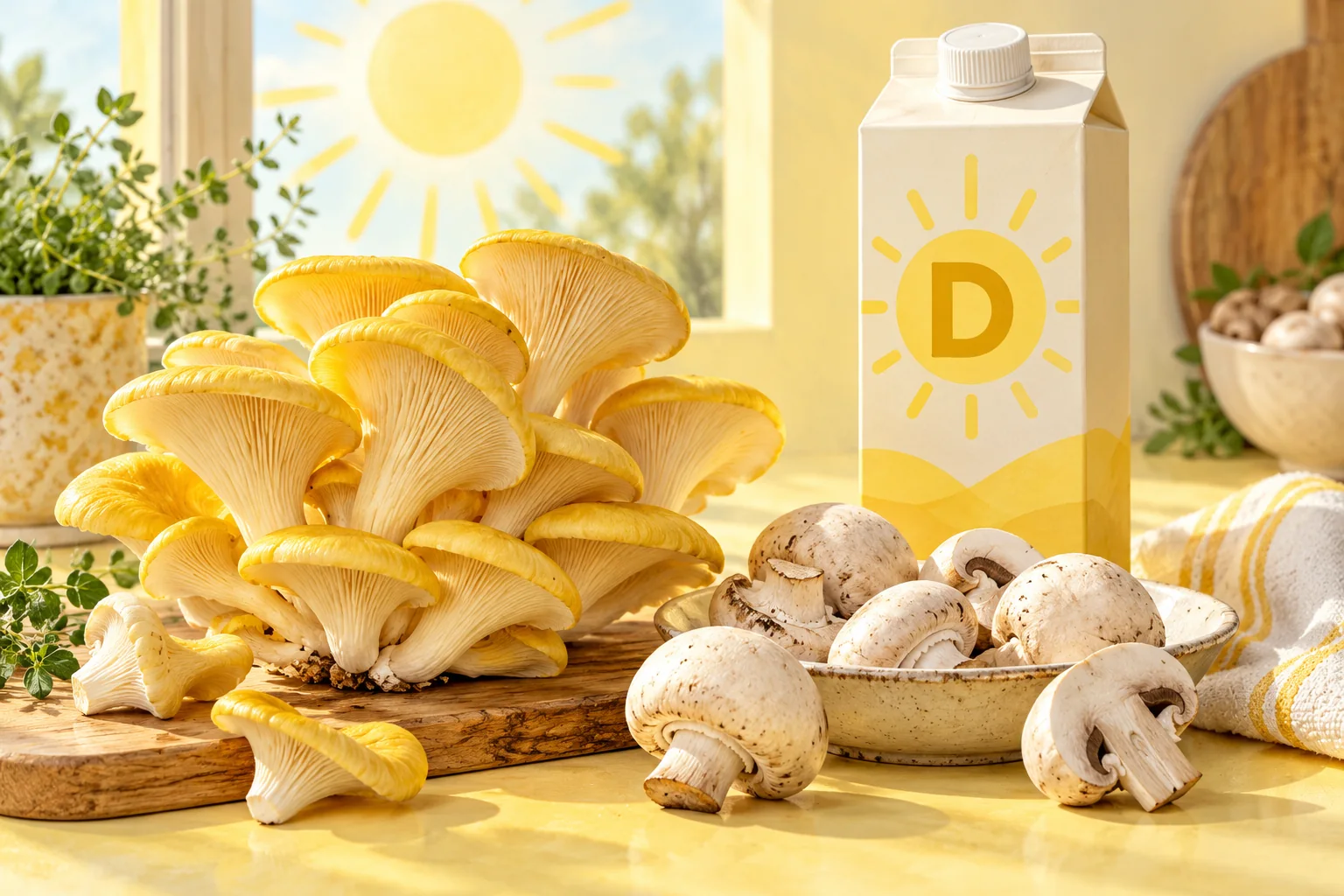
Mushrooms contain a precursor that can become vitamin D2 after ultraviolet exposure. Commercial treatment can therefore make them a useful enriched food. Indoor cultivation without that exposure may produce a very different amount.
That is why a headline about UV-treated mushrooms cannot automatically apply to whatever is in the vegetable drawer. Check a credible product label rather than assuming the species name settles the nutrient content.
A nutrient can be absorbed without solving the whole problem
In the Irish experiment, enriched mushroom powder increased the D2 fraction measured in blood. However, total vitamin-D status did not clearly improve against placebo. The separate D3 capsule comparison did increase total status.
The distinction is useful: a food can deliver a nutrient while the final marker also depends on other changes, including the D3 fraction and season. “Absorbed” and “corrected deficiency” are not interchangeable conclusions.
What did a newer Taiwanese trial add?
A 2025 Taiwanese study assigned thirty-six adults to no mushroom intervention or two quantities of specially UV-treated golden oyster mushrooms for four weeks. The treated groups showed increases in the D2 marker. The trial selected people with low baseline vitamin-D status and used a highly enriched product.
The study supports bioavailability, but not a general recipe for everyone. It was small, unblinded against a no-food control, and many results were before-and-after comparisons. One study arm supplied a very high vitamin-D exposure. Its lack of reported short-term adverse effects does not establish long-term safety.
Four different mushroom questions
Ordinary mushrooms
The nutrient content can be low and variable.
UV-enriched product
A labelled product can provide vitamin D2.
Blood marker
D2 can rise without a clear increase in total vitamin-D status.
Health outcome
These short trials did not establish fracture prevention.
Why not make your own high-dose mushroom plan?
Commercial enrichment, ordinary food preparation and leaving mushrooms in sunlight are different processes. The reviewed trials do not provide a reliable home method for reaching a particular nutrient amount. Concentrated powder should especially not be treated like an unlimited vegetable serving.
More is not automatically better. The useful first step is understanding what a labelled serving actually supplies and how it fits other fortified foods or supplements—not stacking products because they seem natural.
The global relevance is about context
The Irish trial took place in winter; the Taiwanese trial selected people with low blood levels despite a sunny setting. Neither proves that latitude or country alone determines an individual’s status. Diet, exposure, health and the specific product all matter.
For a person avoiding animal foods, a verified enriched mushroom product may offer another food source. That is different from claiming it reproduces every effect of a vitamin D3 supplement or eliminates the need to discuss a deficiency with a clinician.
Keep the promise at food level
These studies measured blood markers over weeks. They did not show fewer fractures, better immunity or prevention of diabetes. Those extra promises require their own evidence.
Enjoy mushrooms for their place in a meal, and check enrichment claims if vitamin D is the reason for buying them. A diagnosed deficiency or a prescribed supplement plan needs individual guidance; a food headline should not quietly replace it.
Evidence context: the Taiwanese authors declared no conflicts; an explicit funding statement was not identified in the retrieved main text. The Irish study received Mushroom Council and Australian Mushroom Growers Association support, with mushrooms supplied by Monaghan Mushrooms and one author employed by that company. Sponsors were reported to have no role in design, analysis or writing. Educational information; not clinically reviewed.
Sources & further reading
Study years differ from this article’s publication date. We reviewed full primary papers and relevant supporting material; access limitations are kept out of efficacy claims. Original illustrations and diagrams; no publisher figures reproduced. Educational writing, not clinical review.
Published 11 October 2026 · Sources checked 11 October 2026. Suggest a correction.