 PoshanSense
Should you spread protein across meals or save it for dinner?
Protein at breakfast, lunch and dinner may be useful, but small US and Japanese trials do not establish a universal grams-per-meal rule or a hard absorption limit.
Complementary human studies · Published 2014 & 2020
Breakfast is toast or poha, lunch is rushed, and dinner is where all the protein finally appears. Would moving some earlier help? It is a more useful question than asking whether your body “wastes” everything above 30 grams.
First, separate distribution from total intake
Distribution means where protein appears across the day. Total intake means how much the day provides. Moving a protein-containing food from dinner to breakfast changes the first; adding an extra shake changes both, and may change energy intake too.
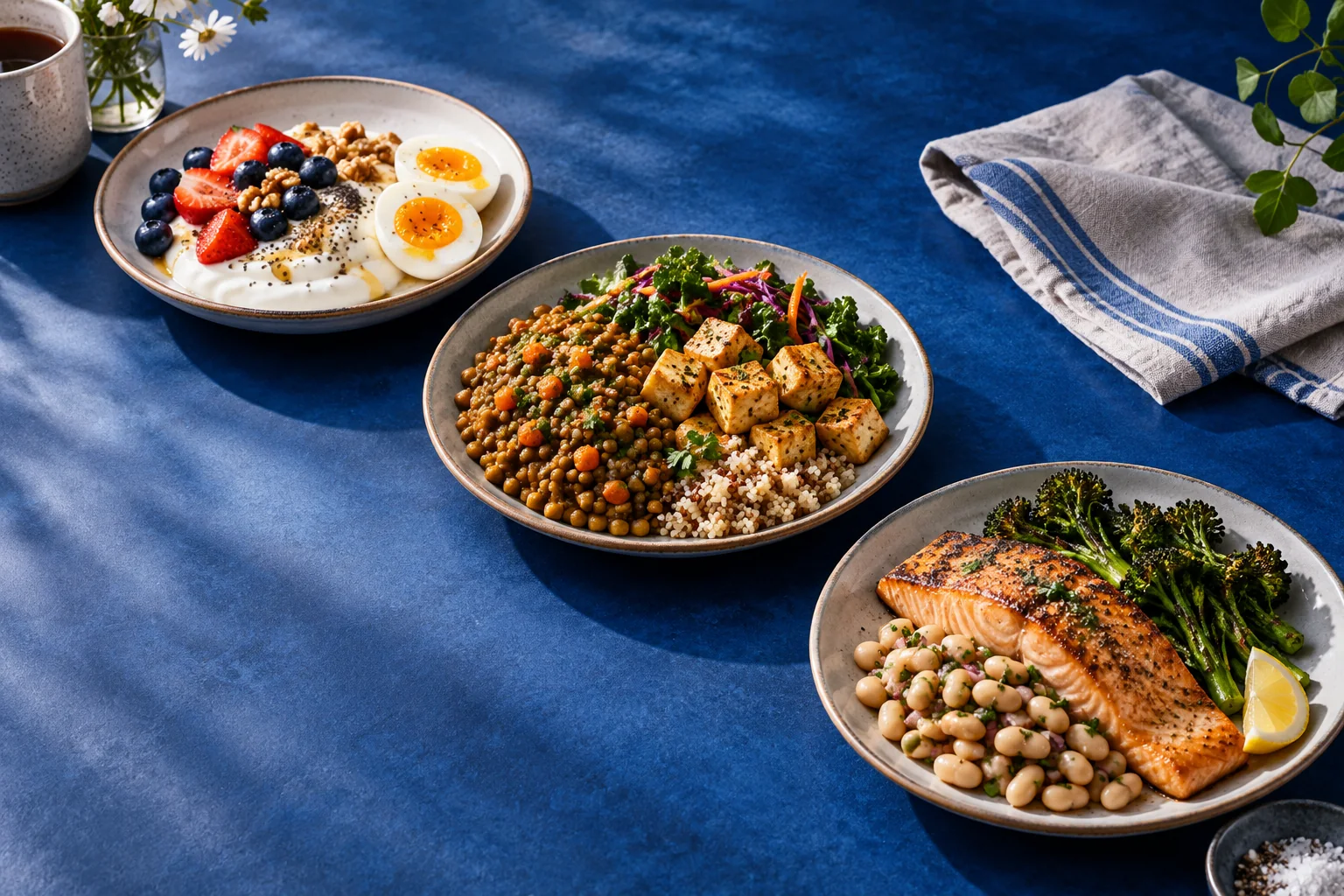
This distinction keeps the answer practical. Before deciding on exact numbers, notice whether a usual meal has a meaningful protein source at all. Dal, beans, dairy, tofu, eggs, fish and meat can play that role depending on your diet. Similar-looking meals can provide different amounts, so check the recipe and serving rather than relying on the dish name.
Small feeding research supports the idea
The US study found greater 24-hour muscle protein synthesis when a similar daily protein amount was spread more evenly across three meals. The study measured the rate of building muscle protein, not weeks of visible muscle growth. Only eight people participated, so it cannot define everyone's target.
The tested patterns were deliberately different: one put much more protein at dinner. That helps answer whether distribution can matter. It does not tell us that a tiny difference between two ordinary breakfasts will transform a training result.
Review the pattern before chasing a number
Daily total
How much does the whole routine provide?
Meal distribution
Is one meal carrying nearly everything?
Training and outcome
Synthesis, lean tissue and strength are different measurements.
Did longer training research settle it?
A Japanese trial moved more protein to breakfast during resistance training. Both groups gained lean tissue. The difference in total lean-tissue gain favoured the higher-breakfast group but was borderline statistically; limb lean tissue and strength did not clearly differ between groups. The abstract's confident conclusion needs that context.
These findings fit a useful possibility, not a settled promise. The Japanese participants were young men training under supervision. The US study included men and women but measured a short-term biochemical response. Neither represents every age, diet or training routine.
Is more than 30 grams “wasted”?
That is not what these experiments tested. Muscle protein synthesis is one process, and an experiment observing it is not a measurement of whether all protein above a particular threshold is absorbed or used elsewhere. Turning a study meal into a hard digestive limit asks the paper to answer a different question.
The same caution applies to maximizing numbers. You do not need to make every meal identical because a graph used evenly distributed servings. The research comparison helps explain a pattern; it is not a universal meal prescription.
What would a useful adjustment look like?
Consider the meal with the least dependable protein source. Perhaps that is an Indian breakfast of tea and toast, a European pastry breakfast or a US bagel eaten alone. Ask whether an available food you enjoy can make the meal more substantial. That might mean yogurt, beans, tofu, eggs or another appropriate choice—not necessarily a powder.
Look at the change across the whole day. If you add something at breakfast without changing anything later, that is different from redistribution. If you are already eating balanced meals, chasing exact symmetry may add effort without a clear benefit. Training, recovery and an adequate overall pattern remain part of the question.
Keep the goal realistic
A food journal can show where protein-containing foods appear and whether portions are consistent. It cannot measure muscle synthesis or decide a medical protein target. People with conditions requiring an individualized diet need guidance specific to them. For everyone else, the takeaway is to review the meals you regularly miss—not to fear a large dinner or promise that breakfast alone builds muscle.
Evidence context: the US paper reported Beef Checkoff and NIH-related support; two authors disclosed paid beef-industry speaking. The Japanese paper reported public research funding, supplied protein products from Meiji and no declared conflicts. These are relevant disclosures, not reasons to infer a product recommendation.
Sources & further reading
Study years differ from this article’s publication date. We reviewed full primary papers and relevant supporting material; access limitations are kept out of efficacy claims. Original illustrations and diagrams; no publisher figures reproduced. Educational writing, not clinical review.
Published 11 October 2026 · Sources checked 11 October 2026. Suggest a correction.