 PoshanSense
Does adding fat help you absorb vitamins from salad?
A little fat can have a useful role, but a laboratory absorption result does not establish the perfect dressing or a disease-prevention benefit.
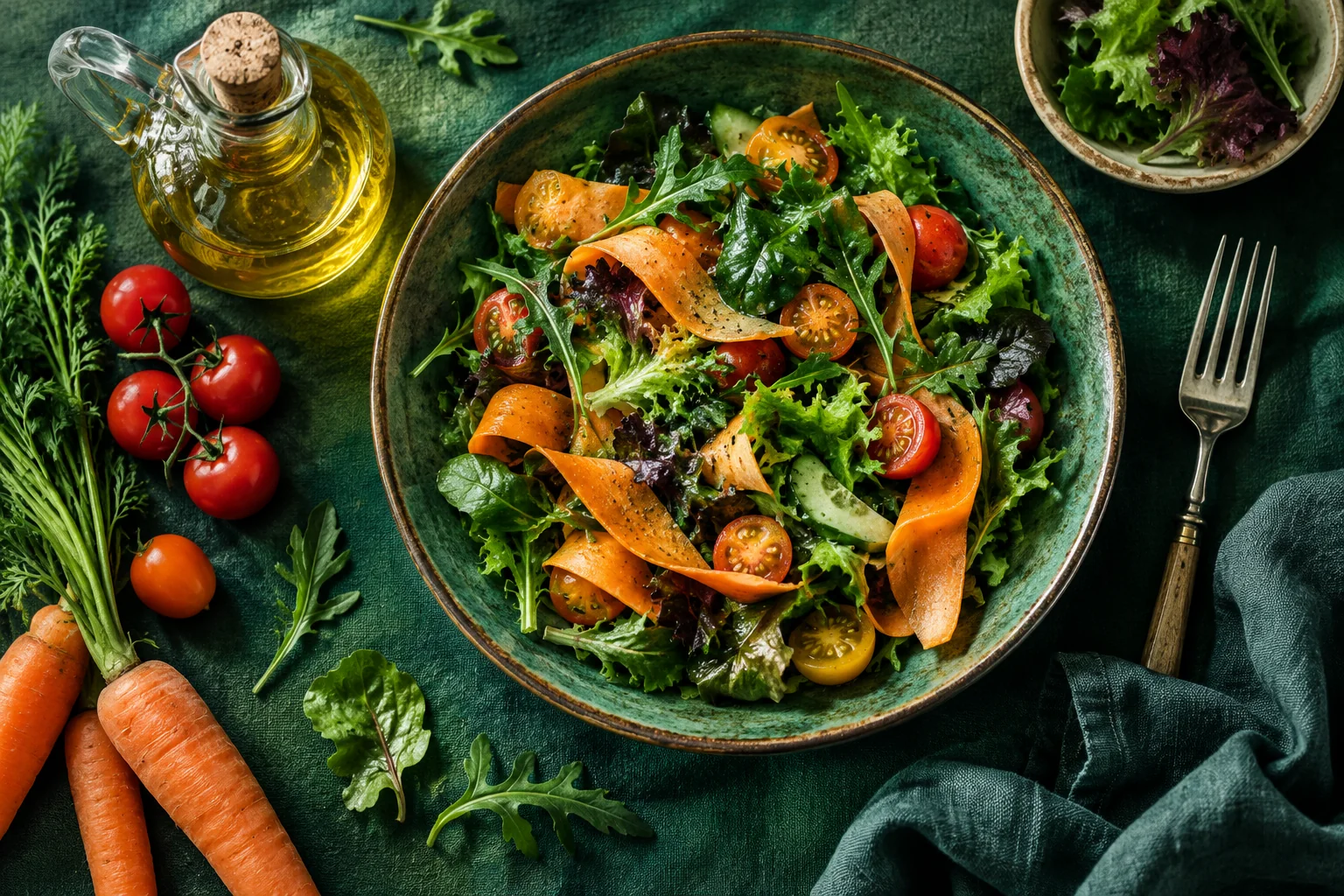
Controlled human meal experiment · Published 2017
A bowl of colourful vegetables can look like the simplest healthy choice. Then dressing adds a confusing question: should you leave it out to keep the salad light, or add it to get more from the vegetables?
The useful answer is to stop treating fat as either a nutritional enemy or a magic upgrade. It has a role in the meal, while the amount and the rest of what you eat still matter.
What does “absorb better” mean?
A food can contain a nutrient without every bit reaching circulation. An absorption experiment asks a different question from a food label, and neither alone describes the long-term effect of your overall diet.
That distinction is helpful when choosing lunch. It prevents a promising nutrient result from turning into a claim that a particular dressing prevents illness.
What does the experiment add?
In the 2017 experiment, oil improved measured uptake of several nutrients compared with the oil-free condition. Responses differed widely between participants and nutrients. The highest tested amount produced the largest measured response, but the study did not establish a personal optimum.
The marker was measured after one salad. It was not a trial of vitamin-deficiency prevention, weight management or better health over years.
Does adding fat help you absorb vitamins from salad?
Vegetables
Nutrient content and nutrient uptake are different questions.
Fat
The tested oil helped uptake under controlled conditions.
Amount
No universal spoonful target was established.
Meal
Dressing is one part of the complete meal.
Should you copy the largest study serving?
No. A laboratory condition is chosen to answer a research question, not necessarily to create the best everyday serving. Selecting the highest experimental amount simply because it produced the largest marker response skips the practical question of how it fits the full meal.
Consider whether the salad is a side dish or the main lunch, what else is on the plate, and whether the dressing makes it enjoyable enough to eat regularly. Those choices deserve attention alongside one absorption measure.
A small amount you enjoy may fit your cooking; another meal may already contain fat in other ingredients. The experiment does not supply a rule for translating every combination into a number of teaspoons.
Does the kind of fat matter?
This paper tested a particular prepared soybean oil, rather than ranking everyday oils, nuts, cheese and avocado against one another. It therefore cannot establish that the same result belongs to every dressing or that one branded product is necessary.
If you enjoy a familiar dressing, examine the whole recipe rather than a single ingredient claim. Serving size, flavour and the ingredients around it are useful information. A label saying “fat-free” or “rich in vitamins” settles only part of the decision.
Keep the salad in perspective
An oil-free salad is not worthless. Nor does pouring on extra oil make a meal automatically balanced. The practical point is that vegetables and the food eaten with them belong in the same discussion.
Unilever supported the research, formulated the dressings and paid a statistical consultant; one author was an employee. Those links should stay visible when interpreting a dressing-friendly result.
This explanation is AI-assisted and not clinically reviewed. Enjoy vegetables in meals you can sustain, without turning an acute uptake experiment into a treatment plan.
Sources & further reading
Study years differ from this article’s publication date. We reviewed full primary papers and relevant supporting material; access limitations are kept out of efficacy claims. Original illustrations and diagrams; no publisher figures reproduced. Educational writing, not clinical review.
Published 11 October 2026 · Sources checked 11 October 2026. Suggest a correction.