 PoshanSense
Is seaweed a good source of iodine—or too much?
Seaweed supplies iodine, but kelp products can vary widely. Norwegian and Japanese studies show why nutrient source, serving and thyroid outcomes need separate answers.
Research explained · Published 2021 & 2026
A seaweed snack looks like a simple way to add a missing nutrient. A kelp capsule promises the same thing in concentrated form. Both raise a question that “natural source of iodine” leaves unanswered: how much iodine is actually being added?
Useful nutrient, uncertain amount
Iodine is needed for thyroid function, but a high intake can also cause or worsen problems in susceptible people. NIH guidance specifically flags foods containing large amounts, including kelp and other seaweed.
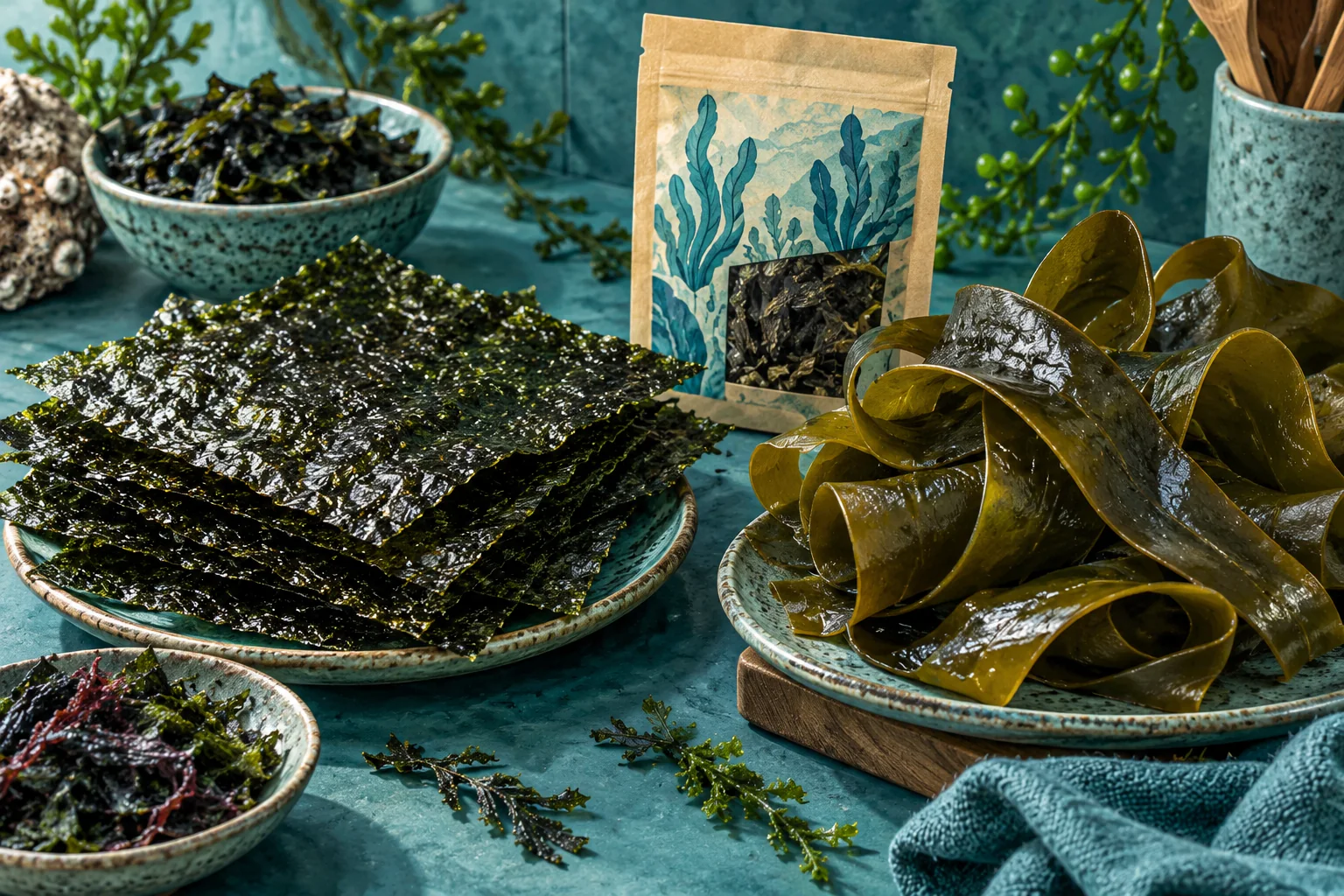
That does not mean every sushi sheet is dangerous. It means seaweed is a broad category, not a fixed nutrient dose. Product identity and amount matter more than a sea-green health label.
What happened when habitual consumers stopped?
In a Norwegian study, iodine estimates fell after participants stopped their usual seaweed intake. Median thyroid-stimulating hormone also fell modestly, while other thyroid hormones did not clearly change.
Most results remained within normal laboratory ranges. The study did not show improved symptoms or prove that seaweed had caused thyroid disease. Without a randomized continuing-intake comparison—and with other dietary changes—it is difficult to assign every change to seaweed alone.
A Japanese trial is useful, but not a safety certificate
A Japanese randomized trial analysed forty-eight adults after an eight-week intervention with iodine-reduced kelp tablets or placebo. It did not find clear group differences in thyroid hormones.
The kelp had been processed to reduce iodine, and participants came from a dietary setting where seaweed was familiar. That result cannot establish that an unprocessed kelp powder or a different concentrated supplement is safe for everyone elsewhere.
An iodine source is not a thyroid remedy
Product
Nori, kelp and concentrated extracts are not interchangeable.
Exposure
Species, preparation and serving affect iodine intake.
Blood tests
A small hormone change does not establish symptom improvement.
Care
Existing thyroid disease needs individual guidance.
The serving on the label deserves attention
Think about whether the product is an occasional food, a seasoning or a daily concentrated extract. These are different ways of consuming it. If a supplement does not clearly describe its iodine content, the uncertainty is not solved by calling it plant-based.
The studies do not provide a dependable conversion from a spoonful of any seaweed powder to an individual safe intake. Preparation and product testing can differ, and a food routine may overlap with other iodine-containing supplements.
Geography adds context, not a different human rule
Habitual diets differ between Norway and Japan, as do the products tested and the study designs. Those differences can help explain why findings vary. They should not become claims that a nationality is immune to excessive iodine.
Someone avoiding dairy, fish or iodized salt may have a different iodine question from someone already using a supplement. A clinician can consider the actual diet and health context; more seaweed is not automatically the right response.
Keep thyroid treatment out of the snack aisle
Thyroid symptoms and laboratory results need proper assessment. Seaweed is not a reliable way to diagnose deficiency, adjust medication or treat autoimmune thyroid disease. Pregnancy and existing thyroid conditions make individual guidance particularly relevant.
The practical answer is balanced: seaweed can be food and an iodine source. Treat concentrated products carefully, identify what you are buying and avoid turning a nutrient claim into a thyroid remedy.
Evidence context: the Norwegian study reported Norwegian public funding. The Japanese trial reported no external funding, but included an employee of a kelp-processing company and contract-research employees; company control over interpretation was denied. Educational information; not clinically reviewed.
Sources & further reading
- Norway · habitual seaweed consumers study (2026)
- Japanese iodine-reduced kelp trial
- NIH thyroid-disease guidance
Study years differ from this article’s publication date. We reviewed full primary papers and relevant supporting material; access limitations are kept out of efficacy claims. Original illustrations and diagrams; no publisher figures reproduced. Educational writing, not clinical review.
Published 11 October 2026 · Sources checked 11 October 2026. Suggest a correction.