 PoshanSense
Do soy foods need to be avoided after breast cancer?
US and Chinese cohort evidence does not show the feared harm from ordinary soy foods, but it cannot prescribe treatment, prove recurrence prevention or validate supplements.
Research explained · Published 2012 & 2013
Soy can become confusing after a breast-cancer diagnosis. One message calls it protective; another says its plant compounds behave like oestrogen and therefore must be avoided. Both messages can outrun what human research actually establishes.
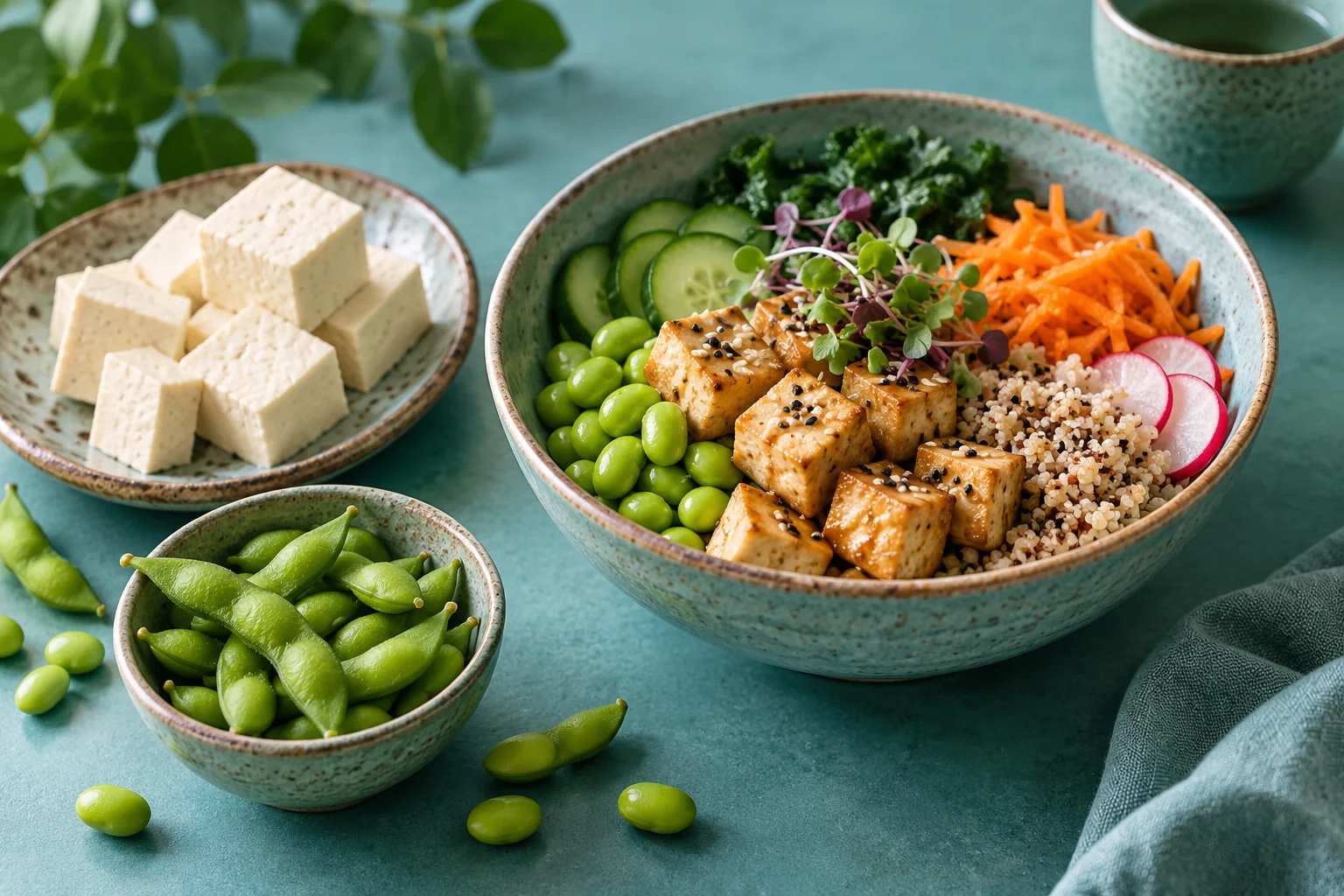
The useful starting point is ordinary food, not a promise of cancer prevention. Tofu, edamame and other soy foods were part of people’s reported diets in survivor studies. Those studies can examine outcomes alongside eating habits, but cannot tell a person to replace treatment with food.
The large human analysis did not show the feared pattern
A pooled analysis of US and Chinese women examined soy intake after diagnosis. Higher intake was associated with lower recorded recurrence. The common-cutoff comparisons did not establish clear reductions in all-cause or breast-cancer-specific mortality.
Those are separate outcomes. Combining them into “soy improves survival” would lose an important distinction. Equally, the results do not support a blanket story that ordinary soy-food consumption was associated with worse outcomes in these cohorts.
Why the countries matter
The analysis included 4,856 women from Shanghai and 4,658 from two US cohorts. Habitual soy intake differed substantially between the settings. The researchers could examine a wider range of diets than one low-intake population would provide.
That geographical breadth is useful, but does not make the findings universally predictive. Food questionnaires differed, and diet was first assessed sooner after diagnosis in Shanghai than in the US cohorts. Clinical practices and recorded treatments also differed.
The researchers adjusted for many recorded factors, including treatment and lifestyle. Yet people with higher soy intake also differed in other habits. Statistical adjustment cannot eliminate every unmeasured influence, so lower recurrence remains an association rather than proof that soy caused it.
Other soy evidence asks a different question
A separate multiethnic US cohort followed 3,842 postmenopausal women with breast cancer in Hawaii and California. It found no clear association between isoflavone intake and the mortality outcomes examined.
Crucially, that diet information had been collected before diagnosis, often years earlier. It does not directly repeat the postdiagnosis question. Treating the two papers as identical studies would make an apparently simple answer less accurate.
The absence of a clear mortality association also does not prove that every intake is harmless for every person. Population research is reassuring in a bounded way; it is not a substitute for individual care.
Four distinctions keep the soy answer honest
Food
Ordinary soy-food intake was assessed in survivor cohorts.
Association
Lower recorded recurrence is not proof that soy caused protection.
Supplement
Concentrated extracts were not validated by these food findings.
Care
Food questions belong alongside, not instead of, your oncology plan.
Foods, extracts and treatment are not interchangeable
A food-intake cohort cannot validate concentrated isoflavone capsules, high-dose extracts or a supplement advertised for recurrence prevention. Products and amounts may differ from what participants ate, and supplement decisions can involve treatment-specific considerations.
The pooled study also had limited information on some therapies and little use of aromatase inhibitors in these older cohorts. It cannot settle every question about current treatment combinations. Findings in treatment subgroups should not become instructions to start, stop or change medicine.
If soy is a food you enjoy and this question affects your cancer care, bring the actual food or supplement details to your oncology team. Ask about your situation rather than trying to copy the study’s statistical intake categories. Those categories were analytical comparisons, not a prescription.
The pooled work reported National Cancer Institute support, additional parent-cohort funding and no author conflicts. Its size and multiple settings make it informative, while its observational design keeps the conclusion modest. Ordinary soy foods were not associated with the feared worse-outcome pattern here; a claim that they treat cancer or prevent recurrence would go beyond the evidence.
Sources & further reading
- United States and China · soy foods after diagnosis (2012)
- Separate multiethnic US cohort using diet measured before diagnosis
Study years differ from this article’s publication date. We reviewed full primary papers and relevant supporting material; access limitations are kept out of efficacy claims. Original illustrations and diagrams; no publisher figures reproduced. Educational writing, not clinical review.
Published 11 October 2026 · Sources checked 11 October 2026. Suggest a correction.