 PoshanSense
Can wall sits lower blood pressure?
Isometric exercise has promising trial results, but a wall-sit challenge is not a replacement for hypertension care.
Research explained · Published 2023–2024
A lower resting reading does not mean a lower reading during the hold
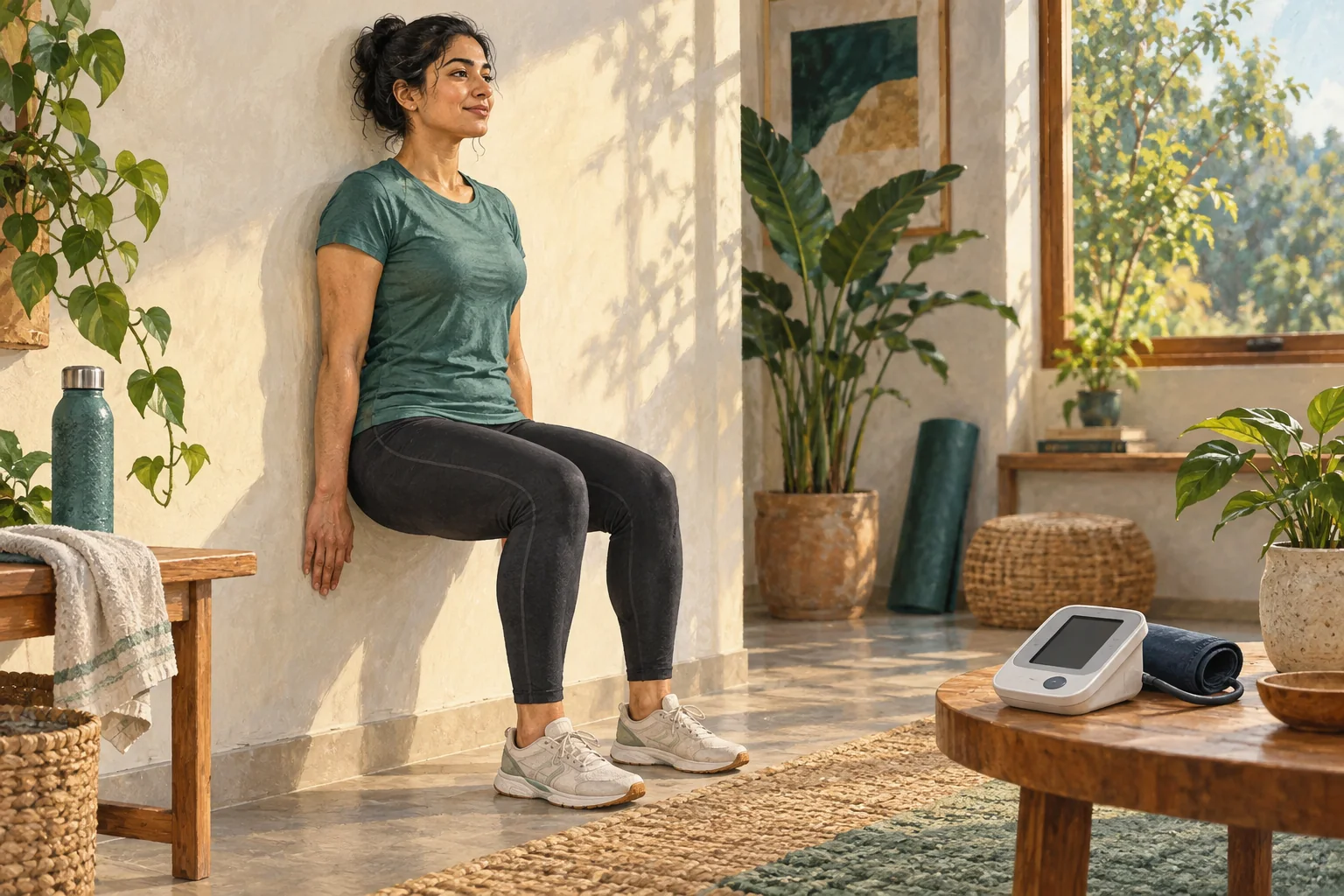
A wall sit looks simple because there is little movement. The muscles are still working hard. The blood-pressure response during that effort is a different question from the resting measurement taken after weeks of training.
What the training study found
Both isometric training approaches reduced office blood pressure during the initial programme. The wall-squat group retained benefits more clearly during the lower-frequency maintenance phase. Researchers tested a planned programme, not a one-off social-media challenge. Their participants had been screened, and the findings should not be transferred unchanged to everyone already taking medication or living with other conditions.
Why more seconds is not necessarily better
Isometric exercise involves holding muscular tension. A longer or harder effort can increase strain; holding your breath adds another concern. A review of the wider evidence discusses intensity, safety and supervision as part of implementation. “Looks easy to do at home” is not the same as “the hardest version is appropriate for me.” This article intentionally does not prescribe the study’s hold times or intensity.
A promising option among several
The useful outcome is a sustainable activity plan, not winning an exercise ranking. Different forms of movement can support health, and individual comfort, mobility and clinical advice affect what is workable. A trial’s average reduction cannot predict your next home reading, and the study did not show fewer heart attacks or that medication could be stopped.
Bring the idea to a blood-pressure review
If you have hypertension and want to try isometric training, discuss an appropriate starting plan and how to monitor it. Do not change prescribed treatment based on a good reading after exercise. The trial received Colombian public research funding; independent replication and longer follow-up remain useful.
Do not confuse these three blood-pressure questions
During exercise
Muscular strain can raise blood pressure temporarily.
After weeks of training
Resting readings improved in screened trial participants.
Long-term care
Medication decisions and cardiovascular outcomes require more evidence.
Sources & further reading
- Wall-squat and handgrip training in hypertension
- 2024 review of isometric exercise, blood-pressure responses and implementation
Study years differ from this article’s publication date. We reviewed the linked research in full, distinguishing original experiments, observational studies and reviews. Access limitations are not used to support efficacy claims. Original illustrations and diagrams; no publisher figures reproduced. Educational writing, not clinical review.
Published 16 October 2026 · Sources checked 16 October 2026. Suggest a correction.