 PoshanSense
How accurate are the calories burned on your smartwatch?
A precise-looking number can still be an estimate. Laboratory validation separates heart-rate accuracy from energy-expenditure accuracy.
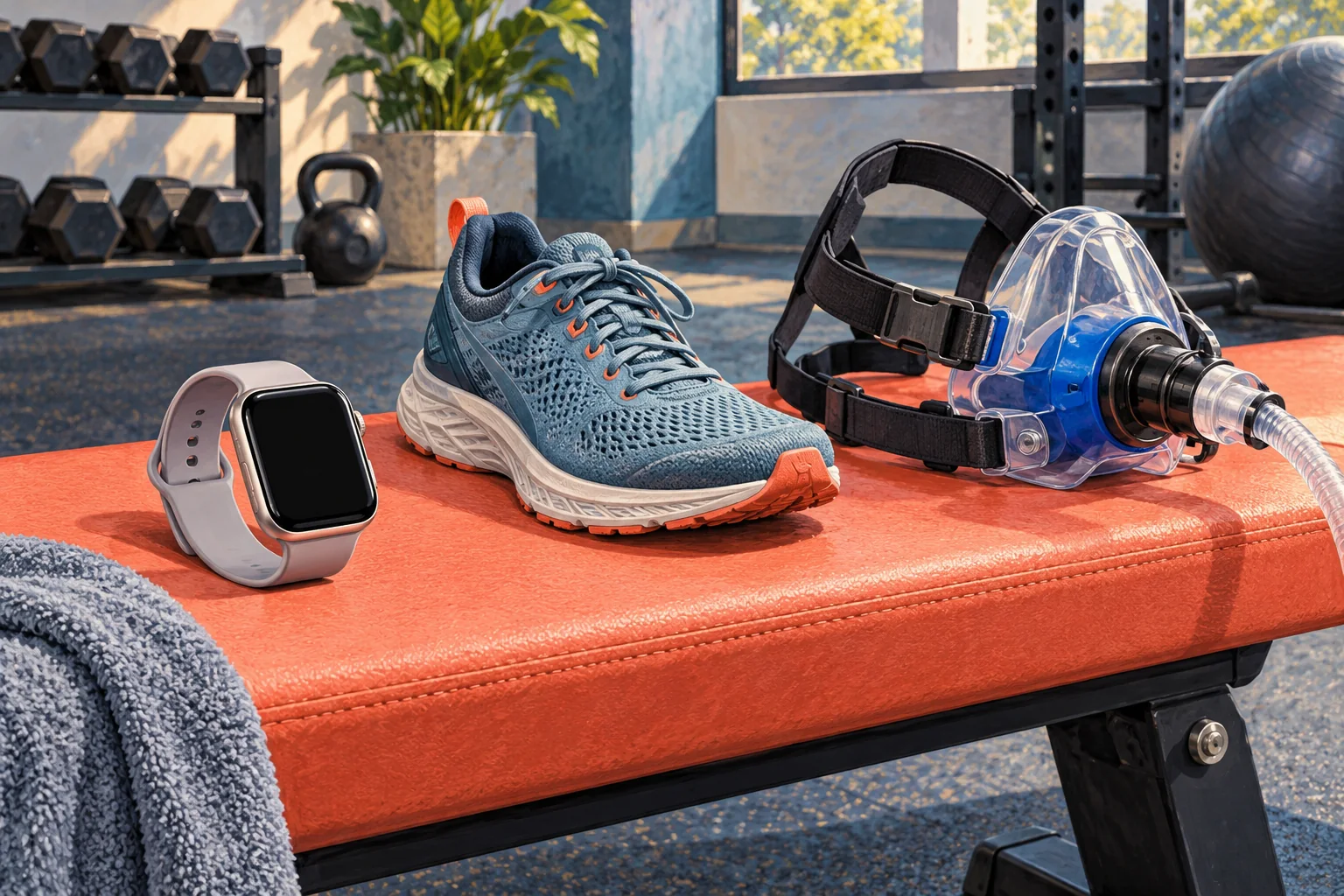
Research explained · Published 2017
You finish a walk and your watch says you burned a precise number of calories. It is tempting to treat that number like a receipt: a measured amount you can spend on dinner. The display may be precise, but that does not tell you how close the estimate is to reality.
What does the watch actually know?
A wearable collects signals and uses an algorithm to estimate an outcome. Different outputs require different validation. Counting movement, detecting a pulse and calculating energy expenditure are related tasks, but success at one does not establish success at the others.
That is why a review saying a watch tracks heart rate well cannot settle the calorie question. Look for an energy-expenditure comparison against an appropriate reference, rather than a general claim of accuracy.
What did the laboratory comparison show?
In the 2017 validation, energy estimates had substantially larger errors than heart-rate measurements. None of the tested devices met the study's prespecified acceptable energy-error range. That finding applies to the versions tested, not every future watch.
It is an example of how to assess a number, rather than a current buying guide. A manufacturer may change hardware, algorithms or apps. Older rankings do not establish which device performs best now.
Four checks before trusting a calorie number
Measurement
Heart rate and energy expenditure are separate outcomes.
Reference
Calories need comparison with a suitable energy measure.
Version
Model and software updates matter.
Decision
Avoid treating an estimate as an exact eating allowance.
Should you ignore your watch completely?
No. Decide what job you want it to do. A reminder to move, a record of activity sessions and an estimated calorie total are different uses. A number can be motivating without being accurate enough to balance food intake calorie-for-calorie.
If you like recording your walks, keep recording them. But do not assume a larger calorie number automatically means a healthier session or permission to change an individual nutrition plan.
Likewise, there is no reliable universal rule such as subtracting the same percentage from every watch. Error can depend on the activity, person, device and calculation. An adjustment that works in one comparison may fail in another.
What should a useful accuracy claim include?
Ask which model and software version were tested, what activity participants performed and which reference was used. Was it a short controlled test or ordinary life across a whole day? Were people like you represented?
Also check the exact output. “Active calories” and a total that includes resting expenditure are not interchangeable. Comparing unlike numbers can create an apparent error even before the algorithm's accuracy is considered.
These checks are especially useful when a product offers a very confident-looking daily target. A neat dashboard is a presentation choice, not evidence that uncertainty has disappeared.
How does this affect meal logging?
Keep the records understandable: food eaten, portions and recorded activity are useful descriptions. An estimated energy balance is a further calculation with uncertainty on both sides. It should not become an exact promise about tomorrow's bodyweight.
The study authors declared no conflicts of interest. This is an educational explanation, not a clinical review or personalised advice about energy needs. Use your watch for the role it can support, and keep the calorie display in proportion.
Sources & further reading
Study years differ from this article’s publication date. We reviewed full primary papers and relevant supporting material; access limitations are kept out of efficacy claims. Original illustrations and diagrams; no publisher figures reproduced. Educational writing, not clinical review.
Published 11 October 2026 · Sources checked 11 October 2026. Suggest a correction.