 PoshanSense
Do beans always cause gas? Often less than people expect
Three US feeding studies found that bean-related gas often eased, but not for everyone. Separate flatulence, bloating and persistent symptoms before excluding pulses.
Research explained · Published 2011
You plan to eat more beans. Then a noisy afternoon makes you wonder whether your gut has vetoed the idea. The research suggests a less dramatic interpretation: an initial change is possible, but neither discomfort nor permanent intolerance is guaranteed.
How common was the problem?
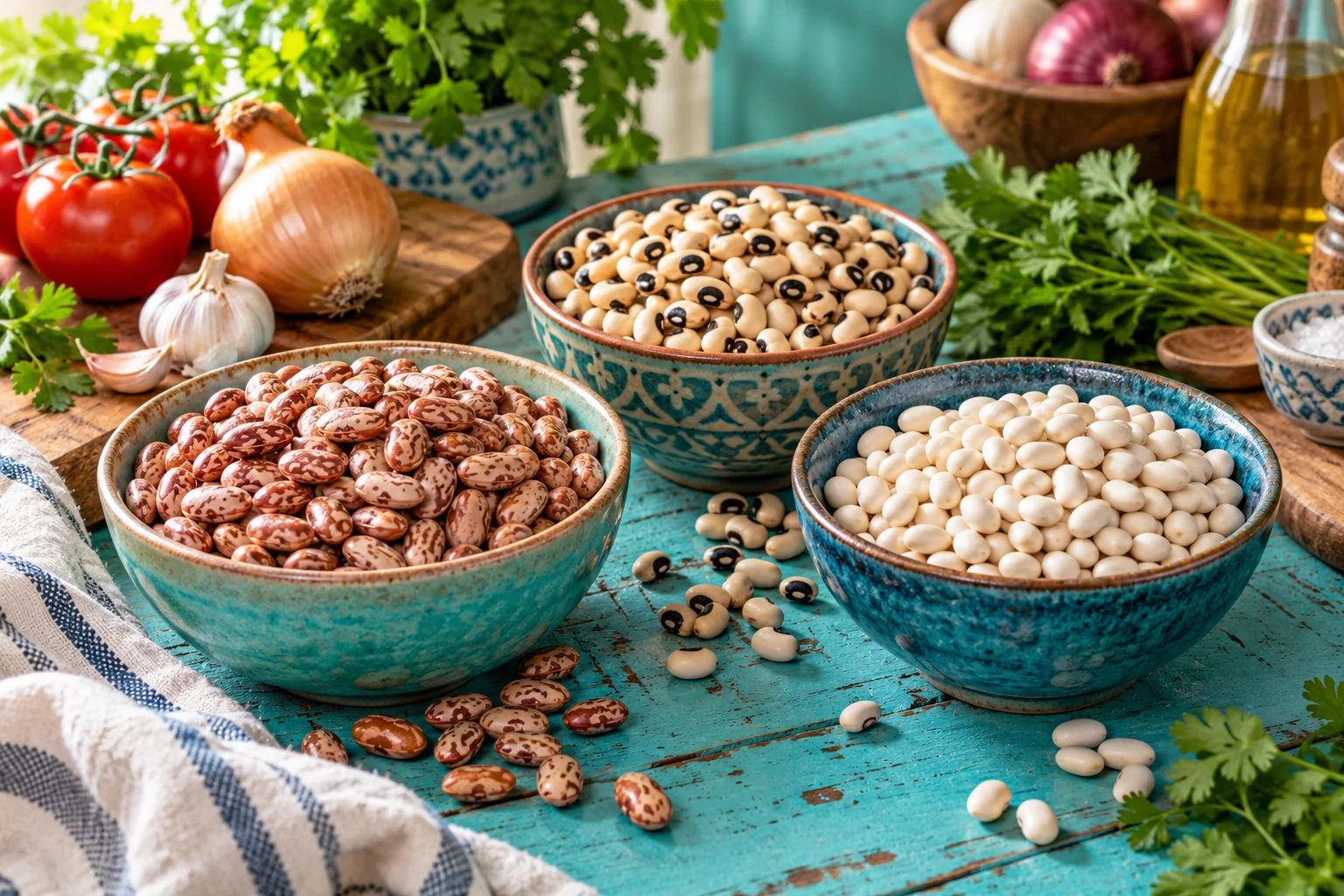
In three US feeding studies, half or fewer of the participants reported increased flatulence during the first week of regular bean eating. In the small crossover study, reports differed between pinto beans and black-eyed peas. This was not one uniform response to every pulse.
Reports generally fell as feeding continued. In the larger pinto-bean group, 45% reported increased flatulence in week one and 20% in week twelve. That is encouraging without being a promise that everyone becomes symptom-free.
Why “my body will get used to it” needs a caveat
The reassuring message is that a first uncomfortable experience does not necessarily predict the next month. However, these studies cannot tell you precisely how long adaptation will take, or whether your own symptoms will improve.
The researchers asked whether symptoms had increased; they did not collect every participant's intestinal gas or diagnose the cause of abdominal pain. Expectations, other foods, medicines and ordinary day-to-day variation can affect a weekly answer. Some comparison-group participants also reported symptoms.
Most participants were White US adults. The experiments do not establish equivalent responses in every population, in people with irritable bowel syndrome, or with every dal, chickpea preparation and mixed meal.
Gas is a response, not a verdict on beans
Not everyone
Half or fewer reported more gas in the first week.
Often changes
Reports generally declined during continued feeding.
Not universal
Some participants still reported symptoms later.
Different signals
Gas, bloating and pain should not be treated as the same outcome.
Gas and bloating are different experiences
Passing more gas can be inconvenient without being painful. Bloating is the feeling of fullness or swelling. Persistent abdominal pain is another issue again. A study finding fewer reports of flatulence does not prove that all these experiences improve together.
This matters when practical advice becomes “just push through”. The trials do not justify ignoring substantial discomfort. If symptoms are persistent, severe or accompanied by other changes, seek appropriate assessment rather than using an adaptation story as a diagnosis.
Keep the food and the portion in view
The study foods included particular bean preparations eaten regularly. A large bowl after months of rarely eating pulses is a different experience from a small amount within a familiar meal. Smaller portions may be easier to experiment with, but this paper did not randomize a gradual-increase strategy or prove a universally comfortable serving.
Nor did it establish that one soaking trick, spice or pressure-cooking method eliminates gas. Preparation advice should be assessed on its own evidence rather than attached to these results. Cook beans safely and appropriately for the type you use.
A useful way to interpret the next meal
If you enjoy beans, an early increase in gas need not automatically remove them from your diet. Notice the type, amount and wider meal, and whether the experience actually changes. Do not label every pulse a problem from one large serving.
Equally, there is no requirement to force one particular food to work. Nutrition can be built around a range of foods. Readers with IBS may need more specific support than these small feeding cohorts provide; our related explainer discusses why a low-FODMAP approach is a separate, targeted question.
The answer is therefore hopeful but individual: beans do not always cause troublesome gas, and some initial responses ease. The studies offer room to try, not an instruction to endure symptoms or a timetable for your gut.
Evidence context: authors declared no competing interests and acknowledged USDA research-centre support; the accessible main text did not specify a complete grant-funding statement. Educational information; not clinically reviewed.
Sources & further reading
Study years differ from this article’s publication date. We reviewed full primary papers and relevant supporting material; access limitations are kept out of efficacy claims. Original illustrations and diagrams; no publisher figures reproduced. Educational writing, not clinical review.
Published 11 October 2026 · Sources checked 11 October 2026. Suggest a correction.