 PoshanSense
Are plant-based burgers healthier than meat burgers?
A small US trial suggests some useful swaps, but a plant label is not a health guarantee. Compare products, portions and what they replace.
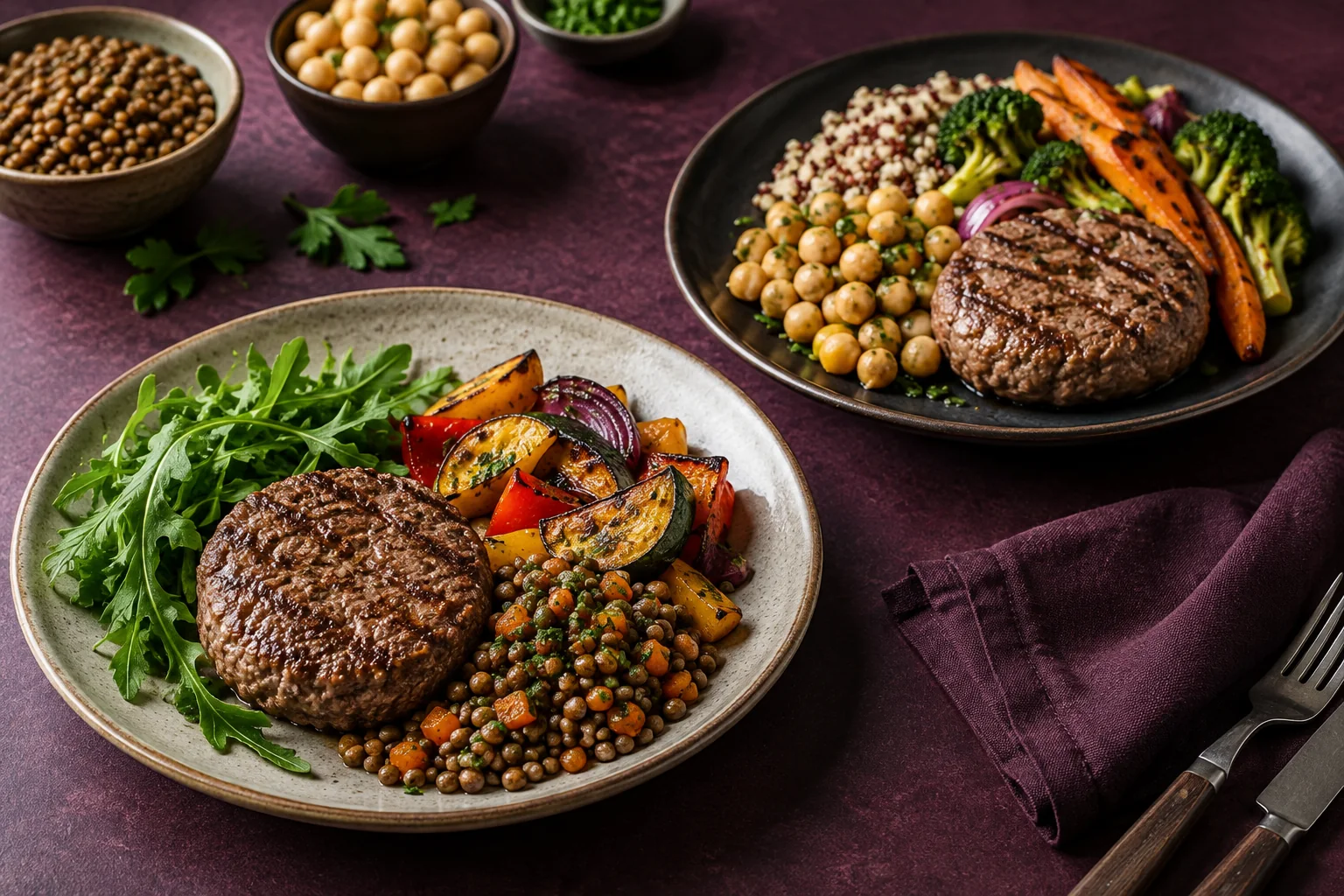
Complementary human studies · Published 2020
A plant-based burger can sit beside a bag of lentils and still be a very different food. That is the first thing to remember when “plant-based” becomes shorthand for healthy. The label describes an ingredient origin, not the entire nutritional profile.
The second thing is just as useful: processing alone does not settle the comparison either. If a product replaces another product, the question is what changes in the meal. A confident verdict needs the actual comparator, not two abstract categories.
What happens when people make a direct swap?
The SWAP-MEAT trial randomized 38 adults; 36 contributed its main two-phase analysis. During the plant-product phase, LDL cholesterol was about 11 mg/dL lower than during the meat phase, with modestly lower weight. These were secondary outcomes in a short study.
The main marker, trimethylamine-N-oxide (TMAO), was lower overall but depended on intervention order. There was no planned washout, so a preceding phase could influence the next. The trial did not count heart attacks, and its products came from one brand family.
Why the meat comparator matters
The supplied animal products were mainly beef and pork, including relatively fatty ground beef and sausages. That is not the same comparison as a plant patty against lentils, tofu, fish or lean chicken. “Better than the meat in this experiment” is therefore a more accurate statement than “best protein choice.”
Some plant formulations have less saturated fat than some meat products, while others use ingredients that make the difference smaller. Salt and serving sizes vary as well. A nutrition panel helps answer that product-level question more directly than a green wrapper or an appealing menu name.
The trial does not establish which ingredient caused each result. Several features changed together, and participants bought the rest of their food. We should not turn a whole-product comparison into a claim that one isolated ingredient is responsible for every benefit.
A better burger question: what replaces what?
Specific swap
Trial products versus the supplied animal-meat products—not every burger.
Read the label
Compare saturated fat, salt, protein and serving weight.
Keep alternatives visible
Beans and tofu are different choices, not the products tested here.
Respect the endpoint
Short-term markers do not count heart attacks prevented.
How should you compare two packets?
Start with the serving you will eat. If one packet gives numbers for a small patty and another for a larger burger, compare the same weight first, then return to your actual portion. It is easy to choose a lower-looking number that describes less food.
Look at saturated fat, salt or sodium, protein and fibre where listed. Check the ingredient and allergen information. This is especially useful when a plant product is based on soy or wheat, or when you have a particular allergy. The word “plant” does not replace those checks.
Then consider the complete meal. Cheese, sauces, buns and sides do not vanish because the patty changed. A small product improvement can coexist with a meal that is otherwise unchanged. The article cannot assign a clinical result to a restaurant order that was never studied.
Do you need a meat imitation to eat more plants?
No. It may be a convenient option when taste or family routines make a familiar burger format useful. But it is not the only route, and it need not become a daily requirement. Beans, lentils, tofu and other ordinary foods remain separate choices with different costs, textures and preparation needs.
Think about the job the food does in your kitchen. For a quick weeknight meal, a ready-made patty may save effort. For a larger household, a familiar lentil dish may be easier on the budget. That is a practical comparison; this specific trial did not determine a universal winner between those options.
Across countries, the products change faster than the research headlines. An Indian soy-based kebab, a European supermarket patty and a US pea-protein burger should not automatically share one result. The evidence travels as a question about replacement, while the label check stays local.
What does industry funding change?
The study was supported by an unrestricted gift from Beyond Meat alongside research support. The researchers reported a prespecified analysis plan and independent blinded statistical analysis. Those safeguards are useful, but the funding relationship still belongs in the discussion.
It is not a reason to pretend the result never happened. It is a reason to avoid presenting one small brand-specific experiment as a final verdict on the entire market. Replication with different products, populations and longer follow-up would strengthen a broader answer.
A sensible decision does not require declaring every plant burger a superfood or dismissing all of them. Compare the products available to you, choose a portion that fits the meal and keep other plant-food options in view. Convenience can be valuable without becoming a clinical promise.
Evidence context: the principal investigator disclosed the Beyond Meat research gift; other authors reported no conflicts. The main paper was reviewed in full. Supplementary data were not recovered, so no supplement-only result is used here.
Sources & further reading
Study years differ from this article’s publication date. We reviewed full primary papers and relevant supporting material; access limitations are kept out of efficacy claims. Original illustrations and diagrams; no publisher figures reproduced. Educational writing, not clinical review.
Published 11 October 2026 · Sources checked 11 October 2026. Suggest a correction.