 PoshanSense
Can black tea lower blood pressure? A small effect is not a treatment plan
Trials in Australia and Italy suggest modest blood-pressure effects from specific black-tea drinks. The answer depends on the comparison, duration and what your cup contains.
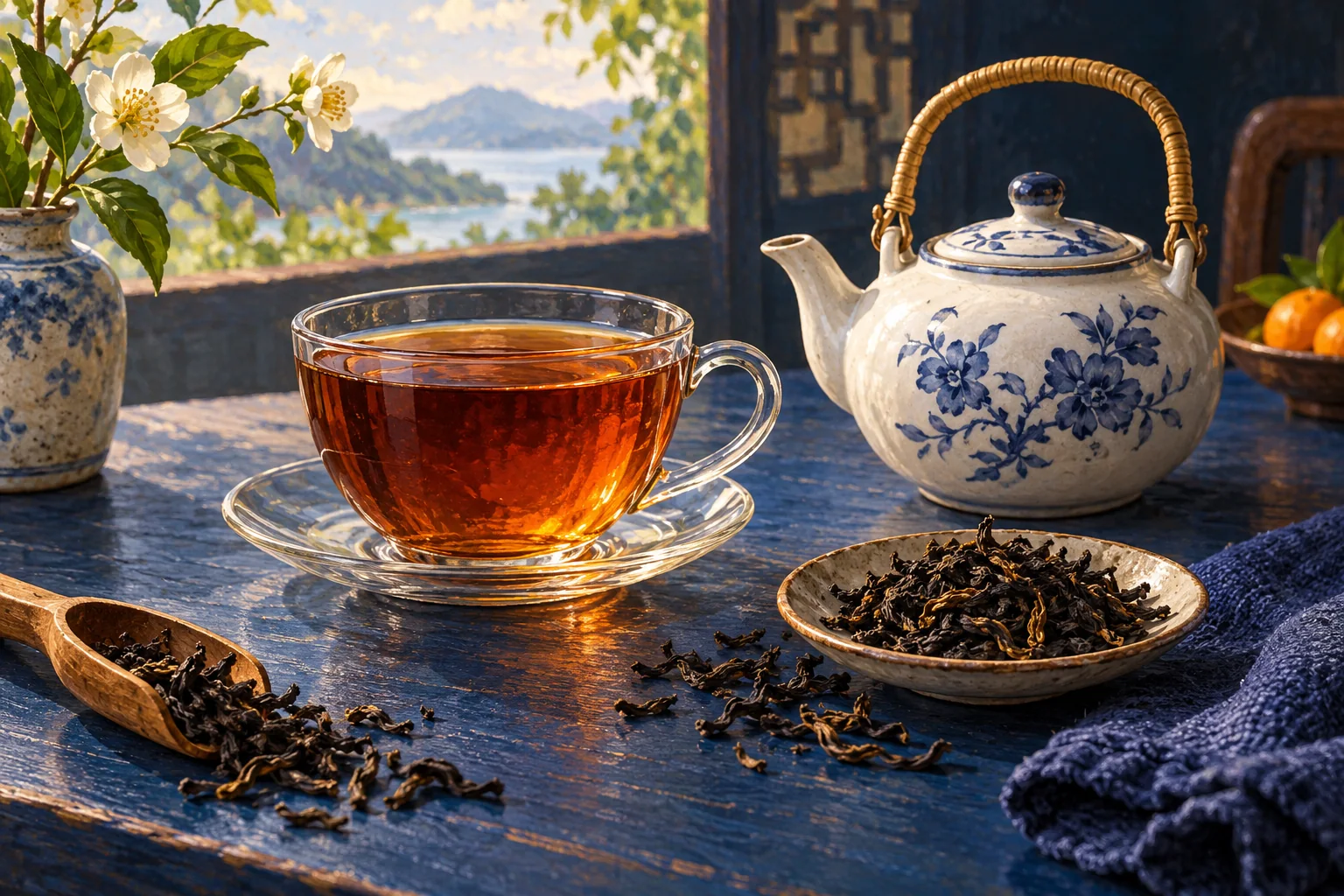
Research explained · Published 2012 · 2015
Black tea can be a comforting daily ritual. When a headline turns it into a blood-pressure remedy, the ritual suddenly comes with an extra expectation. The research is more useful if you separate a small measured effect from the idea that a cup can take over your health care.
The answer is modest, rather than magical
A small Italian crossover trial found a modest reduction in systolic pressure after a week of a specified black-tea drink. It also tested how blood vessels responded around a high-fat cream challenge. These are interesting physiological observations, but a cream challenge in a laboratory is not an ordinary lifetime of eating.
A longer Australian trial analysed 95 randomized participants who had completed baseline measurements. Over six months, a powdered black-tea drink produced blood-pressure differences of roughly 2–3 mmHg compared with a caffeine-matched placebo. The six-month systolic estimate was about 2 mmHg lower, with uncertainty reaching very close to no difference. Participants followed a low-flavonoid diet, and cardiovascular events were not tested.
Why the comparison drink matters
Both experiments tried to distinguish the tea components from caffeine. That is a different question from asking whether switching from sweetened soda to tea improves an overall diet, or whether a person who avoids caffeine should start drinking it.
The experiments used prepared research drinks. Tea variety, brewing, serving size, milk and sugar can change what an ordinary cup contains. We should not quietly transfer the result to every chai recipe, iced-tea bottle or tea extract.
Matching caffeine also means the studies do not show that caffeine is irrelevant to every person's response. Someone's symptoms, sleep or individual tolerance may still affect whether a drink suits them.
Read the cup, comparison and outcome
Cup
Research drinks had specified tea solids and caffeine.
Comparison
Caffeine was matched; the trials did not test tea against every drink.
Result
Modest blood-pressure differences, rather than a dramatic reduction.
Limit
No evidence here of fewer strokes or heart attacks.
Does a small average effect matter?
A modest group difference can be scientifically worthwhile without being a dramatic personal benefit. It may be difficult to distinguish from normal variation in one home reading. The experiments used repeated measurements and planned analyses rather than a single before-and-after check.
They also did not establish how a person with more severe hypertension, another illness or a different medicine regimen would respond. The short Italian study involved selected untreated patients; the Australian study involved regular tea drinkers with normal to high-normal pressures.
There is another distinction: measured blood pressure is a risk marker. These particular trials did not count prevented strokes, heart attacks or deaths. A projected population benefit is not an observed clinical result.
Do not use tea to cancel the rest of a meal
The Italian experiment's fat challenge can make a tempting story: drink tea and neutralise a rich meal. That is not what it proved. Temporary vascular measurements cannot establish that tea erases the long-term effects of an eating pattern.
Nor do these papers show that sweetened tea has no nutritional trade-off. If a drink contains sugar, it remains part of the meal's intake. Enjoying tea does not require treating each cup as medicine or overlooking what comes with it.
A practical place for the evidence
For someone who already enjoys black tea, the studies offer a possible additional reason to be interested in the drink. They do not create a required number of cups or a reason to replace prescribed care.
If blood pressure is your concern, follow your monitoring and treatment plan. A tea habit should fit around sleep, symptoms and clinical advice rather than becoming a test of whether you can drink enough to obtain a laboratory effect.
Tea can also interact with another dietary question: our tea-and-iron explainer looks at meal timing and iron absorption. Different outcomes deserve different answers, even for the same familiar cup.
Evidence context: the Italian study was funded by Unilever and included employee authors. The Australian trial received Australian public funding and Unilever support, with Unilever-affiliated authors; its main analysis was reported as independently performed. Educational information; not clinically reviewed.
Sources & further reading
Study years differ from this article’s publication date. We reviewed full primary papers and relevant supporting material; access limitations are kept out of efficacy claims. Original illustrations and diagrams; no publisher figures reproduced. Educational writing, not clinical review.
Published 11 October 2026 · Sources checked 11 October 2026. Suggest a correction.