 PoshanSense
Does mustard powder make cooked broccoli more nutritious?
A small UK human study tested a specific broccoli-compound pathway. Learn what the mustard trick changes and what it cannot prove.
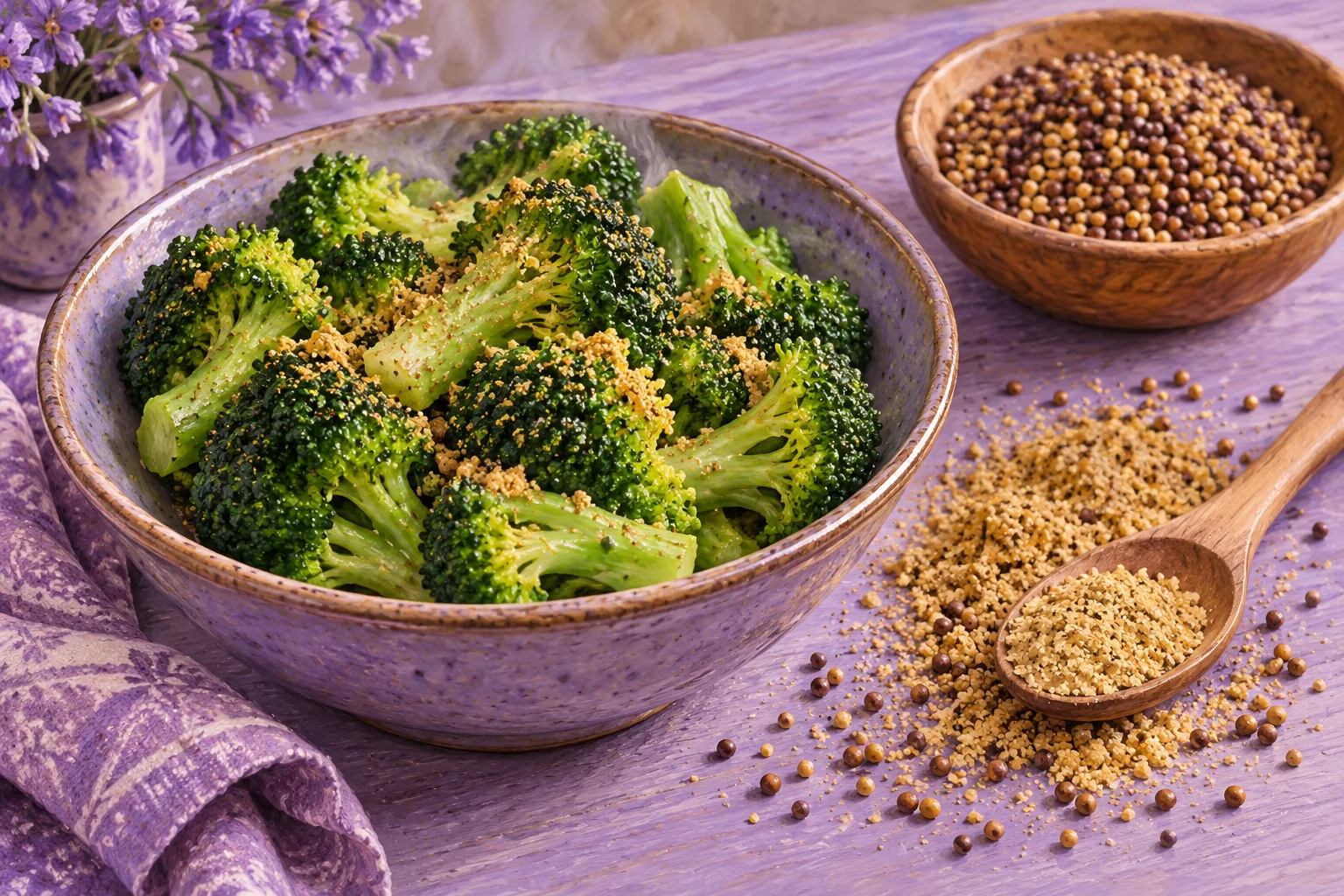
Research explained · Published 2018
A vegetable can contain the starting material for a compound without delivering the same amount of that compound after every preparation. That is why the broccoli-and-mustard idea is more specific than the usual advice to eat more greens.
The interesting part is an enzyme. Broccoli contains glucoraphanin, which can be converted into sulforaphane with help from myrosinase. Heating can reduce that enzyme's activity. Mustard seeds can provide another source. The kitchen question is whether the combination changes what reaches the body, not whether mustard makes broccoli a medicine.
What happened in the human experiment?
The volunteers attended two visits and ate the prepared broccoli with or without freshly ground brown mustard. Researchers then collected urine to measure a metabolite formed after sulforaphane is processed in the body. Each person experienced both meals, helping reduce differences between individuals.
The average urinary measurement was more than four times higher with mustard in this small experiment. People varied substantially in the size of the increase. It is therefore a result about one measured pathway under particular conditions, not a reliable personal multiplier for every serving.
The investigators also performed food-laboratory tests. A change measured in a prepared food and a change measured in urine are different things. They should not be blended into one “eight times healthier” claim. Neither is a direct measurement of someone avoiding illness.
Why not simply say “more nutritious”?
Nutrition includes many components: fibre, vitamins, minerals, energy and the whole eating pattern. This experiment did not measure whether mustard improved all of them. A specific increase in sulforaphane availability does not establish an improvement in every dimension of a vegetable's nutritional value.
It also did not test a person's cancer risk, cardiovascular events or resistance to infections. Research interest in a compound's biological activity is a reason for further work, not permission to attach those benefits to a kitchen trick. An enzyme explanation and a urinary result cannot replace clinical evidence.
From broccoli to a measured metabolite
Starting material
Broccoli contains glucoraphanin.
Enzyme help
Mustard seed can provide myrosinase after cooking.
Observed signal
A urinary sulforaphane metabolite increased in 12 adults.
Missing outcome
Disease prevention and overall nutrition were not tested.
Would any mustard work the same way?
The study used freshly ground brown mustard seed added to a particular cooked-broccoli preparation. It did not compare all commercial powders, prepared mustards or storage conditions. A jar of condiment with several ingredients is not automatically equivalent to the seed material used in the experiment.
Similarly, the broccoli was cooked under controlled conditions, then cooled and prepared for the meals. The article is not a home recipe validated for every cooker, cooking time and portion. We describe the tested quantity to explain the study, not to prescribe a daily dose.
For someone who likes the flavour and can safely eat mustard, it can be a culinary addition. Mustard allergy makes the trick inappropriate; enjoying broccoli without it remains perfectly reasonable. You do not need to turn every plate into a compound-maximising exercise.
A better way to read food-hack headlines
Ask what changed, where it was measured and whether a health outcome was actually observed. “More metabolite in urine after a meal” is informative. “Prevents cancer” would require a very different study. The gap between those sentences is where exaggerated headlines often appear.
The accepted manuscript acknowledges Nigerian TETFUND support for the lead researcher and a mustard-seed contribution from a German genebank. The human experiment took place in the UK; those funding and material origins do not create Nigerian or German participant groups. A separate conflict declaration was not visible in the accessible manuscript.
The practical answer is that mustard can assist a specific conversion and absorption pathway. Keep it at that size. Cooked broccoli is food to enjoy within varied meals, and the optional mustard addition is not a substitute for medical prevention or treatment.
Sources & further reading
Study years differ from this article’s publication date. We reviewed full primary papers and relevant supporting material; access limitations are kept out of efficacy claims. Original illustrations and diagrams; no publisher figures reproduced. Educational writing, not clinical review.
Published 11 October 2026 · Sources checked 11 October 2026. Suggest a correction.