 PoshanSense
Do chia seeds help with fullness or weight loss?
A Turkish yoghurt experiment found short-term appetite effects, not evidence that chia water melts fat. What the setup means for an everyday serving.
Research explained · Published 2017
A spoon of chia seeds has become a very large internet promise. Add them to water, wait for the gel and supposedly appetite, weight and belly fat will take care of themselves. The actual experiment behind a fullness claim tells a narrower, more interesting story.
The useful question is whether chia can make a particular snack feel different. That is something researchers can test. Whether a drink makes someone lose fat over months requires a different study, and cannot be inferred from how much pasta someone ate at one lunch.
The yoghurt snack is the relevant experiment
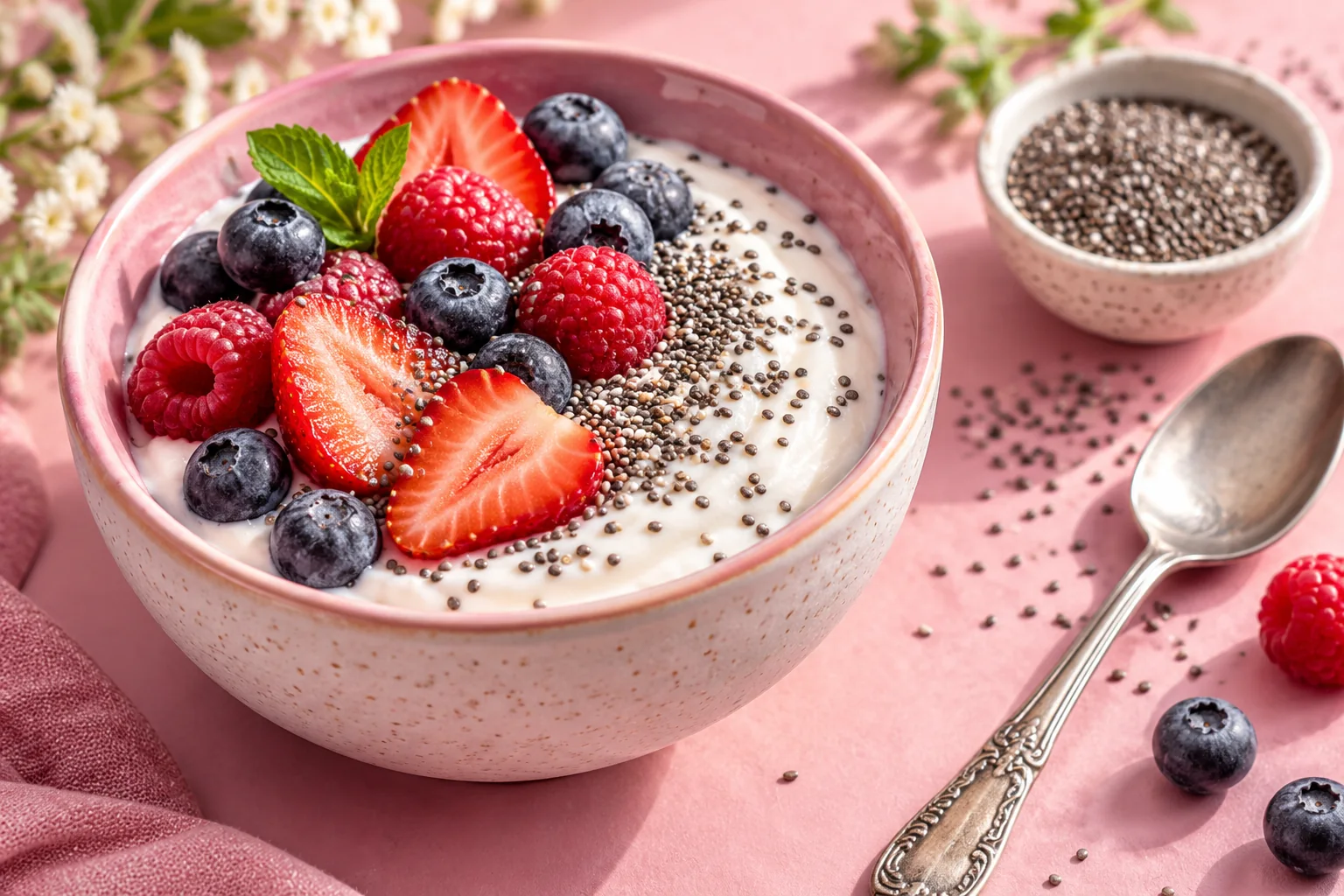
In a Turkish crossover trial, 24 young women tried yoghurt snacks with no chia, 7 g chia or 14 g chia on separate days. They reported appetite, then ate a freely available pasta lunch two hours later.
Both chia-containing versions produced more favourable short-term appetite ratings and lower lunch intake than the no-chia comparison. The two chia amounts did not clearly differ from each other. This is evidence about those snacks over a short interval, not a reason to assume that more seeds always give more benefit.
The snacks were not identical apart from the seeds
To match energy, the researchers changed the yoghurt amount: 180 g without chia, 140 g with the smaller chia amount and 100 g with the larger amount. That means the experiment compared three snack combinations. It did not simply sprinkle seeds into otherwise identical bowls.
This detail is easy to lose when the finding becomes advice. Adding seeds to your usual snack without changing anything else is a different comparison. The result does not show that the added food’s energy automatically disappears through eating less later.
The participants were healthy women aged 19–25, and the visits took place in a laboratory. The study cannot tell us whether children, older adults, people with diabetes or someone following a different meal pattern would respond in the same way.
Fullness is useful, but it is not body-fat loss
Feeling less hungry for a while can be valuable. It might help a snack fit comfortably between meals. Yet appetite ratings, one lunch and a long-term body-weight change are different measurements. People can compensate later in the day, change portions or stop liking a repeated food.
The experiment did not measure months of eating, waist change or fat loss. It also did not test chia mixed into water. Switching the recipe from yoghurt to a drink changes the food context, so the two cannot be treated as interchangeable research evidence.
No author conflicts were declared in the paper. That disclosure does not fix the small sample or short duration; those remain the main reasons to keep the conclusion modest.
Do not skip these steps in the claim
Tested
Chia in an energy-matched yoghurt snack.
Observed
Short-term appetite changes and less food at the following lunch.
Not tested
Chia water, belly-fat loss or months of habitual use.
Your serving
Count the whole snack rather than assuming seeds cancel its energy.
Use chia as an ingredient, not a shortcut
If you like chia in a prepared yoghurt or another familiar food, it can be one ingredient in your routine. The practical checks are ordinary: how much you use, what else is in the snack, whether you enjoy it and whether it fits your appetite.
There is no need to turn the experiment’s two tested amounts into a personal prescription. They were research conditions, not an established dose for weight loss. Nor does the absence of a clear difference between them mean every smaller or larger amount will behave identically.
When comparing snacks, include the entire bowl. Seeds, yoghurt, fruit and any additions belong in the same comparison. A journal can make that serving easier to understand, but it cannot prove the ingredient caused a change in appetite or body weight.
The fair conclusion is that chia-containing yoghurt had a short-term effect in a small experiment. That makes chia worth understanding as food. It does not make it a fat-burning drink, a substitute for a sustainable eating pattern or a guaranteed route to losing weight.
Sources & further reading
Study years differ from this article’s publication date. We reviewed full primary papers and relevant supporting material; access limitations are kept out of efficacy claims. Original illustrations and diagrams; no publisher figures reproduced. Educational writing, not clinical review.
Published 11 October 2026 · Sources checked 11 October 2026. Suggest a correction.