 PoshanSense
Does coffee dehydrate you, or count towards your fluids?
Moderate coffee hydrated habitual drinkers similarly to water in a UK experiment. A Greek study shows why a highly caffeinated drink is a different question.
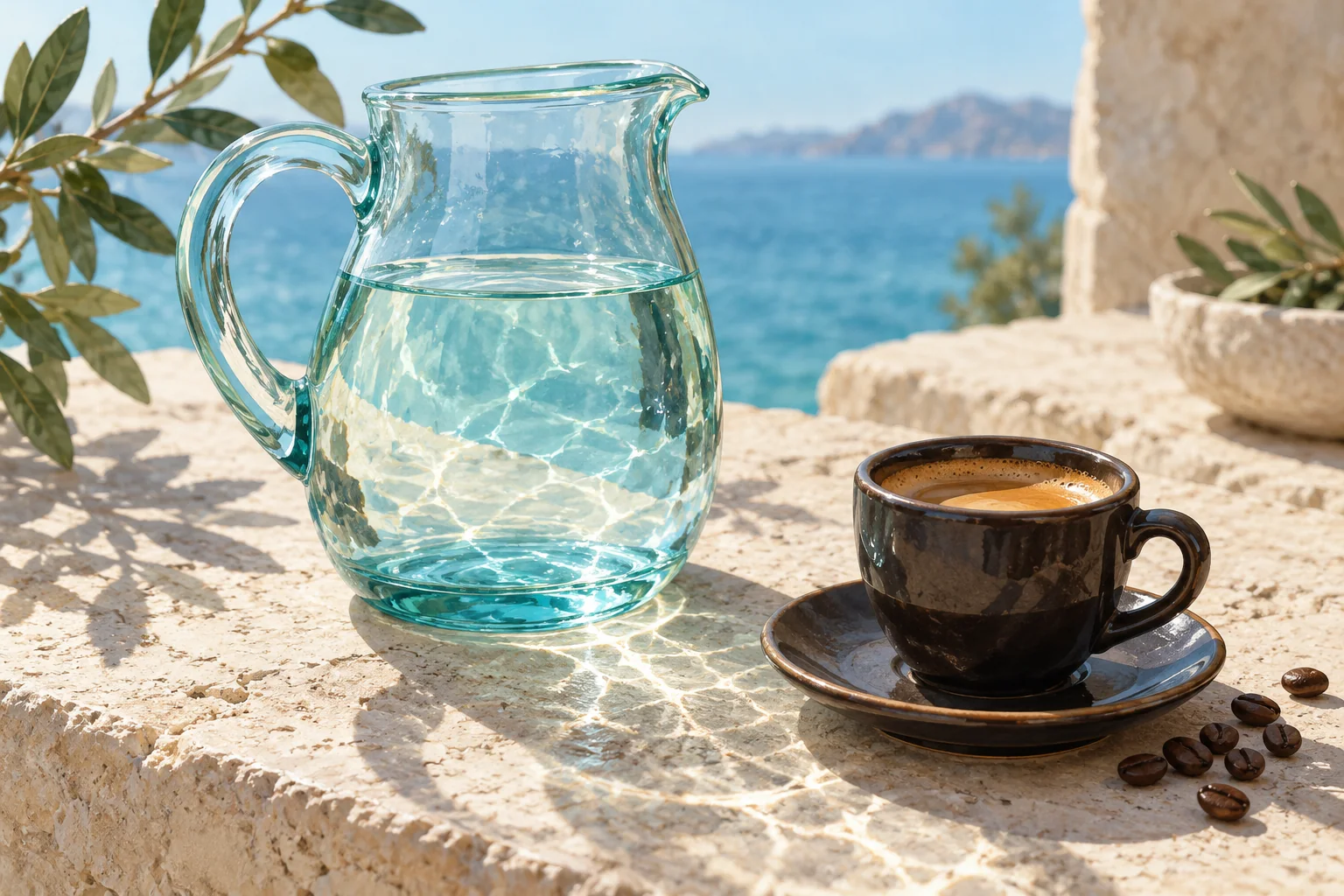
Complementary human studies · Published 2014 & 2017
You finish a coffee, then hear that you must drink another glass of water to “replace” what it removed. Does the mug really leave you with less fluid than before? The simple answer is that a beverage and the caffeine inside it are related, but different, questions.
A coffee is still mostly fluid
The useful issue is net hydration, not whether caffeine can ever affect urination. A drink supplies water while the body regulates fluid losses. Looking only at a trip to the bathroom can miss that balance.
This does not make coffee the best answer to every thirsty moment. It means the blanket claim that coffee never contributes to fluids is too strong. Keep the beverage, caffeine amount, habitual use and setting in view rather than treating all mugs as identical.
The direct coffee-versus-water comparison was reassuring
The UK study found no clear difference between coffee and water across several hydration measures in men who already drank coffee regularly. Total body water was among the measurements, which is more informative than relying on urine frequency alone.
The experiment did not recruit everyone or last for months. Its controlled diet and fluid conditions also differ from a day spent outdoors in the heat. We use it to answer the ordinary coffee-dehydration claim, not to prescribe the tested number of drinks.
A mug contains two questions
Fluid volume
How much water does the beverage supply?
Caffeine amount
Strength and serving can differ considerably.
Situation
Habitual use, heat and exercise are different settings.
A much stronger caffeine concentration changed the picture
In a small Greek trial, the higher-caffeine coffee produced more urine over three hours than water or the lower-caffeine coffee. The lower concentration did not clearly differ from water. All drinks had the same fluid volume, making caffeine amount part of the explanation.
That does not contradict the UK result: the comparisons and observation periods were different. It also does not create a universal threshold at which one person's drink suddenly becomes dehydrating. Individual responses, habits and circumstances remain relevant.
Why “one cup” is not a scientific amount
A small filter coffee, instant mug and large takeaway drink can differ in both volume and caffeine. Cups are convenient descriptions, but they hide what is being compared. A strong concentrate and a milk-based drink should not be assumed equivalent because both are called coffee.
The studies expressed caffeine partly relative to body weight to standardize the experiment. Those protocol numbers are not instructions to calculate and consume a personal dose. The practical point is simply to recognize that serving and strength are separate.
What about tea or Indian chai?
The two studies here directly tested coffee, not every tea or chai recipe. Do not copy their exact results onto a different drink. Likewise, milk and sugar change the nutritional content of a beverage without answering the hydration question on their own.
For a food journal, record the drink you actually had, including substantial additions where relevant. “Coffee” may mean black coffee one day and a sweetened large milk drink another. That distinction is useful for understanding the routine, even though the journal cannot assess your hydration medically.
Keep water easy to reach
You do not need to use a coffee experiment as a reason to make water complicated. Have water available, and think about the actual situation: ordinary desk work, exercise, heat, illness and a medically restricted fluid intake are not interchangeable. These resting adult experiments do not establish a hydration plan for all of them.
Caffeine can also affect sleep or comfort even when hydration looks adequate. A fluid result is not a verdict on every health effect of the drink. Read our coffee-timing explainer for that separate question rather than combining them into one “coffee is healthy” label.
The takeaway is reassuring but modest: your regular coffee does not automatically cancel its own fluid. Concentrated caffeine is a different comparison, and water remains a straightforward everyday option. Persistent symptoms or a prescribed fluid restriction need individual care, not a beverage rule from this article.
Evidence context: the UK study was funded by the Institute for Scientific Information on Coffee and disclosed one author's PepsiCo employment. The Greek authors declared no commercial or financial conflict; dedicated funding was not identified. Funding context is retained alongside the small-study limits.
Sources & further reading
Study years differ from this article’s publication date. We reviewed full primary papers and relevant supporting material; access limitations are kept out of efficacy claims. Original illustrations and diagrams; no publisher figures reproduced. Educational writing, not clinical review.
Published 11 October 2026 · Sources checked 11 October 2026. Suggest a correction.