 PoshanSense
Does eating slowly help you eat less? Texture matters too
A Dutch trial tested slower-to-eat foods for two weeks, while a UK pilot explored fullness. Eating pace may matter, but a timer is not a weight-loss guarantee.
Complementary human studies · Published 2019 & 2025
Lunch disappears between two meetings. You barely remember tasting it, then wonder whether slowing down would change how much you eat. That question has more behind it than “chew exactly 32 times”—but the food itself is part of the answer.
Make eating pace easier, not more complicated
A soft meal can be consumed quickly with little chewing; another takes longer even if you are not deliberately slowing down. A timer treats these as the same task when they are not. That is why texture is a useful part of the conversation.
Rather than turning every bite into a counting exercise, ask whether the meal gives you a chance to notice it. Are you swallowing while scrolling, eating standing up, or working through a familiar portion without looking? Describing the routine is a starting point, not a judgment about willpower.
A longer experiment changed the foods' texture
In the Dutch trial, people ate less energy on the slower-to-eat diet: a mean difference of 369 kcal per day, with a 95% interval of 221–517. Weight did not clearly differ between diets over the short study. The foods were selected for texture, so this was not simply an instruction to slow every meal by willpower.
Both diets were predominantly ultraprocessed. The result shows that foods within that broad category can differ in how quickly they are eaten. It does not establish that processing is irrelevant, or that this diet supplies a long-term weight-loss prescription.
What changed in the texture trial?
369 kcal/day lower intake with the slower-eaten diet
95% confidence interval: 221–517 kcal/day lower
Measured: energy intake over 14 days per diet.
Not demonstrated: a clear between-diet difference in weight change.
Does deliberately slowing down change fullness?
A small UK pilot compared a fixed meal eaten quickly or slowly. Some fullness, portion-memory and later-snack results favoured the slower group, but it was designed as a feasibility study, not a definitive treatment trial. The main meal's energy was fixed, and some participants enjoyed the faster version more.
That last detail matters. A routine that makes every meal tedious may not last. The goal is not to perform slowness perfectly; it is to understand whether the way you eat makes it harder to notice portions and satisfaction.
Why not copy the calorie difference?
The Dutch number belongs to a controlled comparison of provided diets in selected adults. It cannot be subtracted from your daily intake because you put down a fork between bites. Food availability, texture, energy density, social setting and the rest of the day could change the effect.
The diets also differed in some nutrient proportions despite efforts to match them. We therefore avoid claiming that texture alone explains every gram or calorie. Research can show an important contribution without proving that one feature controls the entire outcome.
Bring the idea to familiar meals
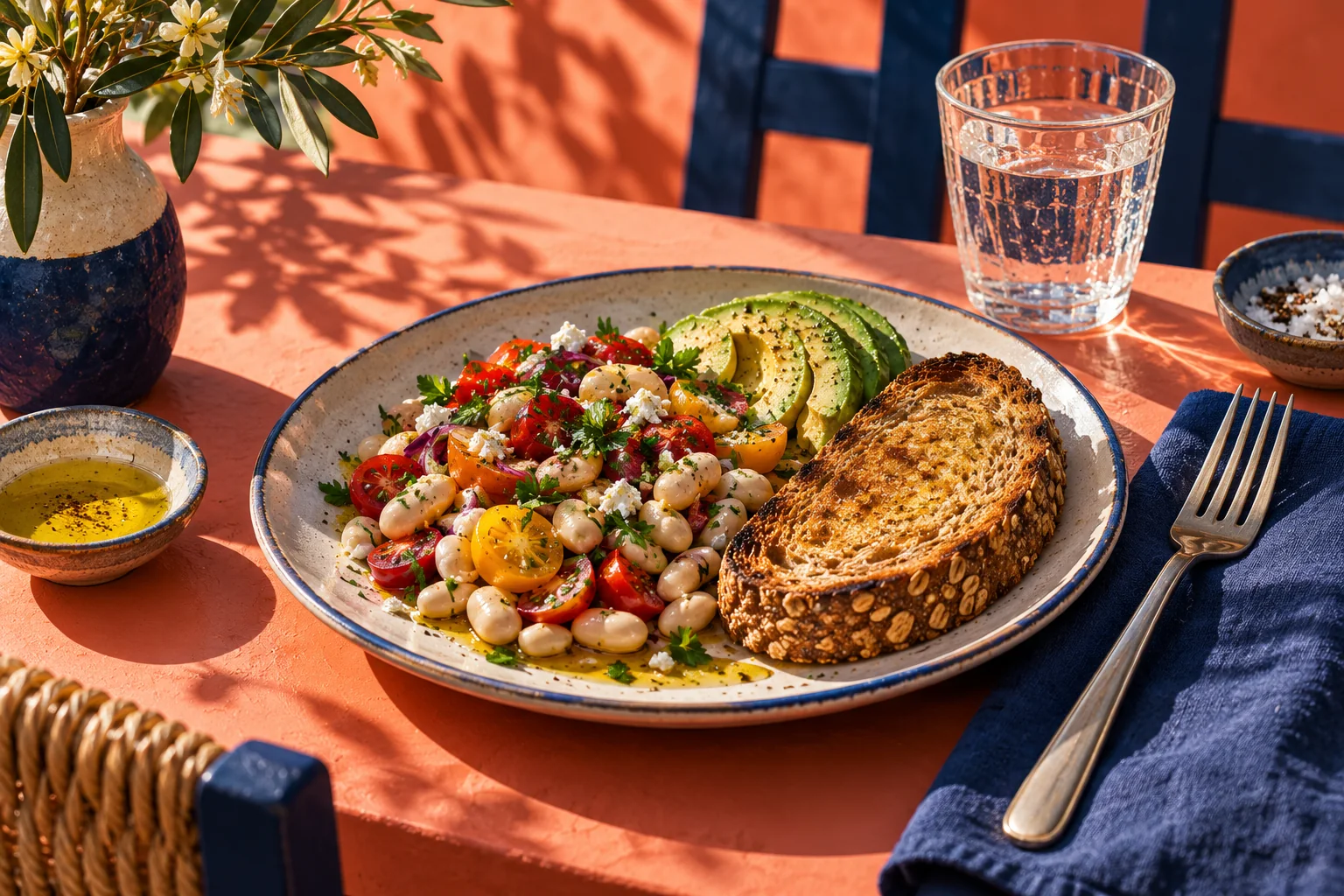
Whether it is roti with dal, a bean-and-vegetable lunch or a sandwich, notice the actual food form. A spoonable drink, soft snack and mixed meal may take very different times to finish. Do not assume that choosing something crunchy automatically makes it nutritionally preferable.
Some people need soft foods because of dental, swallowing or other difficulties. Texture experiments are not advice to make those meals harder to eat. Comfort and safety take priority, and medical dietary needs should remain individualized.
A small habit is easier to understand than a rule
If it fits your situation, give one regular meal a little attention: sit where you can see the serving, pause before adding more and notice when you feel satisfied. These are practical observation ideas, not the exact intervention tested in the trials. There is no reason here to prescribe a number of chews or a mandatory meal duration.
A journal can help you compare meals and servings without making speed another score to optimize. The useful answer is that pace and texture may influence intake, while the actual foods, amount and routine still matter. A smaller experimental intake is not automatically a proven long-term weight benefit.
Evidence context: the Dutch study was part of a public–private food research partnership and disclosed multiple food-industry relationships. The UK pilot reported research funding and disclosures in its full text. These findings are presented with their design limits, not as product claims.
Sources & further reading
Study years differ from this article’s publication date. We reviewed full primary papers and relevant supporting material; access limitations are kept out of efficacy claims. Original illustrations and diagrams; no publisher figures reproduced. Educational writing, not clinical review.
Published 11 October 2026 · Sources checked 11 October 2026. Suggest a correction.