 PoshanSense
Is home-cooked food actually healthier than eating out?
UK and US research links frequent home cooking with better diet patterns. The ingredients and portions still matter—and the evidence is not a cooking prescription.
Complementary human studies · Published 2014 · 2017
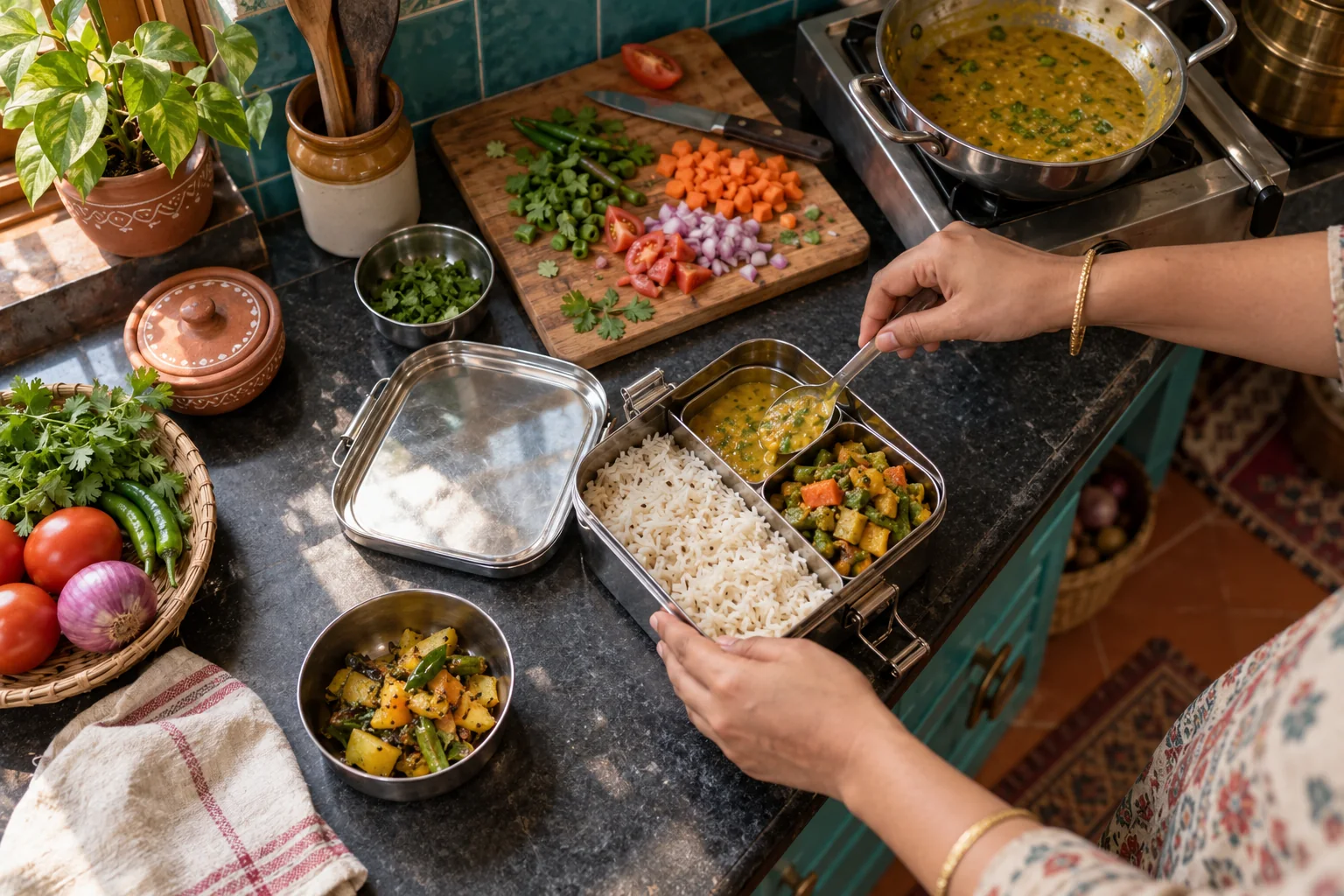
A homemade paratha and a homemade vegetable soup share a kitchen, but they do not share the same ingredients or portions. That is a useful starting point for the question “Is home food healthier?” Home cooking offers control; what you do with that control still matters.
Why cooking can help without being magic
When you prepare a meal, you can see the ingredients and choose the portion. You can also make a large, energy-dense meal. So a sensible answer cannot award every home meal a health badge or treat every restaurant meal as a failure.
The research question is slightly different: do people who eat home-cooked meals more often tend to have different diets and health measurements? Studies in the UK and US suggest they do. That is encouraging, but it is not the same as randomly assigning people to cook and watching their health change.
What the UK study contributes
The 2017 Fenland analysis associated more frequent home-cooked meals with better diet patterns and greater fruit and vegetable intake. Some weight-related measurements also differed. Other cardiometabolic associations were less clear after adjustment, so the conclusion should not expand into a promise about every health outcome.
People who cook frequently may differ in time, income, skills, household support and other routines. Researchers adjusted for several factors, but a cross-sectional study cannot remove every difference or establish which came first. Health-conscious people might cook more; cooking might support their choices; both can be true.
What does cooking change?
Ingredients
You can see and choose what goes into the meal.
Portions
The amount served still counts, wherever food is prepared.
Replacement
Compare the actual old and new meals—not their addresses.
Does the pattern appear elsewhere?
A US analysis of 9,569 adults linked more frequent household dinner cooking with lower reported energy, sugar and fat intake. The association appeared among people both trying and not trying to lose weight. That makes the question broader than dieting, while still leaving causality unresolved.
The US information combined an interview about household cooking with a day's dietary recall. It did not directly observe every recipe or prove that all the reported foods were cooked from scratch. Recall and reporting errors remain possible. The UK and US results support a useful pattern, rather than a precise number of dinners everyone must cook.
The useful comparison is what changes on your plate
Suppose cooking replaces a rushed dinner that never includes vegetables. That is a different change from replacing a balanced prepared meal with a homemade one containing similar foods. The word “home” does not explain the nutritional difference; the actual replacement does.
This is also why convenience ingredients need not make a meal pointless. Frozen vegetables, cooked beans or a simple ready component can fit a practical routine. This is an example of applying the question thoughtfully, not a result proving that a particular convenience product was tested in either study.
For an Indian reader, the same reasoning applies to familiar meals. The useful details are the dal, vegetables, rice or roti, cooking fats and servings—not whether a dish looks traditional enough. UK and US studies do not justify assigning a universal health score to an Indian recipe.
Make it workable rather than virtuous
Not everyone has equal access to time, equipment, affordable ingredients or help. A message that cooking is a moral obligation misses both the research limitations and ordinary life. A feasible routine is more useful than an elaborate menu that collapses after two days.
The answer is therefore a qualified yes: frequent home cooking often travels with better diet patterns and can make ingredients easier to manage. The goal is to improve the food routine, not simply increase the count of meals labelled homemade. Recording familiar meals and realistic servings can help you see that routine without turning cooking into another all-or-nothing test.
Sources & further reading
Study years differ from this article’s publication date. We reviewed full primary papers and relevant supporting material; access limitations are kept out of efficacy claims. Original illustrations and diagrams; no publisher figures reproduced. Educational writing, not clinical review.
Published 11 October 2026 · Sources checked 11 October 2026. Suggest a correction.