 PoshanSense
Is very hot tea or coffee bad for your health?
The concern is repeated exposure to very hot drinks, not a claim that every warm cup causes cancer. A prospective Iranian study puts the risk in context.
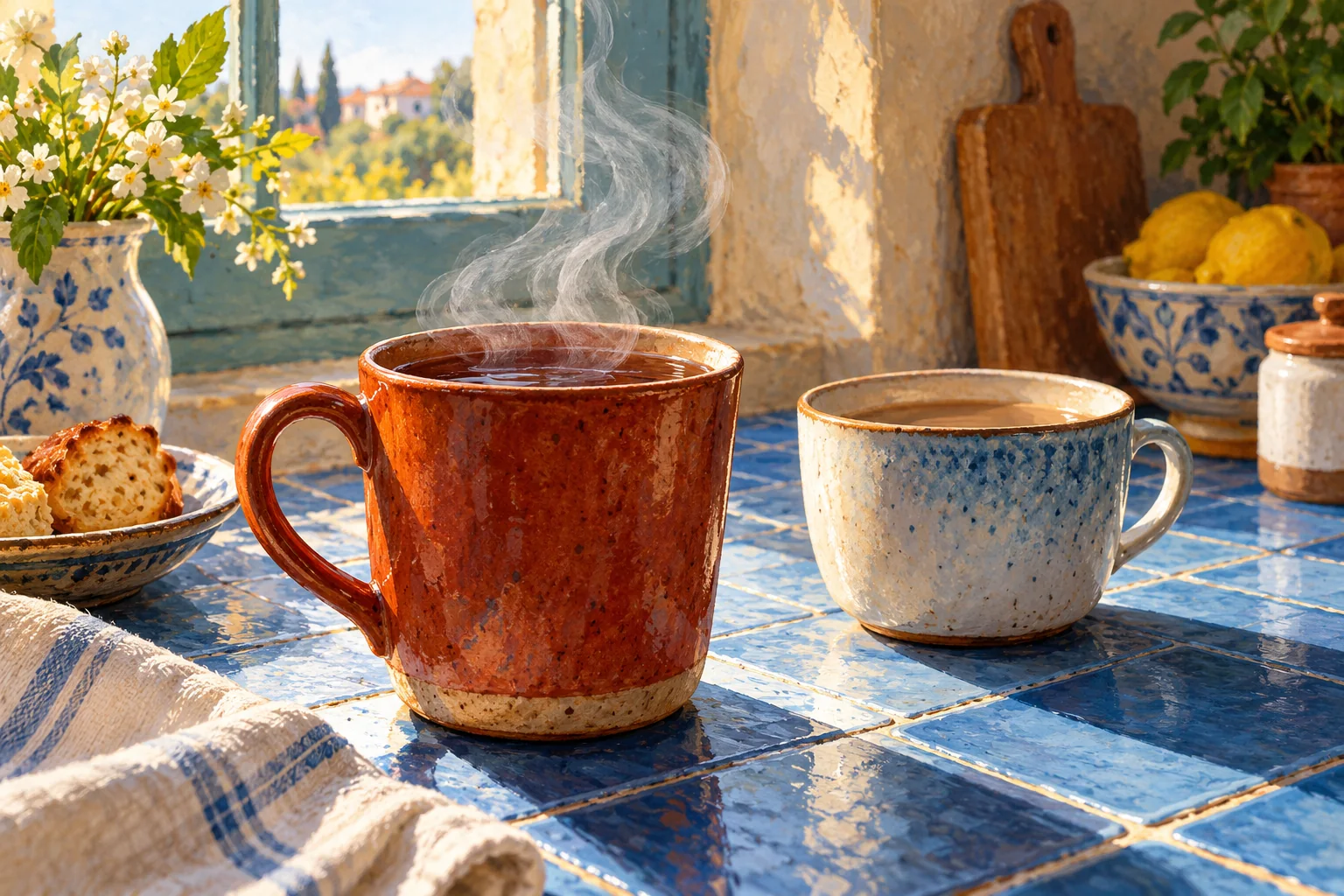
Long-term observational evidence · Published 2019–2020
Some people enjoy tea at the moment it is poured; others wait until the cup is comfortable to hold and sip. Temperature can feel like a matter of taste, yet it is also part of the health question.
The useful takeaway is simple: you do not need a painfully hot drink to get the experience of tea or coffee. Cooling the cup is a different decision from giving up the drink altogether.
Why temperature deserves its own question
Conversations about coffee often focus on caffeine, and tea conversations on antioxidants. Neither answers what happens when a beverage is consumed repeatedly at a very high temperature. The ingredient and the temperature are separate exposures.
The same distinction helps with headlines. “Hot tea and cancer” does not mean the study compared every tea drinker with every non-drinker, or that it found all kinds of cancer.
What did the long follow-up show?
In the Golestan analysis, measured tea temperatures of at least 60°C were associated with a higher rate of oesophageal squamous-cell carcinoma than the lower-temperature category: adjusted hazard ratio 1.41, with a 95% confidence interval of 1.10–1.81.
That is a relative comparison over follow-up, not a statement that 41% of hot-tea drinkers will develop cancer. It concerned a particular cancer subtype in a particular population.
Is very hot tea or coffee bad for your health?
Temperature
Very hot and comfortably warm are different habits.
Finding
Hotter tea was associated with higher ESCC risk.
Meaning
A relative association is not your absolute probability.
Choice
There is no demonstrated need to drink scalding hot.
Does this prove heat caused the cancers?
The prospective design helps: habits were assessed before the later diagnoses, rather than being reconstructed after someone became ill. Measuring temperature also improves on a question that simply asks whether a cup feels “hot”.
But people were not randomly assigned to habits for a decade. A hotter-drink habit can accompany other differences, and adjustment cannot remove every possible source of confounding. The evidence supports taking the habit seriously without pretending the cause has been experimentally isolated.
Can we apply it to every country?
The broad question travels well; the exact risk estimate does not automatically travel with it. Tea quantities, drinking styles, other exposures and underlying cancer rates differ between communities.
Nor did this tea study directly establish a coffee-specific effect. It is most useful as evidence about temperature, rather than a ranking of tea, coffee, chai or other drinks. Adding milk changes a cup, but this paper does not establish a protective recipe.
What should you change in practice?
Let a drink that feels scalding cool before sipping it. There is no need to race the kettle or finish a cup before it becomes comfortable.
Avoid converting an observational category into a precise personal safety boundary. Cups cool at different rates, and the paper did not prove that one fixed waiting time makes every serving safe. You can change the habit without buying a gadget or timing every drink.
The cohort received support from Iranian and international public and charitable cancer-research bodies; authors declared no conflicts. This AI-assisted explanation is not clinically reviewed. Persistent swallowing difficulty or another concerning symptom needs medical assessment, rather than an explanation based only on beverage temperature.
Sources & further reading
Study years differ from this article’s publication date. We reviewed full primary papers and relevant supporting material; access limitations are kept out of efficacy claims. Original illustrations and diagrams; no publisher figures reproduced. Educational writing, not clinical review.
Published 11 October 2026 · Sources checked 11 October 2026. Suggest a correction.