 PoshanSense
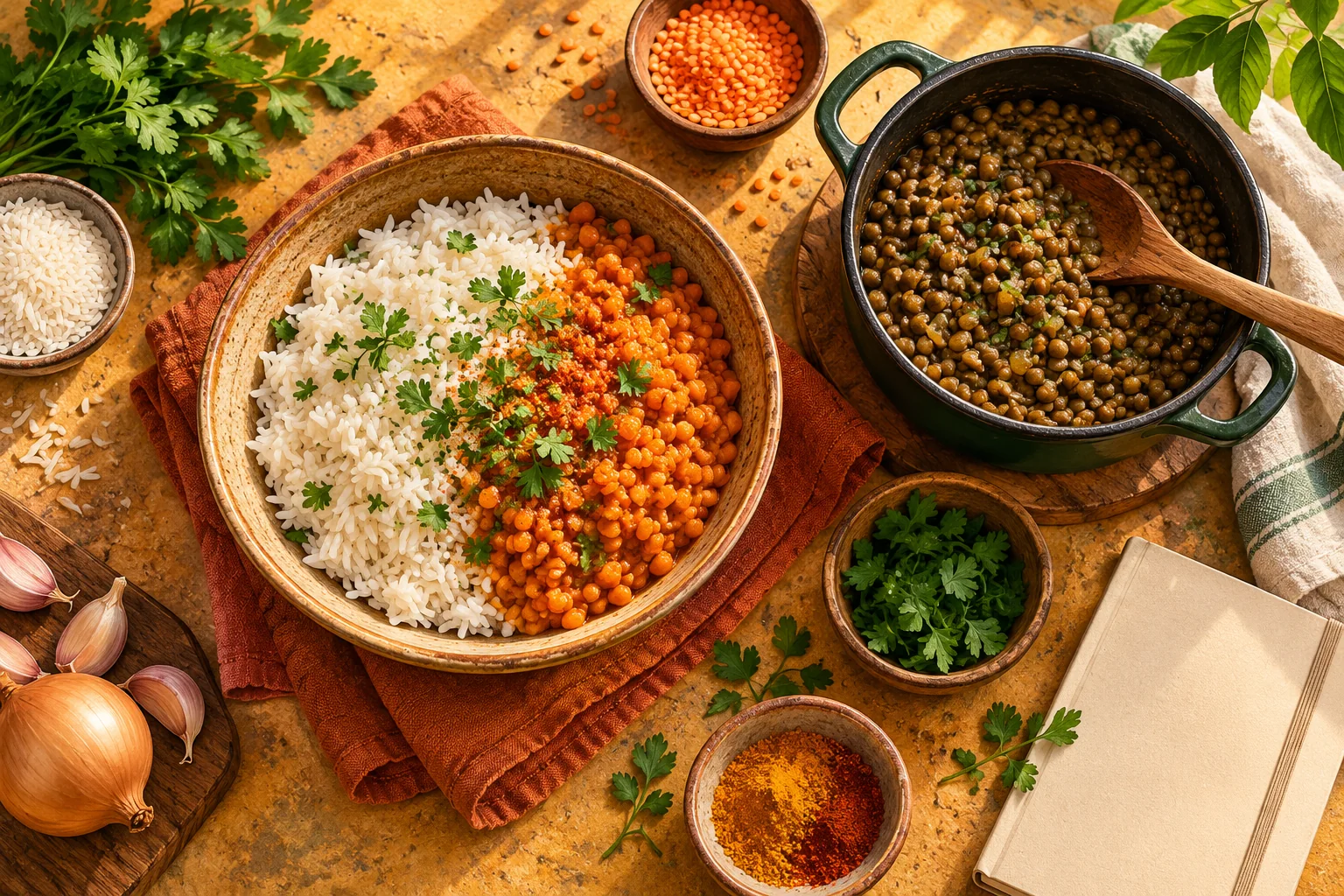
Can replacing some rice with lentils reduce the glucose rise?
Replacing part of rice with lentils can change an acute meal response. That is different from adding dal on top or promising diabetes prevention.
Controlled human meal experiments · Published 2018
Rice and lentils already share a plate in many kitchens. The research question is therefore appealingly practical: can adjusting that familiar combination change what happens after the meal?
The evidence gives a qualified yes for a controlled short-term response. It does not require abandoning rice, and it does not promise that every bowl with dal produces an identical number.
The important word is replacement
Adding a second dish to an unchanged portion and replacing some of the original food are different choices. Both may involve lentils, but they do not ask the same question about the complete meal.
Likewise, “half” can refer to food weight, plate area or carbohydrate content. Those are not interchangeable. This experiment used available carbohydrate, not a visual rule telling everyone to fill exactly half a bowl.
What changed after the test meals?
The 2018 Canadian experiment found lower glucose peaks with the lentil combinations. The two-hour glucose exposure was clearly lower for the small-green and split-red rice combinations; the large-green rice comparison was uncertain. Potato combinations also had lower glucose and insulin responses.
These were acute meal tests, not a demonstration of improved long-term diabetes outcomes. The meals were carbohydrate-matched, but not identical in calories, protein or fibre.
Can replacing some rice with lentils reduce the glucose rise?
Swap
Lentils replaced carbohydrate from rice or potato.
Response
Glucose peaks were lower in tested mixed meals.
Detail
One rice-lentil exposure comparison remained uncertain.
Limit
Not a diabetes treatment or an exact result for your dal.
What can you do with that answer?
Think about the complete plate you actually enjoy. Rice can remain part of a meal while lentils contribute to the combination. The useful question is what is being replaced and what else is present, rather than whether one ingredient is allowed.
You do not need to calculate the laboratory replacement to understand the distinction. Describe your usual rice portion and your lentil portion separately; that makes it easier to see whether you changed the balance or simply added more food.
Cooking style also belongs in the picture. A plain tested lentil variety and a finished dal with additional ingredients are different preparations. The study does not establish one universal response for every recipe, country or serving.
Does it prove lentils prevent diabetes?
No. A lower post-meal glucose response is a narrower outcome than disease prevention. The experiment excluded people with impaired glucose tolerance from the analysed groups, so it cannot establish treatment effects for them.
Nor does an acute difference show a guaranteed effect on bodyweight, appetite or long-term glucose control. Each of those questions needs an appropriate measurement and follow-up.
People managing diabetes should keep their individual care plan in view. A food experiment cannot decide medication changes or a personal carbohydrate allowance.
Do all lentil varieties work identically?
The results did not establish a clear difference between the tested varieties, but that is not proof that every pulse and preparation is equivalent. The experiment used specific cooked foods and a controlled comparison.
A larger glucose change in one reported condition is also not automatically the best everyday choice. Taste, availability, cost and the rest of the meal influence whether a combination is useful enough to repeat.
Keep the familiar meal familiar
The practical insight is a possible benefit from changing the mix, without making rice a villain or dal a treatment. That is a more useful starting point than expecting one bowl to reproduce a laboratory percentage.
Agriculture and Agri-Food Canada and Pulse Canada supported the work; Pulse Canada and Alliance Grain Traders provided lentils. This explanation is AI-assisted and not clinically reviewed. The study informs the food question while leaving individual clinical decisions where they belong.
Sources & further reading
Study years differ from this article’s publication date. We reviewed full primary papers and relevant supporting material; access limitations are kept out of efficacy claims. Original illustrations and diagrams; no publisher figures reproduced. Educational writing, not clinical review.
Published 11 October 2026 · Sources checked 11 October 2026. Suggest a correction.