 PoshanSense
Is low-sodium salt better—or should you simply use less salt?
Potassium-enriched salt has meaningful trial evidence, but it is not suitable for everyone. Separate replacing table salt, reducing sodium in food and individual safety.
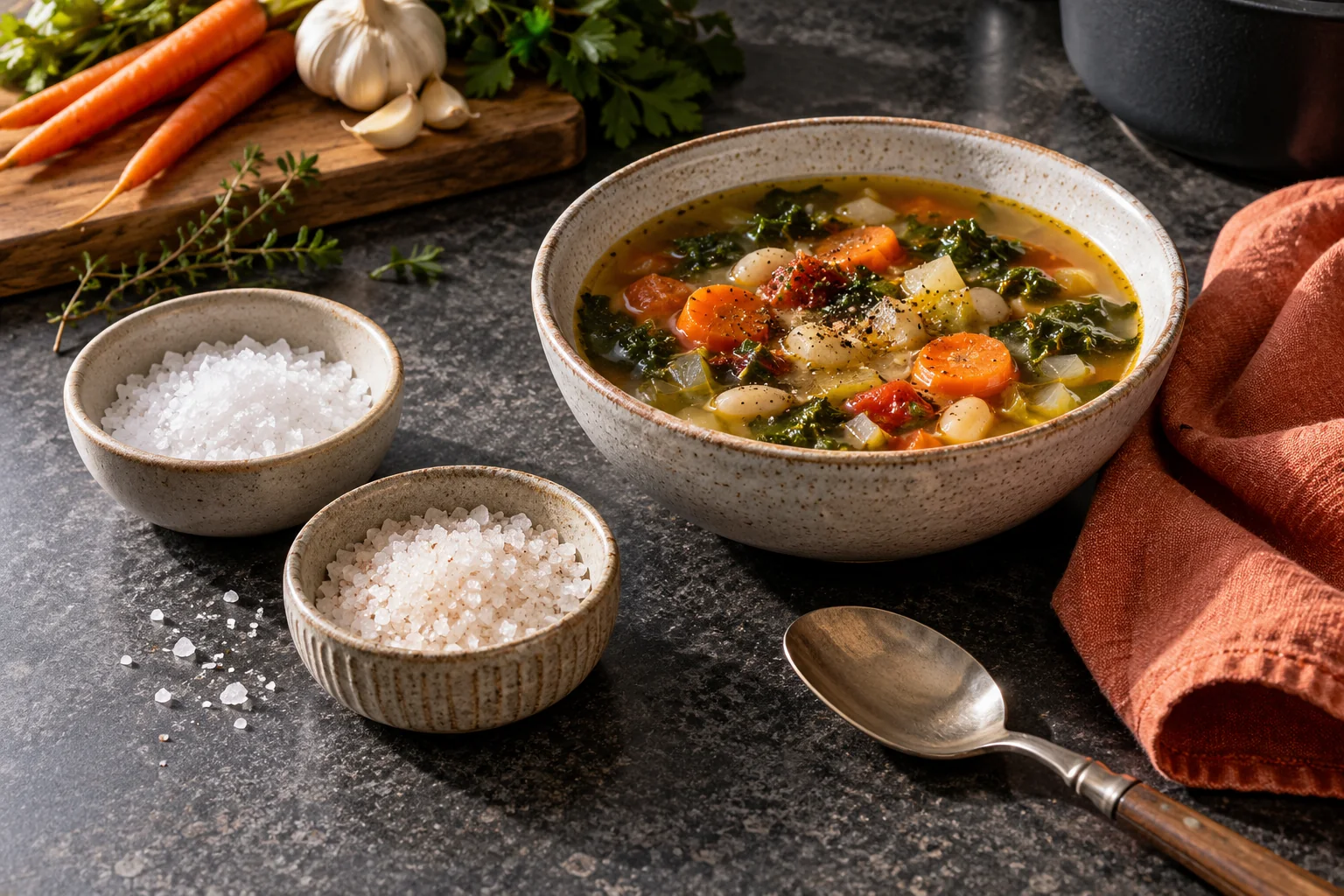
Complementary human studies · Published 2021, 2023 & 2025
A packet says “low sodium” and the price is higher. Is it a useful change, or another kitchen upgrade with an oversized promise? The answer depends on what the product contains, how you normally get salt, and whether extra potassium is appropriate for you.
It changes the salt, not the whole diet
Many lower-sodium salts replace some sodium chloride with potassium chloride. That reduces sodium for the same quantity of the mixture while adding potassium. It is different from simply putting a smaller quantity of ordinary salt into a dish.
Those approaches are not rivals. You can reduce sodium across the diet without buying a substitute. A substitute may help with salt added during cooking, but it cannot change the composition of bread, sauces, ready meals or restaurant dishes already made elsewhere.
What is the strongest outcome evidence?
The Chinese trial measured strokes, not just a blood-pressure marker. Stroke rates were 29.14 versus 33.65 per 1,000 person-years, favouring substitution; the rate ratio was 0.86, with a 95% confidence interval of 0.77–0.96.
That is meaningful evidence in a higher-risk rural population. It is not a prediction of your personal benefit. Both sodium reduction and additional potassium changed together, so the result cannot isolate which was responsible for how much of the effect.
Nor did a lack of a clear difference in clinical hyperkalaemia establish safety for everyone: susceptible households were excluded and routine blood-potassium testing was absent. A shopping recommendation should retain that boundary.
Can less sodium help without a salt substitute?
A 2023 US crossover study provides complementary evidence. Among 213 people who completed both diet visits, a week of prepared lower-sodium meals produced lower blood pressure than a high-sodium week. The first-week between-group systolic difference was about 8 mm Hg, with a confidence interval of 4–11.
The diet order was prospectively allocated, and the whole supplied menu differed—not only a shaker. It was a short study, not a test of strokes or a reason to stop medication. The Chinese and US results answer related questions without being one head-to-head competition.
Two levers—and one safety check
Less sodium overall
Look at the usual foods and condiments, not only the shaker.
Replace added salt
A potassium-enriched product changes the composition of the salt you use.
Check suitability
Kidney function and medicines can make additional potassium unsafe.
Keep quantities sensible
A lower-sodium label does not make unlimited use equivalent to the trial.
Who should not make a casual switch?
The WHO’s 2025 recommendation is conditional and aimed at adults in general populations. It excludes kidney impairment and other circumstances that compromise potassium excretion. It does not apply to children or pregnant women because evidence was insufficient or very uncertain.
Medicines and supplements matter too. The guideline scope names potassium-sparing diuretics and potassium supplements among relevant circumstances. If you have kidney disease, take relevant medication, or have been given a potassium restriction, ask the clinician or pharmacist who knows your situation before choosing a potassium-enriched product.
A household choice also affects anyone sharing the cooking. Do not assume that a mixture suitable for one adult is suitable for every family member. This article cannot determine eligibility from an age, a blood-pressure reading or a package label.
Why your country changes the practical question
If much of your sodium comes from salt added at home, the shaker is an obvious place to look. If it mostly arrives in manufactured food or meals out, that same swap leaves a large part of the routine untouched. The Chinese trial should not be copied into every food environment without that distinction.
The FDA explains that sodium comes from many foods and that a product need not taste conspicuously salty to contribute. Compare the amount per serving and the portion you actually eat. Similar thinking is useful with bread in Europe, packaged lunches in the US or condiments in another kitchen.
Labels may report sodium or salt, depending on the market. Compare like with like rather than treating those words as numerically interchangeable. Keep the packet available if you are discussing a product with a healthcare professional.
The practical answer
Start by understanding your usual sodium sources. A suitable potassium-enriched salt may be one tool, while using less added salt and reviewing packaged foods address other parts of the same problem. None requires believing that a particular brand can prevent disease.
Choose the next step around your routine and medical context. The headline “better salt” hides a question about the entire diet and another about individual safety. Answering both is more useful than treating a substitute as a universal licence to use more.
Evidence context: SSaSS reports Australian public research funding; some study salt was donated by a manufacturer. The US study reports NIH and American Heart Association support and a disclosed association grant. The primary reports are linked above.
Sources & further reading
- China · Salt Substitute and Stroke Study (2021)
- 2023 US sodium crossover primary paper
- WHO 2025 recommendation and exclusions
- WHO: scope of salt-substitute guidance
- FDA: sodium sources and labels
Study years differ from this article’s publication date. We reviewed full primary papers and relevant supporting material; access limitations are kept out of efficacy claims. Original illustrations and diagrams; no publisher figures reproduced. Educational writing, not clinical review.
Published 11 October 2026 · Sources checked 11 October 2026. Suggest a correction.