 PoshanSense
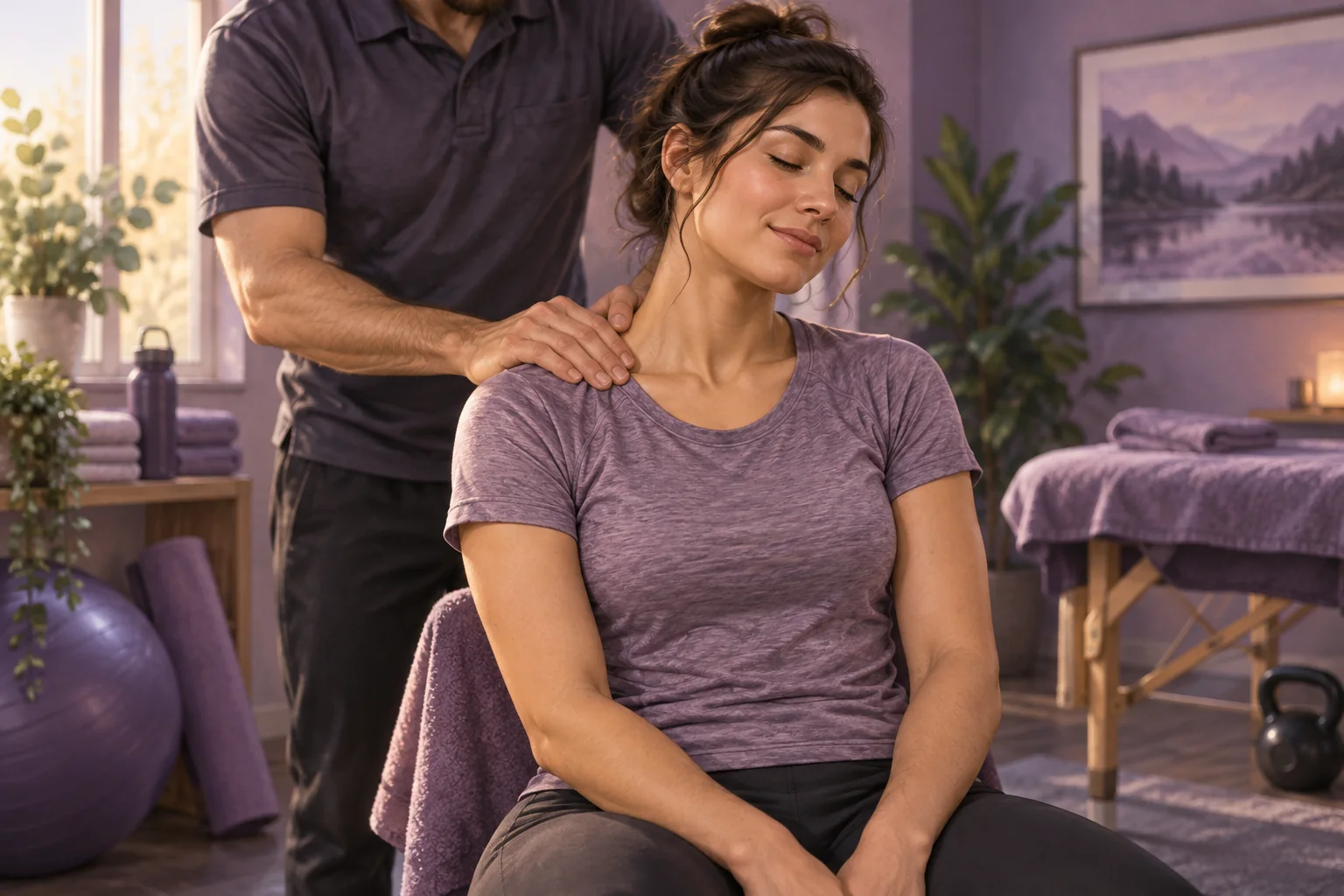
Does a sports massage reduce muscle soreness after exercise?
Small trials suggest less delayed soreness after massage. Feeling better does not guarantee recovered strength or faster tissue healing.
Research explained · Published 2017
The morning after unfamiliar exercise, stairs can become an unwelcome surprise. A massage sounds appealing because it offers something immediate: less discomfort. The useful question is whether that relief means your muscles are ready for everything again.
Can it make the next day feel easier?
The research gives that possibility some support. But feeling less sore and being fully recovered are not the same thing. A person can rate discomfort more favourably while a strength test changes little.
Separating those goals makes the buying decision clearer. Are you paying for a relaxing, comfortable experience, or expecting a guaranteed improvement in sporting performance?
How convincing was the soreness result?
In the 2017 review, massage groups reported less soreness at the later measurements. Immediate post-exercise soreness did not clearly improve. The later benefits were pooled across different techniques, muscles and comparison groups.
Most trials involved deliberately strenuous or unfamiliar muscle-lengthening exercise. Their results should not be transferred automatically to every gentle walk, chronic painful condition or sporting injury.
Participants knew whether they received massage. Only two trials blinded outcome assessors. Expectations can influence subjective ratings; that does not make relief imaginary, but it reduces confidence about the size of a specific massage effect.
Does less soreness mean more strength?
Not reliably. Some strength estimates favoured massage, but the result for peak torque lost its statistical advantage when one trial was removed. Results also differed by measurement and follow-up time.
That sensitivity matters more than a headline saying massage “improved muscle performance”. It suggests the answer depends on a small and variable evidence base, rather than a dependable performance boost.
Blood creatine kinase also changed in some analyses. A blood marker is not a direct demonstration that massage repaired muscle fibres faster, and it cannot tell an individual whether they should resume demanding exercise.
Feel better versus recover fully
Soreness
Ratings tended to improve in small trials.
Strength
Results were less consistent across measures.
Mechanism
Blood markers do not establish faster tissue healing.
Decision
Comfort is a reasonable goal; injury care is separate.
Is there one best time to book it?
The review reported different results at 24, 48 and 72 hours, but those comparisons do not establish an optimal appointment time. Different trials and protocols contribute to each estimate. A stronger average result in one subgroup is not the same as randomly comparing identical massages at different times.
Likewise, the studies do not prove that a painful or especially deep massage works best. Their findings should not become an instruction to tolerate more pressure.
What about a roller at home?
A 2019 foam-rolling review found modest soreness and flexibility benefits, with uncertain performance recovery. That is a separate intervention, rather than proof that any form of pressure delivers the same effect.
NCCIH advises discussing suitability with a qualified practitioner and not delaying medical care because of massage. Ordinary exercise soreness and an injury are different questions.
The review reported National Natural Science Foundation of China support and no commercial or financial conflicts. Educational article; not clinically reviewed.
Sources & further reading
Study years differ from this article’s publication date. We reviewed full primary papers and relevant supporting material; access limitations are kept out of efficacy claims. Original illustrations and diagrams; no publisher figures reproduced. Educational writing, not clinical review.
Published 11 October 2026 · Sources checked 11 October 2026. Suggest a correction.