 PoshanSense
Are millets always low GI? Ragi, bajra and millet labels need context
Millets can diversify meals, but preparation and portion matter. Indian food tests and Chinese research explain why a millet label is not a blood-sugar guarantee.
Complementary human studies · Published 2016, 2018, 2020 & 2021
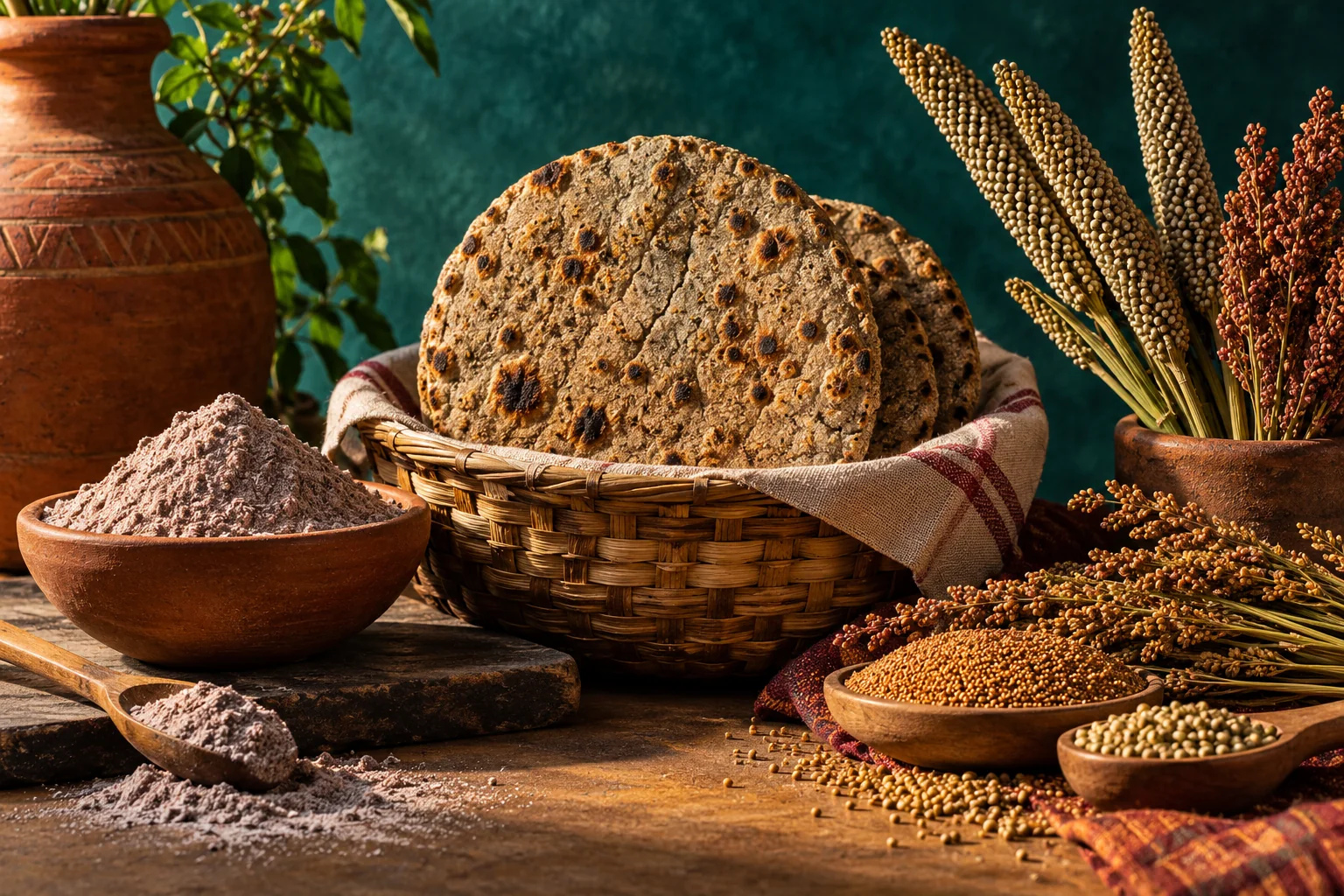
Ragi cookies, bajra roti, millet noodles: the word appears on foods that have very little else in common. That is the first clue. A grain can be worth eating without every product made from it sharing the same nutritional effect.
What can millets bring to the table?
They can offer variety and another way to build familiar meals. But choose the food you want to eat, not a promise that its name will cancel the rest of the recipe. A sweetened ragi drink, a plain millet serving and a biscuit made with mixed flours are different foods.
For readers outside India, the same principle applies to sorghum, teff and other millet-family products. A traditional grain is not automatically equivalent to a highly processed snack made from it. The ingredient list and serving are still useful information.
The food test that challenges the blanket claim
The Chennai study found high GI values—around 89—for the particular pressure-cooked little and foxtail millets tested. It also found that many market samples were polished, despite shoppers' assumptions. Those results do not make all millets “bad”; they show why “millet equals low GI” is unreliable.
The tests used portions containing a fixed amount of available carbohydrate after an overnight fast. They did not measure ordinary mixed lunches or long-term disease outcomes. A different preparation may behave differently, which is exactly why the recipe belongs in the answer.
A grain name does not describe the finished food
Which millet?
Ragi, bajra, little millet and foxtail are not one identical grain.
How prepared?
Polishing, milling and cooking change the food.
What recipe and portion?
A plain serving and a sweet biscuit ask different questions.
Other preparations produced different findings
An Indian foxtail-millet dosa study found a lower post-breakfast glucose response than its rice-dosa comparison. That is evidence for a particular prepared breakfast, not a licence to extend the result to all varieties, brands or cooking methods.
A Chinese study also reported improvements in glucose-related markers after a 12-week millet routine. Because it lacked a parallel control group, it could not isolate millet from other changes or natural variation. Its participants should not be treated as a randomized prevention trial.
The 2021 review found promising results across varied millet foods, but collected a mixture of grains and study designs. A favourable average cannot overrule a direct food test or tell you the GI of an untested product.
How should you read a millet packet?
Start with what it is. Is millet the main grain or a small addition? Is the food plain, sweetened or rich in added fat? What is the suggested serving, and how does it compare with what you eat? These questions work for biscuits, cereal, flour mixes and ready meals.
“No refined sugar” does not settle total sugar, and “ancient grain” does not establish a clinical benefit. Likewise, gluten-free is a separate property from low GI. Useful labels answer a defined question; decorative claims often invite a much broader conclusion.
Do you need to replace all rice and wheat?
The research here does not require that. Variety can be introduced through recipes you enjoy and can prepare regularly. If a millet roti fits your lunch, it can be one option alongside other grains. Pair the choice with attention to portions and the foods around it, rather than treating one grain as a complete solution.
A grain rotation is also easier to describe honestly than a “diabetes-proof” kitchen. These studies do not show that millet reverses a condition, and their test amounts are not personalized targets. People managing diabetes need their existing care plan, not a packet slogan or a copied experiment.
Evidence context: the Chennai food-testing study reported no financial support or conflicts; the dosa study was supported by its diabetes research centre. The Chinese study reported public agricultural research funding and no conflict. The review includes millet-focused researchers and disclosed its funding; findings remain preparation-specific.
Sources & further reading
- India · Chennai millet testing, 2020
- Foxtail millet dosa study
- Chinese foxtail millet before-and-after study
- 2021 millet evidence review
Study years differ from this article’s publication date. We reviewed full primary papers and relevant supporting material; access limitations are kept out of efficacy claims. Original illustrations and diagrams; no publisher figures reproduced. Educational writing, not clinical review.
Published 11 October 2026 · Sources checked 11 October 2026. Suggest a correction.