 PoshanSense
Can mushrooms replace meat as a protein source?
Mushrooms can work as a culinary swap, but a US feeding experiment shows why matching protein requires very different amounts. Texture is not nutritional equivalence.
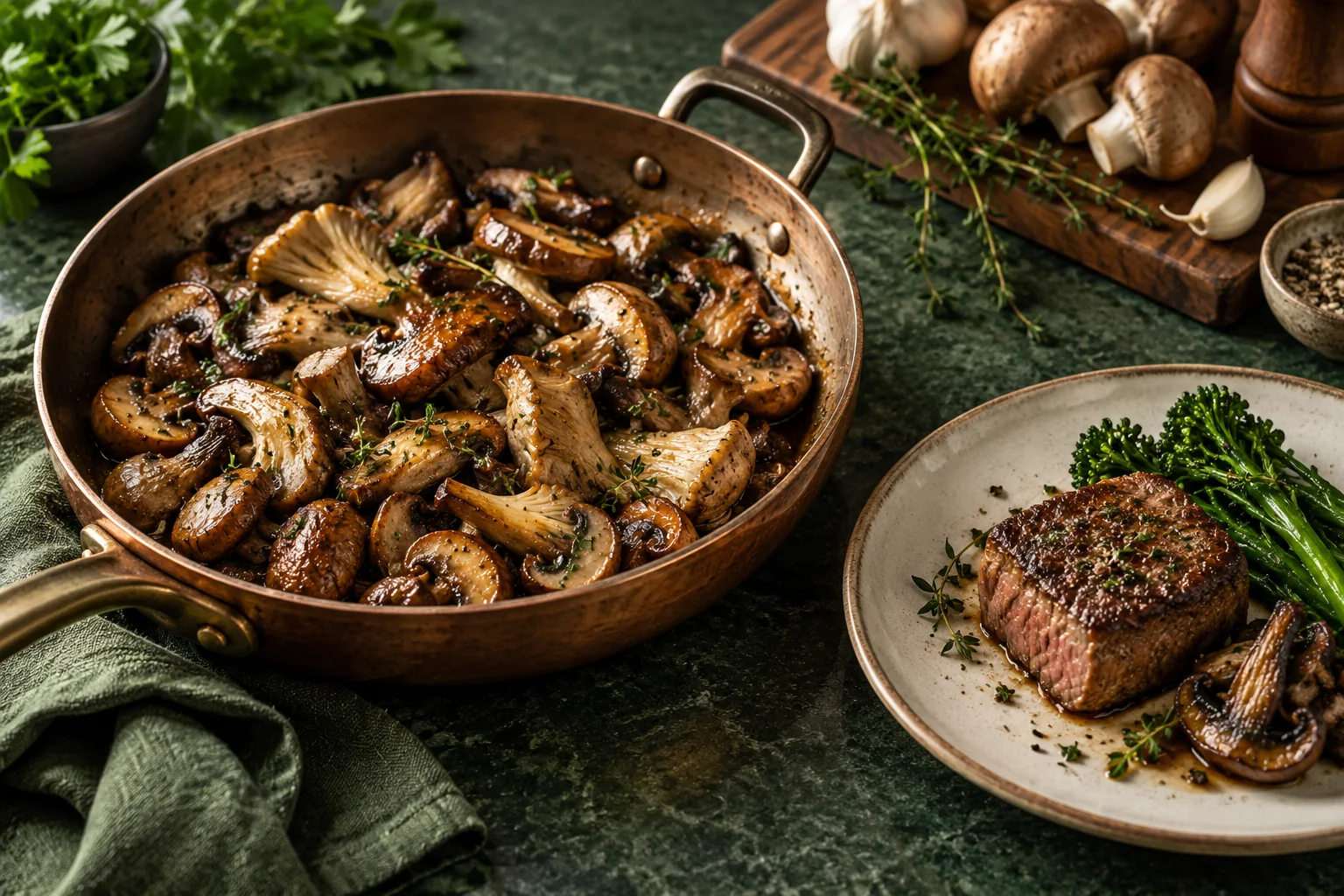
Research explained · Published 2018
A mushroom burger or a pan of mushrooms can feel satisfyingly substantial. That makes mushrooms a useful cooking option, but also creates a common mix-up: if they occupy the place meat used to occupy, do they supply the same protein?
The answer is no, not weight for weight. Food can be an excellent culinary replacement without being a nutritional duplicate. Keeping those two ideas separate lets you enjoy the recipe while checking whether the rest of the meal does the job you need.
A protein-matched trial makes the distinction visible
In a Minnesota feeding experiment, researchers wanted to compare mushrooms with beef while matching protein. They therefore used 226 g raw mushrooms, prepared for serving, against 28 g lean ground beef per meal.
The raw mushroom weight was about eight times the beef weight. Cooking changes weight and texture, so this is not a picture of two equal cooked plates. It is a clear example of why a similar place in a recipe does not mean equal protein in the same amount.
The experiment was about the gut, not muscle
Participants ate the assigned foods twice daily during each ten-day period. The researchers looked at gut symptoms, stool and selected microbiota measures. They did not test whether replacing a normal meat portion with a normal mushroom portion maintained muscle or met someone’s full nutritional needs.
Some stool and bacterial measures differed. Stool frequency and consistency did not show clear improvements, and many metabolite comparisons did not differ. Early gas symptoms were greater with the mushroom condition. These mixed findings should not be compressed into “mushrooms improve gut health”.
No baseline stool sample was collected, and the intervention was short. The Mushroom Council funded the study; the authors declared no conflicts and reported that the funder had no role in the work. The result still needs its design limits.
Build the replacement meal, not just the replacement ingredient
If mushrooms replace a little meat within a larger dish, the rest of that dish may already provide protein. If they replace the main protein item, the question becomes more important. Look at the full meal rather than expecting mushrooms alone to copy everything the removed food supplied.
That might mean checking whether the meal includes another protein food you enjoy, such as beans, lentils or tofu. The point is not to prescribe one universal plate, but to avoid making a nutritional decision using texture alone.
The same logic works across cuisines. A mushroom filling, stew, pasta sauce or rice dish can be delicious. Its nutritional contribution depends on the recipe, serving and other foods eaten with it. A plant-based description does not automatically tell us those details.
A swap needs more than a similar shape
Texture
Mushrooms may fill a culinary role in a familiar recipe.
Protein
The trial matched protein using very different food weights.
Complete meal
Other ingredients determine what the replacement meal supplies.
Evidence limit
Gut measurements over ten days do not prove muscle or long-term health benefits.
Do not turn the research amount into a target
The large mushroom quantity was chosen to create a controlled comparison. It was not a recommendation to eat that amount twice a day, and the study did not establish that more mushrooms produce better outcomes. Its gut-symptom findings are another reason not to treat the tested serving as a challenge to copy.
A practical food journal can distinguish the ingredients in your actual meal. It is less useful if a mushroom dish is entered as an equivalent meat portion just because the recipes look similar. Use the correct food and amount, then include accompanying ingredients.
Protein is also not the only nutritional question. This experiment matched one feature while leaving the foods different in other respects. Matching protein does not prove that every vitamin, mineral or dietary role is matched too.
You can choose mushrooms for their taste, variety and usefulness in cooking. Just describe the swap accurately: they can replace meat in a recipe, while the protein replacement needs to be assessed across the complete meal. Enjoying a good dish and checking its nutritional role are entirely compatible.
Sources & further reading
Study years differ from this article’s publication date. We reviewed full primary papers and relevant supporting material; access limitations are kept out of efficacy claims. Original illustrations and diagrams; no publisher figures reproduced. Educational writing, not clinical review.
Published 11 October 2026 · Sources checked 11 October 2026. Suggest a correction.