 PoshanSense
Can you cook with extra virgin olive oil? Heat changes it, not all at once
Spanish cooking experiments show that heat reduces some olive-oil phenols and moves others between ingredients. Understand what chemistry can—and cannot—say about health.
Research explained · Published 2019 & 2020
An expensive bottle marked “extra virgin” can create an unnecessary kitchen dilemma: is it wasted the moment it touches a hot pan? The better question is what changes during cooking, and whether the evidence measures a meal or merely the oil.
Heat does change some compounds
A Spanish laboratory experiment found lower total phenolic content after heating an olive-oil batch under simulated sautéing conditions. The reduction was roughly 40% at the lower temperature and 75% at the higher temperature used.
That sounds large because it is a change in a particular collection of compounds. It is not a statement that the oil lost 75% of its overall nutritional value, nor that the resulting meal became dangerous. The scientists did not feed the oil to people or measure disease outcomes.
The pan experiment was not a full dinner
The lead experiment heated oil without food. This helped researchers isolate the effect of temperature and time. At home, vegetables, water, movement and the size of the pan can alter what happens.
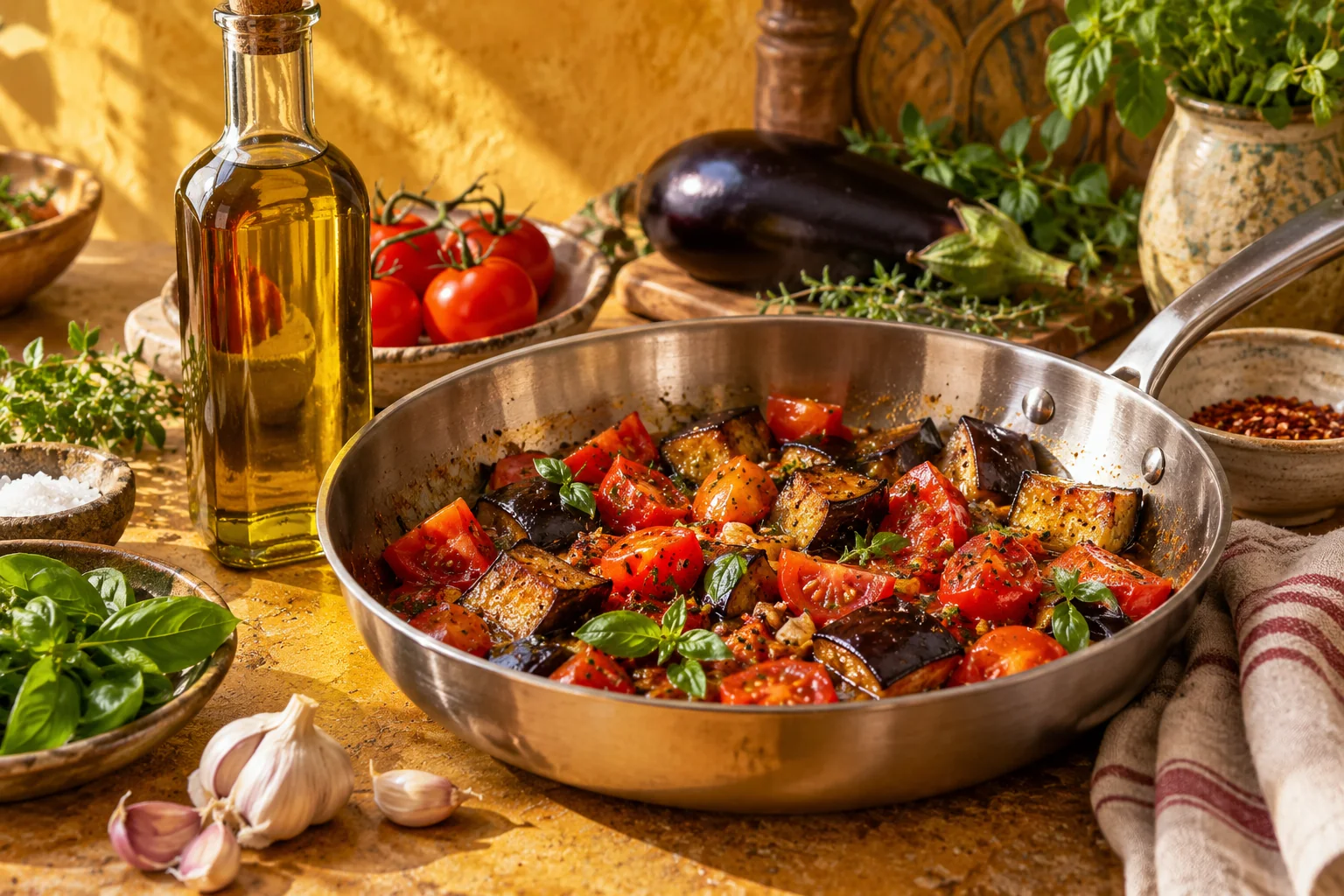
A separate Spanish experiment cooked potato, pumpkin, tomato and aubergine using different methods. Some oil phenols decreased, but compounds also moved between vegetables, oil and cooking water. The chemical picture was more complicated than a simple “all antioxidants destroyed” headline.
That study still measured laboratory antioxidant assays and compounds, not a person's future health. It does not establish that deep frying is the healthiest method because one assay looks favourable, or that eating all the cooking oil is a health requirement.
What heating changed in one oil batch
Unheated
Reference phenolic content before cooking.
120°C
Total phenols were about forty percent lower.
170°C
Total phenols were about seventy-five percent lower.
Meaning
Chemical retention, not a measured change in heart health.
Antioxidant content is not a score for the whole meal
A laboratory assay asks how a sample behaves under particular chemical conditions. It is useful for understanding the food. It cannot directly rank the benefits of every cooked meal or replace evidence from human dietary research.
Likewise, phenols are not the only feature of an oil. The experiments focused on a chosen part of its composition. They did not show that all properties disappeared, compare every affordable cooking oil, or demonstrate that raw olive oil is always the best choice.
Think about the meal you actually want to make
Olive oil can be part of a dressing, a sauté or another familiar preparation. Taste, affordability and the amount used are practical considerations. A bottle does not need a therapeutic justification to belong in the kitchen.
Using some oil in a vegetable dish is different from adding large amounts because the label says antioxidant. Cooking methods also change the overall meal, including its texture and energy density. A chemistry result does not erase those changes.
Do not turn study temperatures into personal targets
The listed temperatures describe an experiment, not a recommended home schedule. The paper did not validate unlimited reheating, smoking oil or every frying practice. Different batches begin with different phenolic profiles, and real pans are not identical laboratory conditions.
Read any strong product claim with that in mind. “Retains certain phenols in this test” is narrower than “protects your heart better when cooked this way”. Moving from one claim to the other requires evidence that these papers did not provide.
The practical answer
Cooking with extra virgin olive oil is not automatically pointless. Heat can change its phenols, while cooking with ingredients can redistribute compounds. Neither process justifies a dramatic all-or-nothing nutrition story.
Choose an oil and method that work for your food, and keep the whole dish in view. The strongest takeaway from these studies is understanding what heat changes—not searching for a pan setting that guarantees health.
Evidence context: the 2020 study received Spanish public and Brazilian research support; one author disclosed lecture fees and travel support. The 2019 study reported no external funding or conflicts. Educational information; not clinically reviewed.
Sources & further reading
- Spain · domestic-sautéing chemistry study (2020)
- Vegetable-cooking and olive-oil chemistry experiment
Study years differ from this article’s publication date. We reviewed full primary papers and relevant supporting material; access limitations are kept out of efficacy claims. Original illustrations and diagrams; no publisher figures reproduced. Educational writing, not clinical review.
Published 11 October 2026 · Sources checked 11 October 2026. Suggest a correction.