 PoshanSense
Do you have to cut out carbohydrates if you have PCOS?
PCOS does not come with a universal ban on rice, roti or fruit. Diet quality, preferences and the actual comparison matter.
Research explained · Published 2013 & 2023
Rice is not a diagnosis
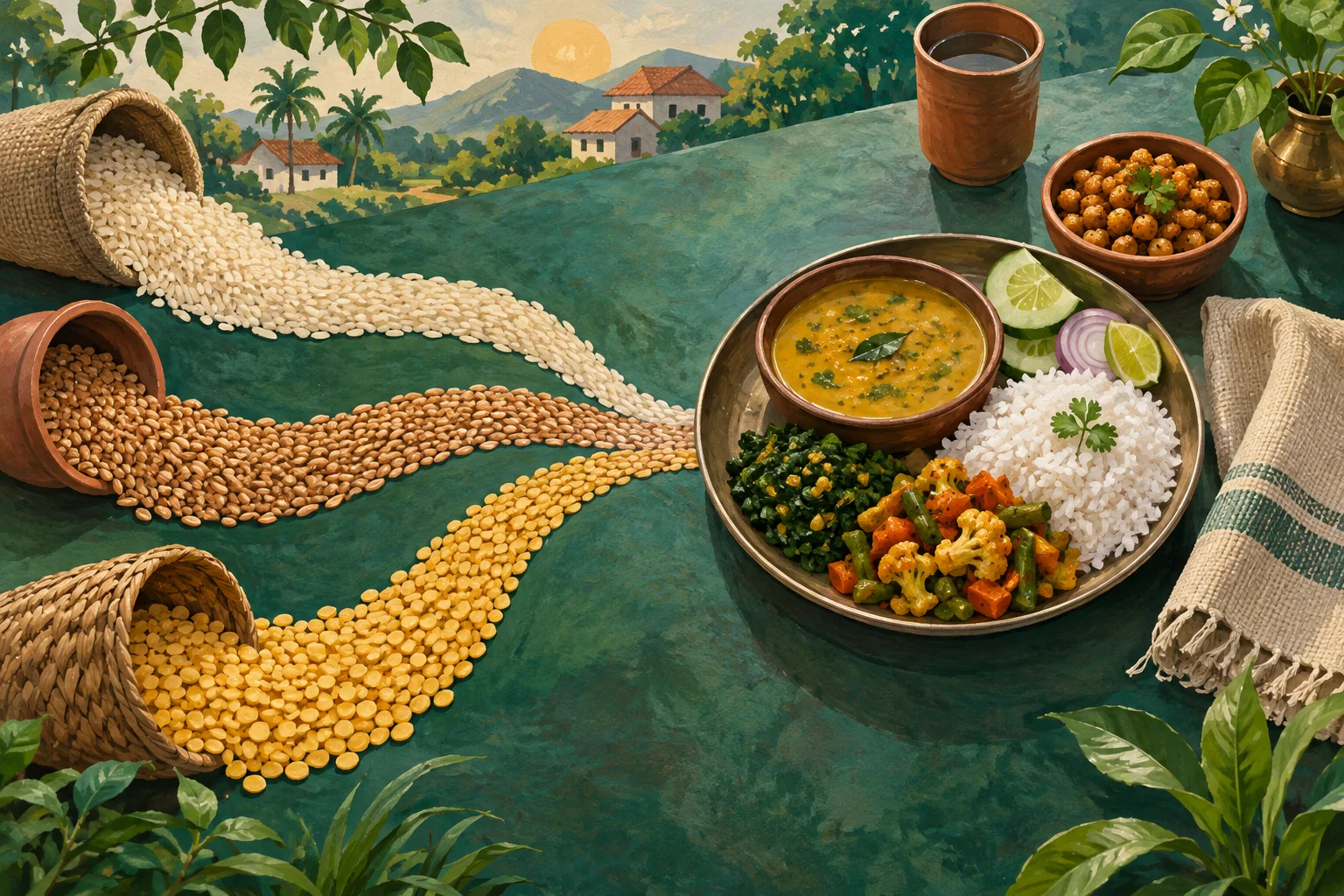
Being told you have PCOS can turn an ordinary plate into a list of forbidden foods. But “carbohydrate” covers lentils, fruit, whole grains and sugary drinks. A rule that treats them as interchangeable misses much of what makes a meal useful or satisfying.
What was lower-carb about this study?
The lower-carbohydrate menu still supplied a substantial share of energy from carbohydrate. It was not a carbohydrate-free or ketogenic diet. Some insulin and hormone measures improved during that period, but a statistically significant change within one diet is not automatically proof that it beat the other diet. Both periods also produced small weight changes despite the intention to maintain weight.
Why one experiment is not a food ban
Food was provided, portions were controlled and follow-up was short. Everyday eating involves work schedules, food access, culture, cost and enjoyment. The diets also differed in fat and fibre, so the findings cannot isolate carbohydrate grams as the only explanation. They did not establish improved fertility or a cure for PCOS.
What the broader guideline says
The international guideline supports healthy eating and individual preferences, while finding no evidence for one particular diet composition over another across PCOS outcomes. That leaves room for rice, roti, oats, beans and other familiar foods. Meal balance and a pattern you can sustain are more useful starting points than copying somebody else’s strict exclusions.
Start with a workable plate
For a person eating mostly refined starch, replacing some of it with vegetables, pulses or other suitable foods is a different change from removing all carbohydrate. If dietary restrictions become stressful, seek support from a clinician or dietitian familiar with PCOS. Medication, fertility goals and metabolic risk need individual assessment; an app can record meals but cannot choose treatment.
Three questions before cutting a food group
Which carbohydrate?
A pulse, a piece of fruit and a sweetened drink are different foods.
What replaces it?
A diet comparison changes the rest of the plate too.
Can it last?
The guideline supports an individual, sustainable approach.
Sources & further reading
- Moderately lower carbohydrate intake in women with PCOS
- 2023 international evidence-based PCOS guideline
Study years differ from this article’s publication date. We reviewed the linked research in full, distinguishing original experiments, observational studies and reviews. Access limitations are not used to support efficacy claims. Original illustrations and diagrams; no publisher figures reproduced. Educational writing, not clinical review.
Published 16 October 2026 · Sources checked 16 October 2026. Suggest a correction.