 PoshanSense
Can raisins fuel a long run instead of sports chews? Small trials say they can work
Small US running and cycling trials found similar measured performance with raisins and commercial carbohydrate snacks. The evidence does not establish universal equivalence.
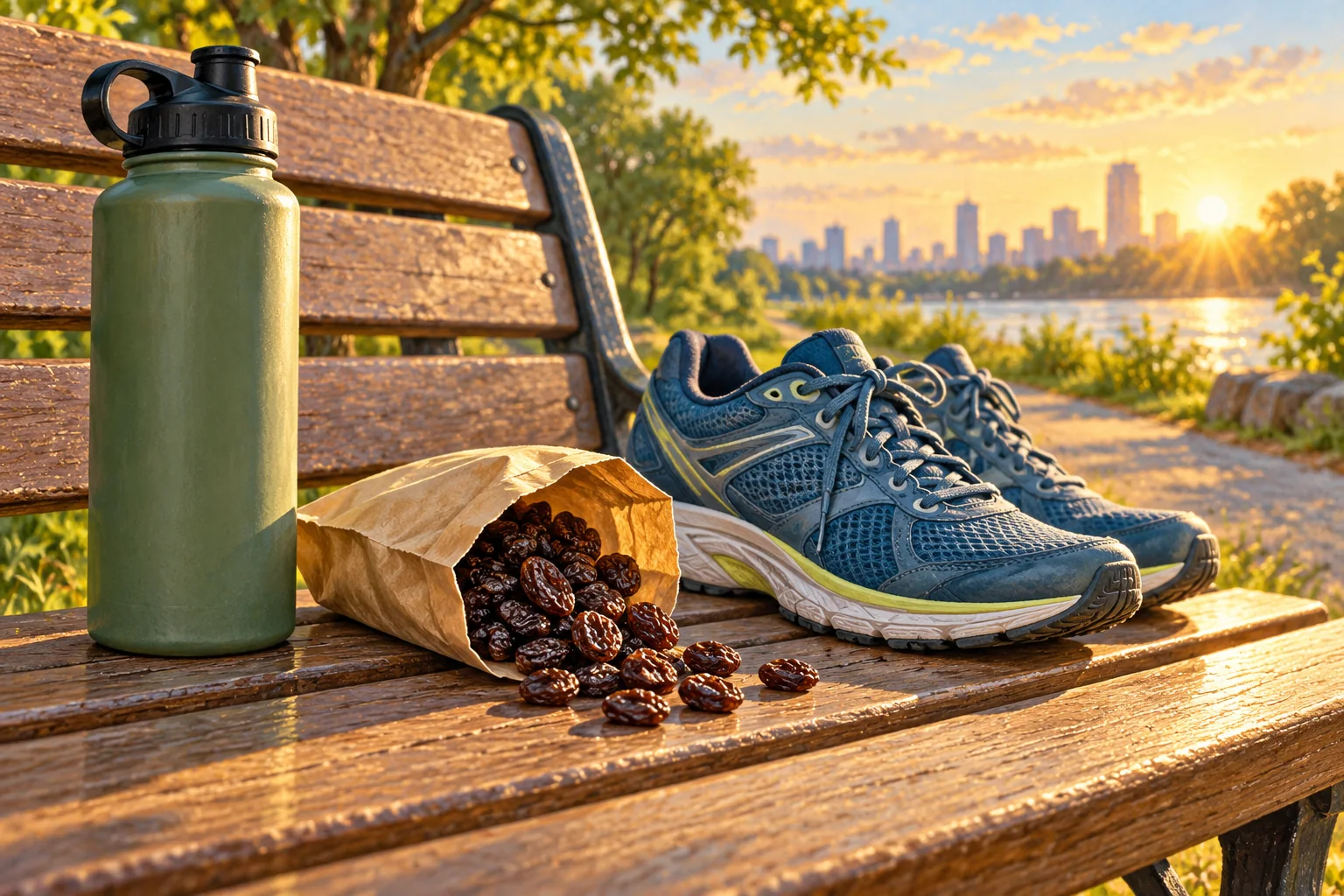
Research explained · Published 2011 · 2012
Sports nutrition can make a long run feel like a shopping problem: which packet is essential, and can an ordinary food do the job? Raisins offer a useful example of how a simple carbohydrate source can work without proving that all sports products are unnecessary.
What did the running study find?
In a small US running experiment, trained men completed a long treadmill effort before a five-kilometre time trial. They tested raisins, sports chews and water-only across separate visits.
Average time-trial times were about 20.6 minutes with raisins, 20.7 with chews and 21.6 with water. Both carbohydrate conditions were faster than water-only; raisins and chews did not clearly differ.
Why “no difference” is not universal equivalence
Eleven completers are enough to provide an interesting experiment, but not a guarantee that the two options are interchangeable for all athletes. The study was not a large formal equivalence trial across different products.
It matched carbohydrate and fluids under controlled conditions. Participants paused briefly to eat during the treadmill portion, with the exercise clock paused. That is different from managing chewing while racing outdoors without a break.
A runner can also care about more than a finishing time: ease of carrying food, texture, thirst, taste and stomach comfort. Those practical considerations may decide which option is useful in a particular event.
A fuel option, with a context
Long effort
The running trial used 80 minutes before a five-kilometre test.
Comparison
Raisins and chews supplied matched carbohydrate.
Performance
Both beat water-only in that small running experiment.
Practical limit
Texture, stomach tolerance and event conditions still matter.
Does cycling research point the same way?
A separate US cycling study tested raisins against jelly beans in ten trained men. After two hours of cycling, the ten-kilometre time-trial result did not clearly differ between the two carbohydrate snacks. Participants preferred the raisins' taste.
The water visit in that study was an initial familiarisation session, not a randomized comparison. It should not be used as a second controlled demonstration that raisins outperformed water. The useful comparison is raisins versus jelly beans.
Both experiments were small and male-only. Neither establishes the same response in women, younger athletes, less-trained people or every climate and event duration.
What about your stomach?
Gastrointestinal symptoms were generally mild in the running study, although belching was greater with carbohydrate feeding than water. That does not mean everyone will tolerate dried fruit during hard exercise.
The same paper found a difference in one muscle-damage marker without a corresponding clear difference in soreness or fatigue. It is another reason not to turn a performance result into a broad recovery or protection claim.
Food tolerance away from exercise is not always the same as tolerance during it. A laboratory result cannot choose your race-day food, and trying an unfamiliar option during an important event adds uncertainty the study does not remove.
Fuel and hydration are separate questions
Raisins supply carbohydrate; they do not make fluid needs disappear. These trials also do not establish that raisins replace electrolyte strategies in every long or hot event. Our sports-drink explainer looks at the hydration context separately.
For an ordinary short walk or easy workout, the prolonged-exercise protocol may not be relevant. Do not assume that every activity requires a dedicated snack simply because a feeding trial found a benefit after a long effort.
The direct answer is encouraging: a familiar dried fruit worked as one fuel option in small endurance experiments. The right option still depends on the event, your tolerance and the full plan, rather than whether the package looks scientific.
Evidence context: the running trial was funded by the California Raisin Marketing Board and reported no funder role in design, analysis or writing. Funding details were not clear in the accessible cycling main-text extract. Educational information; not clinically reviewed.
Sources & further reading
Study years differ from this article’s publication date. We reviewed full primary papers and relevant supporting material; access limitations are kept out of efficacy claims. Original illustrations and diagrams; no publisher figures reproduced. Educational writing, not clinical review.
Published 11 October 2026 · Sources checked 11 October 2026. Suggest a correction.