 PoshanSense
Is dried fruit a healthy snack, or too much sugar?
Dates, raisins and dried apricots can fit a diet, but portion and replacement matter. Canadian and US trials separate a glucose response from a health promise.
Complementary human studies · Published 2018–2020
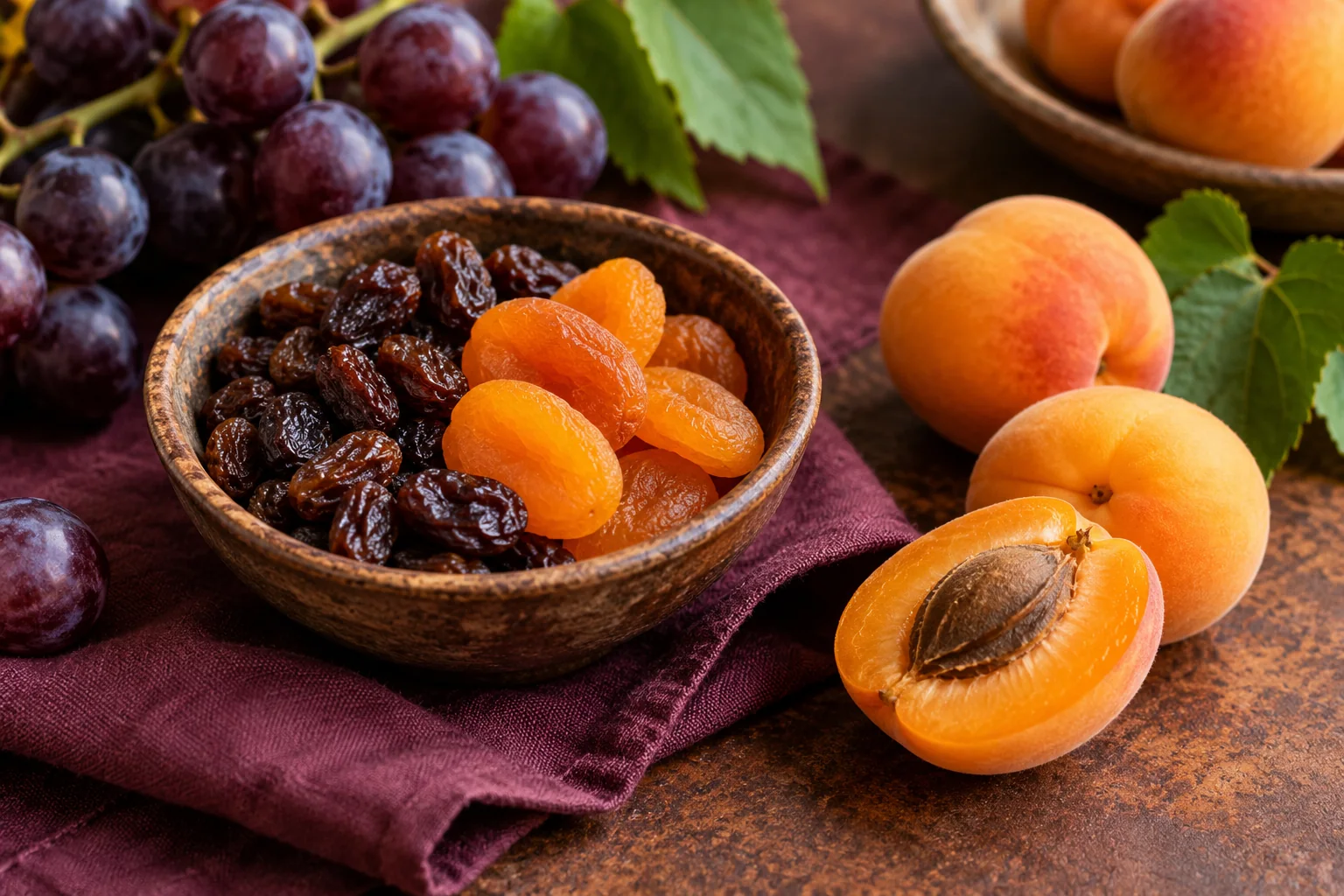
A handful of raisins and a handful of grapes look like similar snacks until you notice how much water has disappeared. Drying makes fruit convenient, portable and easy to store. It also makes it easier to eat the carbohydrate and energy from several pieces of fresh fruit in a small volume.
So the useful answer is not that dried fruit is secretly terrible, or that a fruit label makes the quantity irrelevant. The useful answer is that portion and replacement matter. A small planned snack and an extra bowl eaten absent-mindedly are different habits.
Sweet does not automatically mean the same as sweets
Traditional unsweetened dried fruit retains fibre and other components of the fruit. That is different from fruit-flavoured gummies. But products vary: a packet can include sweetening, coatings or other ingredients, and a nutrition label gives a clearer picture than its front-of-pack name.
“No added sugar” also does not mean “no carbohydrate.” The sugar already in the fruit remains. If you monitor carbohydrate for a medical reason, the amount you eat still belongs in that calculation.
Can dried fruit produce a lower glucose response?
A Canadian crossover experiment tested dates, dried apricots, raisins and sultanas in ten healthy adults. Each person attended separate meal tests, with blood glucose measured for two hours. Some dried fruits produced lower relative responses than white bread.
Replacing half the available carbohydrate from bread with dried fruit lowered the measured response numerically for all four fruits, but only the apricot comparison was statistically clear. Adding dried fruit on top of a full bread portion did not produce the proposed beneficial fructose effect.
This makes a useful distinction: replacing part of a food is different from adding something to it. It does not show that a person with diabetes will get the same result, or that scattering raisins over an unchanged meal reliably lowers their glucose.
What happens beyond one breakfast?
A longer US trial asked a more everyday question. Adults with elevated baseline risk incorporated a large mixed dried-fruit portion or matched snack foods into their usual diet. The dried-fruit period did not improve the main LDL-cholesterol outcome relative to the control period.
Mean fasting glucose was slightly higher after dried fruit than after control. That secondary result was small, and the researchers tested many outcomes without correcting for all comparisons. It deserves restraint rather than a headline that dried fruit causes diabetes.
Participants were asked to substitute the study foods, but received no personalised plan for what to remove. Weight tended to increase during both periods. Without full dietary records, the researchers could not confirm how effectively people replaced their usual foods. The finding therefore challenges an unlimited-addition strategy; it does not settle every sensible smaller snack swap.
The snack swap changes the question
Instead of
A deliberate replacement changes what is already in the day.
As well as
An extra bowl adds carbohydrate and energy to the existing diet.
Short glucose curve
A two-hour response does not measure months of health.
Whole portion
Count the amount eaten, not just the word fruit on the packet.
How to make the choice simpler
First decide the job of the snack. Is it something portable for a commute, a topping for breakfast or an alternative to a usual biscuit? Once that is clear, deciding the portion becomes easier. You do not need to make dried fruit a daily assignment to justify enjoying it.
Next, serve the amount rather than letting the packet decide. This is especially useful when a trail mix contains nuts, chocolate and dried fruit together. Those ingredients can be enjoyable, but “a handful” becomes surprisingly hard to compare when the mix and hand size keep changing.
Fresh fruit is another option when you want more volume. It is not necessary to choose a permanent winner between fresh and dried. Availability, cost, storage and the rest of the meal all affect the practical choice.
What about dates in homemade energy balls?
A recipe can replace refined sugar with dates while still containing substantial carbohydrate and energy. Grinding dates with nuts does not make every serving metabolically identical to a whole date, and neither trial tested your recipe.
The same goes for adding dried fruit to rice or porridge. It changes the ingredients and total portion. A useful question is how much of the original meal remains and what the addition contributes, rather than assuming one ingredient cancels another out.
If you have a prescribed carbohydrate target or a digestive condition that affects food tolerance, use your individual guidance. These studies do not define a universal safe number of dates, and changing a snack is not a reason to alter medication.
Read the evidence without a health halo
Both trials had dried-fruit industry funding. The Canadian authors disclosed additional food-industry relationships and reported no sponsor role; the US authors declared no conflicts. The studies tested specific fruits, portions and comparators, not every dried-fruit product.
You can enjoy dried fruit without asking it to lower cholesterol or prevent disease. Choose it because it fits the snack you need, then keep the amount and the replacement visible. That is a more dependable answer than either fear of all fruit sugar or faith in unlimited “natural” food.
Sources & further reading
- United States · dried fruit versus snack foods (2020)
- Canadian acute dried-fruit glucose-response trial
- US dried-fruit trial published paper
Study years differ from this article’s publication date. We reviewed full primary papers and relevant supporting material; access limitations are kept out of efficacy claims. Original illustrations and diagrams; no publisher figures reproduced. Educational writing, not clinical review.
Published 11 October 2026 · Sources checked 11 October 2026. Suggest a correction.