 PoshanSense
Can treating sleep apnoea lower blood pressure? An extra benefit, not a medicine replacement
A Spanish trial found a modest blood-pressure benefit from CPAP in resistant hypertension. It does not make snoring a diagnosis or replace medication.
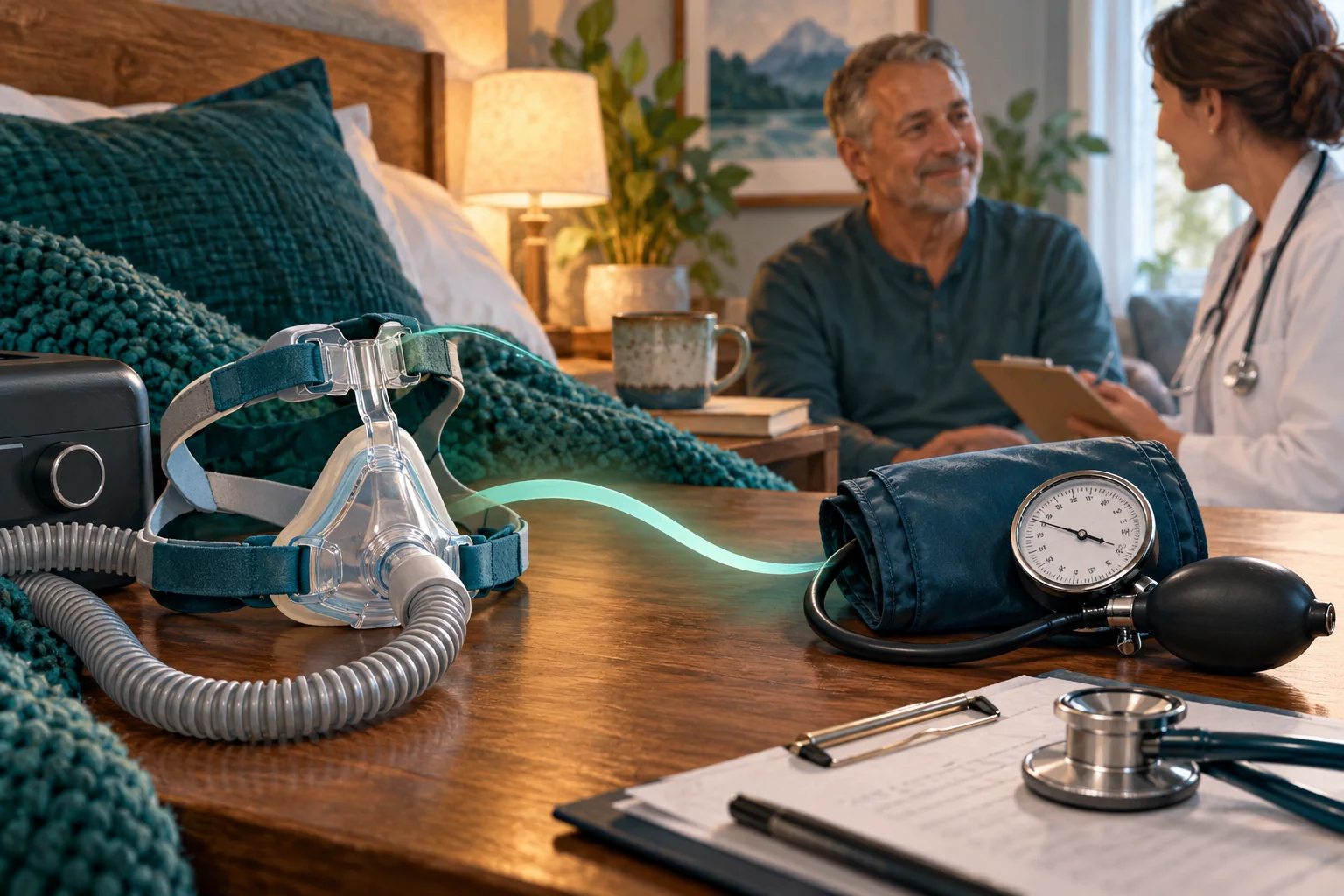
Research explained · Published 2013
Sleep and blood pressure are often discussed as if better sleep simply means lower readings. The question becomes more specific when breathing repeatedly stops during sleep: could treating that condition help pressure that remains high despite medication?
Is CPAP a blood-pressure treatment for everyone?
No. CPAP keeps the airway open during sleep in suitable patients with obstructive sleep apnoea. It is prescribed for a diagnosed condition. A person should not buy or configure it just because they snore or have a high blood-pressure reading.
The possible pressure benefit is an additional reason to assess relevant symptoms, rather than a shortcut around that assessment.
What did adding CPAP achieve?
In HIPARCO, CPAP lowered average 24-hour blood pressure by about 3.1 mmHg more than usual care alone. Diastolic pressure improved clearly; the systolic comparison alone remained uncertain.
The improvement was modest, not normalization for everyone. Funding included Philips Respironics and public and professional organizations; no conflicts or sponsor role were reported.
Why measure pressure across a whole day?
An ambulatory monitor takes repeated readings during ordinary activities and sleep. That gives a different picture from one reading in a clinic. The trial's primary result concerned the average over 24 hours; it was not a claim that every reading dropped by the same amount.
Systolic and diastolic pressure are also distinct measurements. A change in their combined average does not establish that each component improved clearly. This is why the positive average result and the uncertain systolic result can both be true.
A modest average pressure change can be relevant without predicting your individual response. The trial did not test prevention of heart attacks or deaths, and treating sleep apnoea can leave other reasons for hypertension in place.
A specific condition, a modest extra effect
Diagnosis first
Snoring alone does not establish obstructive sleep apnoea.
Trial population
Confirmed apnoea plus resistant hypertension.
Blood-pressure result
About 3 mmHg lower average 24-hour pressure.
Treatment stays connected
CPAP complements care; do not stop blood-pressure medicine.
Does using the device longer guarantee a bigger benefit?
People who used CPAP more consistently sometimes had better results, but that does not make every adherence comparison randomized. Consistent users may differ in other behaviours and clinical circumstances.
The evidence is not a reason to choose pressure settings yourself or treat a research threshold as a personal prescription. Fitting, comfort, follow-up and appropriate device use belong with the treating service.
When should the question come up in care?
NICE guidance includes assessment for suspected obstructive sleep apnoea and recognizes resistant hypertension as a relevant context. Snoring, witnessed pauses or marked daytime sleepiness are information to discuss, not an online diagnosis.
Sleep apnoea severity, symptoms and treatment suitability are assessed with clinical information and appropriate testing. A blood-pressure cuff cannot tell whether breathing is obstructed during the night, just as a snoring recording cannot reliably establish the full condition.
If you already receive treatment for either condition, keep changes coordinated with the clinician. Do not stop blood-pressure medicines because you started CPAP, and do not delay assessment while trying general sleep tips alone.
The useful answer
Treating confirmed sleep apnoea may add a small pressure benefit to usual care. It does not establish a cure for resistant hypertension, and a short pressure trial cannot promise long-term cardiovascular protection. Educational article; not clinically reviewed.
Sources & further reading
Study years differ from this article’s publication date. We reviewed full primary papers and relevant supporting material; access limitations are kept out of efficacy claims. Original illustrations and diagrams; no publisher figures reproduced. Educational writing, not clinical review.
Published 11 October 2026 · Sources checked 11 October 2026. Suggest a correction.