 PoshanSense
Does eating vegetables before carbs really change blood sugar?
Food order changed short-term glucose responses in US and Japanese experiments. Understand what that means for an ordinary meal—and what a salad cannot promise.
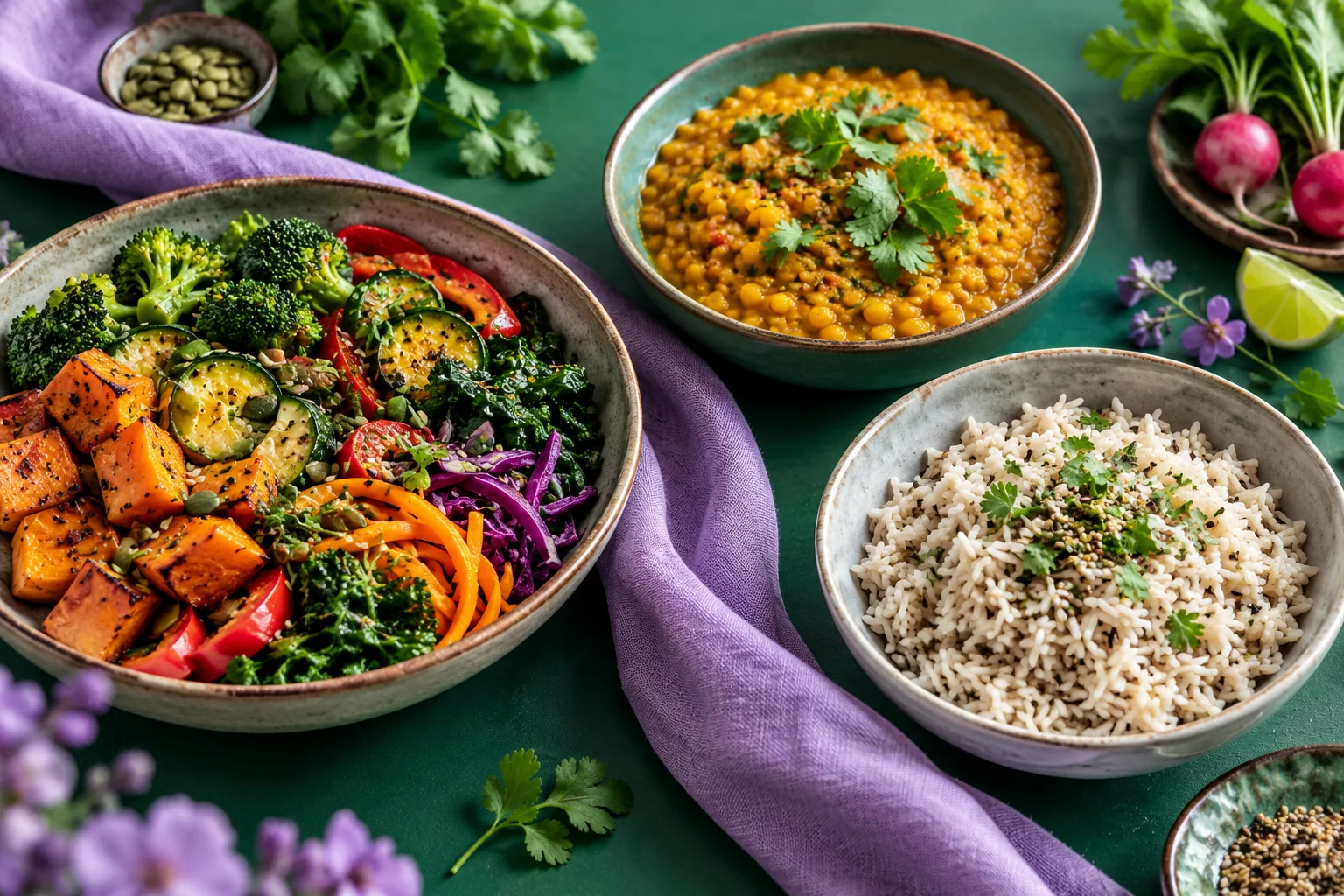
Complementary human studies · Published 2013 & 2017
You are eating rice with vegetables and dal. A video says the first few bites determine whether the meal is healthy. Is there something behind the advice, or has a small experiment become a rule for every plate?
Food order can matter—but it is a smaller question
The studies support a possible effect on how glucose rises after certain meals. They do not make order more important than what the meal contains, how much is eaten or a person's medical context. A starter is not a protective coating that makes the rest of dinner irrelevant.
That distinction makes the answer easier to use. Think of sequence as one detail to understand, alongside the carbohydrate portion and the presence of vegetables and protein-containing foods. You do not need to turn an ordinary lunch into a timed laboratory session to learn the principle.
The strongest simple comparison used the same foods
The US experiment changed the order rather than giving one group a healthier meal. Protein and vegetables first produced a lower three-hour glucose response above baseline than carbohydrate first or the mixed sandwich condition. The reported reduction versus carbohydrate first was about 53% for that specific response measure.
That is not “53% less blood sugar” all day, nor 53% lower diabetes risk. It refers to the area of the measured rise above baseline after a defined meal. The study used bread, juice, chicken and vegetables, with pauses between courses; it did not directly test dal-rice, pasta or every breakfast cereal.
A smaller measured excursion—not a cure
Three-hour glucose response above baseline
Carbohydrate-first index
Protein/vegetables-first index
Did a different population show anything similar?
A Japanese experiment also found smaller glucose fluctuations with vegetables first, in participants with and without diabetes. However, average glucose did not clearly differ between the two orders. A smoother short-term curve and a lower overall average are different outcomes.
Seeing related findings in another country makes the question worth considering. It does not erase the studies' small samples, short duration or tightly specified foods. The two experiments are complementary, not a worldwide demonstration that everyone should eat in exactly the same sequence.
What about meals where everything is mixed?
A bowl of khichdi, a bean stew or a sandwich does not separate neatly into vegetable, protein and carbohydrate courses. That does not make it a failed meal. These papers do not compare all mixed dishes with all separated dishes; the tested sandwich was one particular condition.
For a familiar mixed meal, focus first on the recipe and serving you can actually assess. Is there a vegetable component? What supplies protein? How much grain or bread is present? Adding thoughtful composition is a different change from rearranging identical foods, and should be described that way.
Do you need to avoid glucose “spikes” at any cost?
A rise after eating is not, by itself, a diagnosis or proof of harm. These experiments involved defined outcomes and, in one case, people already receiving diabetes treatment. They do not establish a perfect curve for every healthy person. One wearable trace also cannot tell you whether a meal pattern will prevent disease.
In particular, do not change medication or omit needed carbohydrate based on a food-order tip. The everyday research question and an individualized diabetes plan are separate. If your glucose management needs attention, the answer belongs with a clinician who knows your medicines and circumstances.
The practical takeaway
Vegetables-first can be a reasonable preference when a meal naturally allows it. Keep the broader plate in view and resist numerical promises copied from a short experiment. A journal can record what and how much you ate, helping you compare routines without assigning a medical benefit to the order.
Evidence context: the US paper reported foundation and donor support plus research-centre grants, and disclosed book royalties for two authors. The Japanese study reported public and university support and no competing interests. Neither measured long-term complications or disease prevention.
Sources & further reading
Study years differ from this article’s publication date. We reviewed full primary papers and relevant supporting material; access limitations are kept out of efficacy claims. Original illustrations and diagrams; no publisher figures reproduced. Educational writing, not clinical review.
Published 11 October 2026 · Sources checked 11 October 2026. Suggest a correction.