 PoshanSense
Does rinsing canned beans remove salt? Yes, but the label still matters.
A food-lab study found lower sodium after draining and rinsing. Understand the averages, the draining-only result and what cannot be calculated for every can.
Research explained · Published 2011
A can of beans can rescue lunch in minutes. Then you notice the sodium figure and wonder whether the advice to rinse it actually changes anything. It can, but there is a more useful answer than treating “rinse” as a magic reset.
Some salt is in the packing liquid, and some remains with the beans. Removing liquid can therefore remove part of the sodium. Starting with a lower-sodium product and considering the rest of the dish remain relevant.
What happened when the beans were drained?
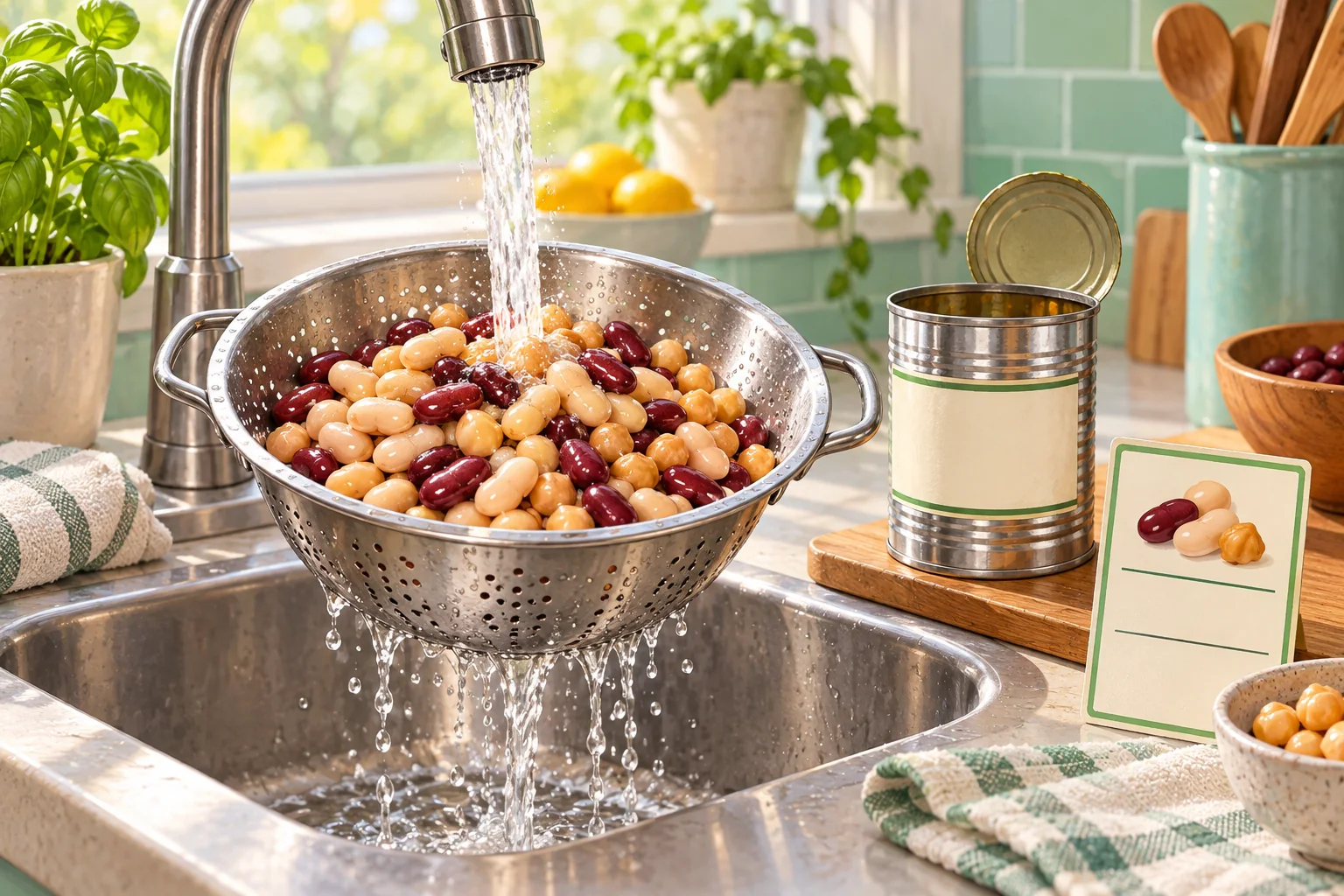
A 2011 food-laboratory study tested black, red kidney, garbanzo, great northern and pinto beans from several brands. Analysts measured sodium in three preparations: beans with liquid, beans drained for two minutes, and beans drained, briefly rinsed and drained again.
Across the tested varieties, the average sodium content fell from 503 mg per label-size serving with packing liquid to 321 mg after draining, and 295 mg after draining and rinsing. Those changes corresponded to average reductions of about 36% and 41%.
Both preparations had less sodium than the original beans-plus-liquid condition. However, the difference between draining alone and draining plus rinsing was not statistically significant. So the paper supports removing the liquid; it does not establish that the rinse always produces a large extra reduction.
Does rinsing canned beans remove salt? Yes, but the label still matters.
With liquid
Average 503 mg sodium per label-size serving.
Drained
Average 321 mg: about 36% lower.
Drained + rinsed
Average 295 mg: about 41% lower.
Not exact for your can
Brands, recipes and serving conventions differ.
Why 41% is not a universal label correction
The tested products varied in sodium content and in how much was removed. Bean structure, thickening of the packing liquid and processing can affect what stays on the beans. Products may also have changed since the paper was published.
The study expressed results using a label-size serving that included liquid in the original product. A drained serving on a current label may use a different basis. If you are calculating a recipe, first check whether its nutrition information is for the product as sold, the drained product, or another specified preparation.
It would be misleading to take any can, multiply the sodium figure by 0.59, and present that as a laboratory-verified value for your portion. The average tells us the direction and approximate size under the tested conditions; it does not analyse the can in your kitchen.
A useful way to use the finding
For plain canned beans where the liquid is not needed, draining and rinsing is a reasonable preparation option. If a dish relies on that liquid for texture, look at lower-sodium or no-added-salt alternatives and compare labels on the same serving basis.
Then consider what goes into the meal. Stock cubes, sauces, pickles, cheese or added table salt can contribute sodium too. A rinsed bean salad can still be salty if the dressing supplies a lot. The preparation step is useful within the whole recipe rather than permission to ignore everything added afterwards.
Canned beans are also a convenience choice. Cooking from dry can give more control over added salt, but requires time, fuel and a suitable cooking routine. Neither approach has to be a purity test. The best option is one that makes a workable meal and meets your needs.
Does rinsing wash away all the goodness?
This study did not answer that question. It measured sodium, not changes in fibre, protein or the full range of vitamins and minerals. The authors specifically identify other water-soluble nutrients as an unanswered issue. It would therefore be wrong to promise either perfect nutrient retention or large nutrient losses from this paper.
It also did not measure blood pressure. Lower sodium in a food is a laboratory finding; a clinical benefit depends on total intake, the person and the wider eating pattern. Anyone given a medical sodium limit needs to work with reliable product information and their care team, rather than assume rinsing makes a food unrestricted.
The accessible journal PDF does not provide a clear study-specific funding or conflict statement. It is hosted publicly by a bean manufacturer; that hosting is not proof of independent funding. The methods and table are available to assess, with a small internal sample-count inconsistency noted in our evidence review.
The practical answer remains straightforward: removing packing liquid can materially lower sodium, while the label and the complete meal still deserve attention.
Sources & further reading
Study years differ from this article’s publication date. We reviewed full primary papers and relevant supporting material; access limitations are kept out of efficacy claims. Original illustrations and diagrams; no publisher figures reproduced. Educational writing, not clinical review.
Published 11 October 2026 · Sources checked 11 October 2026. Suggest a correction.