 PoshanSense
Does cinnamon lower blood sugar—or just make breakfast taste better?
Some short trials show modest glucose changes, others do not. Why cinnamon powder, extracts, prediabetes and diabetes cannot be treated as the same experiment.
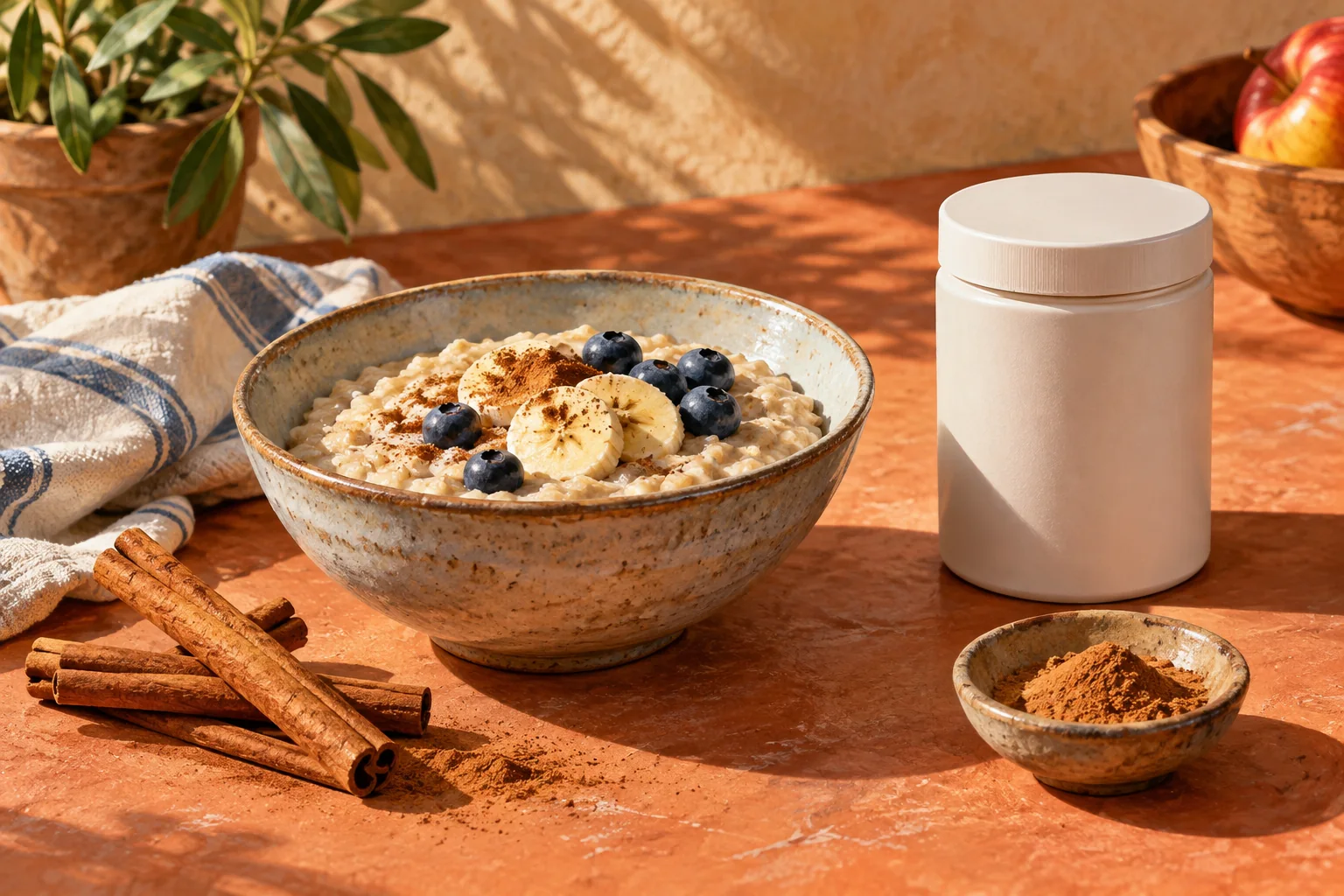
Research explained · Published 2013 & 2020
A pinch in oats, a stick in chai, a capsule on the supplement shelf: all are called cinnamon. That shared name makes a claim about blood sugar sound simpler than the research actually is.
The short answer needs the product attached
A 2020 trial in South Korea and the United States found a small advantage for a specified cinnamon supplement in people with prediabetes. Fasting glucose stayed broadly stable in the cinnamon group while it rose in the placebo group. This was not a dramatic fall from a high starting level, and it was not a trial showing fewer people developed diabetes.
The preparation combined extract and powder. It should not be quietly translated into “add a sprinkle to any meal and cancel its sugar.” A controlled product, repeated exposure and selected participants answer a narrower question.
What does a modest difference mean?
The primary comparison was about five milligrams per decilitre in fasting glucose change. Some glucose-tolerance measures also favoured cinnamon. Those are interesting signals for further research, not a reason to promise remission.
The sample was small, mostly Asian and not large enough to settle country, sex or age differences. The study was also too short to test whether any effect lasts. No serious adverse events in this experiment cannot guarantee safety for every product or years of use.
Other human results do not all point the same way
An Iranian randomized trial assigned seventy adults with type 2 diabetes to cinnamon or placebo alongside their usual care. After sixty days it found no clear between-group improvement in fasting glucose or HbA1c.
That does not automatically disprove the prediabetes result. The people, preparation and background treatment differed. It does show why one promising trial cannot stand in for all cinnamon products and all glucose problems. Choosing only positive studies would make the answer look more certain than it is.
Four questions behind a cinnamon claim
Which product?
Bark powder and standardized extracts are not interchangeable.
Which people?
Prediabetes differs from established diabetes on medicines.
Which outcome?
A glucose-test change is not fewer future diabetes cases.
Which time?
A twelve-week result cannot establish years of benefit.
A spice is not a sugar shield
It is possible to make a sweet food smell less sweet by adding warming spices. That changes the experience; it does not erase its ingredients or portion. Look at the actual meal rather than assuming a functional-food label changes the nutritional maths.
Cinnamon can still be enjoyable. Porridge, unsweetened yoghurt or other familiar dishes may taste better with it. There is no need to turn every flavour preference into a medical intervention to justify eating it.
More concentrated does not automatically mean better
NCCIH notes uncertainty about health benefits and differences among cinnamon species and products. Cassia can contain coumarin; prolonged use of high-coumarin products is a concern for susceptible people, including those with liver disease. Supplements can also interact with medicines.
Ordinary culinary amounts and repeated concentrated supplementation are different situations. Do not imitate a trial regimen, take dry powder as a challenge or assume “natural” settles pregnancy, liver or medication safety.
The useful answer at breakfast
Use cinnamon as a flavour if you like it. If blood sugar is the concern, keep assessment and a sustainable food pattern at the centre. A short supplement result is one piece of evidence, not an alternative to care.
When judging the next headline, ask what was actually taken and what changed. That small habit is more useful than memorizing a magic quantity of cinnamon.
Evidence context: the binational trial reported South Korean Ministry of Health and Welfare funding and no author disclosures. The Iranian main text does not provide a clear separate funding statement. Neither trial established diabetes prevention. Educational information; not clinically reviewed.
Sources & further reading
- South Korea and US · prediabetes trial (2020)
- Iranian randomized diabetes trial with null results
- NCCIH cinnamon evidence and safety
Study years differ from this article’s publication date. We reviewed full primary papers and relevant supporting material; access limitations are kept out of efficacy claims. Original illustrations and diagrams; no publisher figures reproduced. Educational writing, not clinical review.
Published 11 October 2026 · Sources checked 11 October 2026. Suggest a correction.