 PoshanSense
Does coffee raise cholesterol, and does filtering help?
Why the brewing method matters when discussing coffee and cholesterol, and why a lower cholesterol response is not proof of fewer heart attacks.
Research explained · Published 2017
The coffee conversation usually starts with caffeine: how strong is it, how late can you drink it, and will decaf solve the problem? For cholesterol, the preparation deserves a place in that conversation too.
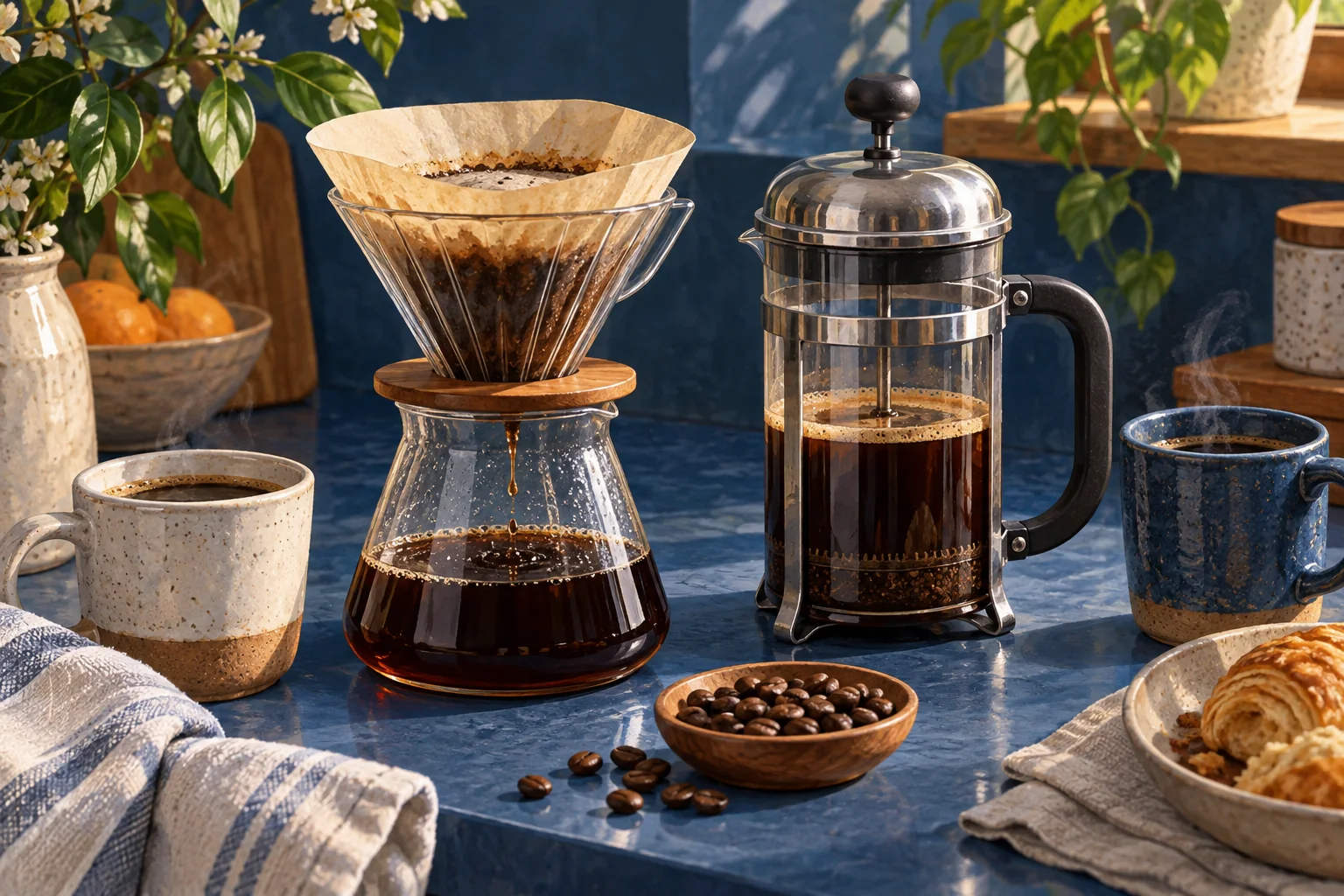
A coffee pressed through a metal mesh is not necessarily the same exposure as one passed through a paper filter. They may taste equally familiar and contain caffeine, yet retain different amounts of coffee compounds. That makes “coffee raises cholesterol” an incomplete sentence.
What the review actually found
A 2017 BMJ umbrella review brought together existing coffee meta-analyses. Its trial summaries found higher total cholesterol, LDL cholesterol and triglycerides in coffee intervention groups overall. Those broad averages combined different preparations.
The preparation-specific findings were more informative. Filtered coffee comparisons showed a smaller rise in total cholesterol, with no statistically clear change in LDL or triglycerides in the reviewed subgroup. The paper describes the cholesterol increases as mitigated by filtering, rather than declaring them impossible.
Why caffeine is not the whole explanation
The review discusses coffee’s diterpenes, including cafestol and kahweol, as a plausible reason preparation matters. Their exposure differs with brewing and filtration. Decaffeination and filtering answer different questions: one primarily concerns caffeine, the other what passes into the drink.
That does not let us assign a precise cholesterol effect to an espresso from your favourite café. Bean, serving size, preparation and number of cups vary. The evidence is more useful for recognising a brewing distinction than for predicting the result of your next blood test.
Likewise, “filtered” can be used loosely in everyday language. A metal sieve and a paper filter are not identical just because both separate liquid from grounds. Describe the actual equipment when discussing the habit with a clinician.
Blood lipids and heart outcomes are different evidence
The same umbrella review reported favourable associations between coffee drinking and several longer-term outcomes. Much of that material came from observational research. It does not cancel a lipid change measured in trials, and it does not show that coffee caused lower mortality.
People who choose different drinks can also differ in smoking, diet and other habits. A broad association about coffee consumption cannot establish the benefit of switching your own brewing method. A smaller LDL response would also not, by itself, prove fewer heart attacks.
Read the brew before the health headline
Preparation
Filtered and unfiltered coffees are not interchangeable exposures.
Blood test
Trial lipid changes answer a narrower question than heart-event prevention.
Review finding
Filtering was associated with smaller cholesterol changes in the reviewed comparisons.
Personal decision
Consider your lipid results and overall care, not just the coffee label.
Use the distinction without turning coffee into treatment
If your LDL cholesterol is elevated, tell your clinician how you make coffee and roughly how much you drink. Brewing may be one detail worth reviewing alongside the rest of your diet, medical history and any treatment. Keep prescribed medicines and follow-up testing in place.
If you do not enjoy coffee, this evidence is not a reason to start. Nor is it a reason to take green-coffee extracts: supplement studies involve different products and comparisons. A drink, a capsule and a brewing method should not be bundled into one health promise.
Milk, cream, sugar and serving size also belong to the complete drink. They do not explain the review’s filtering finding, but they matter when comparing the beverages you routinely consume. A journal can record that complete habit without claiming to estimate cholesterol.
How much confidence should we put in this?
The review received no specific grant. Some authors reported pharmaceutical grants or fees outside the work. It also found evidence of publication bias in the total-cholesterol trial meta-analysis, and did not inspect the funding of every underlying primary study.
A 2018 correction amended numerical estimates for other outcomes in the review; those are not used here. Keeping later notices visible is part of reading the evidence.
Those limits make a measured answer preferable to a universal rule. Preparation can matter, unfiltered coffee deserves attention when cholesterol is a concern, and paper filtering is a relevant distinction. None of those findings turns the morning brew into a replacement for cardiovascular care.
Sources & further reading
- International evidence · coffee outcomes umbrella review (2017)
- 2018 correction to numerical estimates in the umbrella review
Study years differ from this article’s publication date. We reviewed full primary papers and relevant supporting material; access limitations are kept out of efficacy claims. Original illustrations and diagrams; no publisher figures reproduced. Educational writing, not clinical review.
Published 11 October 2026 · Sources checked 11 October 2026. Suggest a correction.