 PoshanSense
Does flaxseed lower blood pressure—or is that promise too strong?
Trials suggest a possible benefit, but results vary and some individual comparisons are null. How to read flaxseed blood-pressure claims without turning food into medicine.
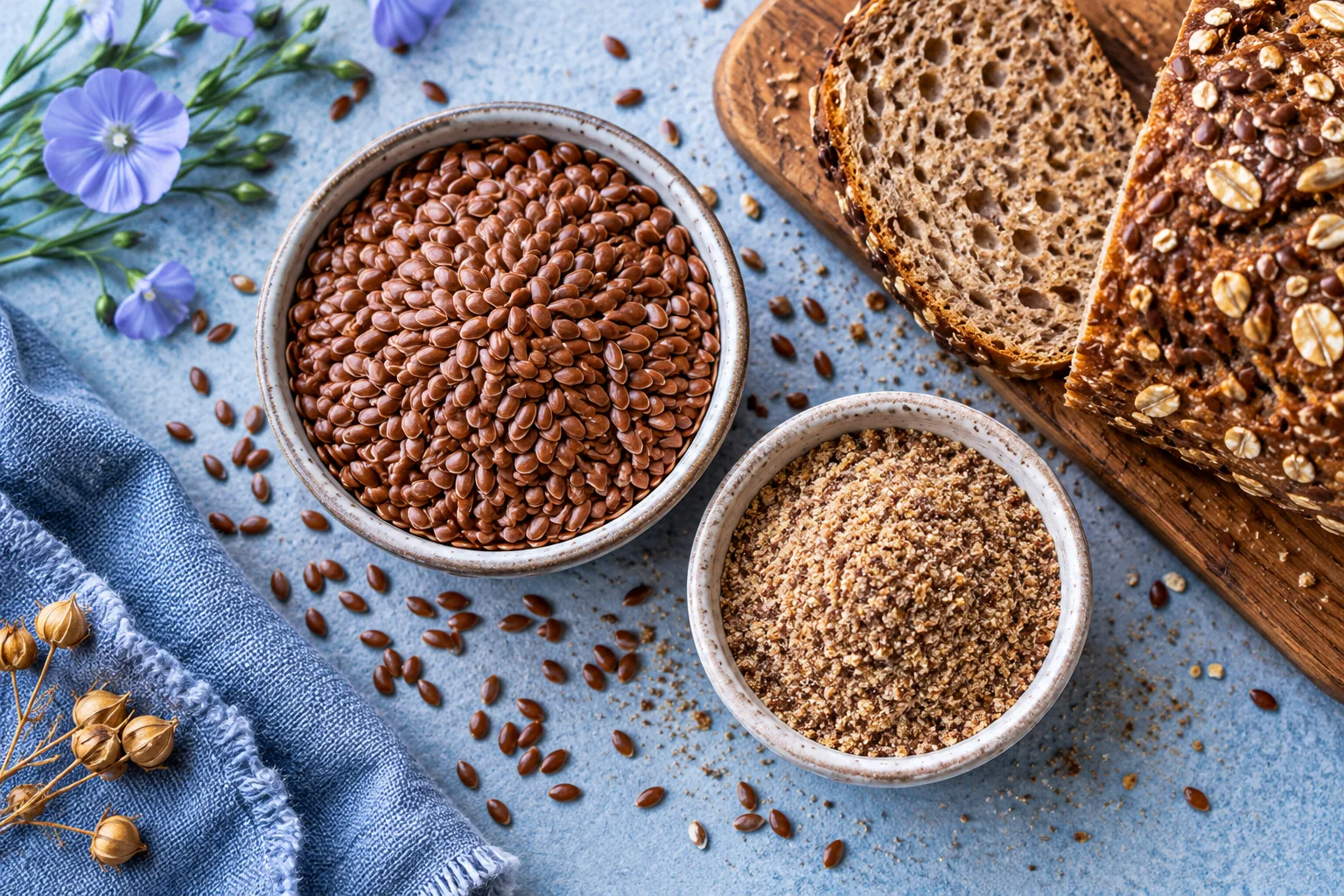
Research explained · Published 2019 & 2025
A spoonful of flaxseed sounds like an easy heart-health upgrade. The problem is the promise sometimes attached to it: add this food, watch your blood pressure fall, and perhaps need less treatment. Research does not support that simple chain for everyone.
There is a signal, with real variation
A 2025 review pooled eighteen randomized parallel trials in people with cardiovascular risk factors. Average systolic and diastolic pressure were lower with flaxseed interventions. However, differences between studies were extremely large, so the pooled average is not a reliable prediction for a particular person.
Trials varied in starting health, product, comparison and duration. Blood pressure was also a secondary outcome in many. Pooling them can suggest a possible effect while still leaving considerable doubt about the size and consistency of the benefit.
Why an individual trial can sound positive but be inconclusive
In the Iranian sachet trial, pressure fell within the flaxseed group. It also fell in the comparison group. When the researchers compared the groups properly, the blood-pressure difference was not statistically clear.
That distinction is easy to lose in a headline. A before-and-after improvement can reflect dietary advice, medicines, repeat measurement or other changes shared by the groups. The question is whether adding flaxseed produced an additional benefit.
The paper also contains inconsistent screening and recruitment descriptions. Its abstract calls the sachet amount flaxseed, but the methods show that the sachet included sweeteners as well as ground seed. Those details are reasons to be cautious, not reasons to pretend the study never existed.
What does the wider evidence add?
The review included research from several countries, including Iran, India, China, Brazil and the US. That broadens the settings, but diversity is not the same as universal applicability. People with different diagnoses, baseline pressure and usual diets may respond differently.
Nor does a positive pooled result make every trial positive. A useful answer accommodates both: there may be a modest benefit on average in selected populations, while a well-defined individual comparison can be inconclusive.
A fall in one group is not the full comparison
Before and after
A number can improve for reasons shared by both groups.
Against control
The difference between groups is the key treatment comparison.
Across studies
Pooled averages hide wide variation in products and participants.
In your routine
A food choice does not replace monitoring or medical care.
Seeds are not the same as oil
Ground flaxseed supplies a mixture of fibre, fat and other components. Oil has a different composition; a concentrated extract differs again. A result for one preparation should not be pasted onto another simply because the front label says flax.
The same applies to portions. A sprinkle added to breakfast is not necessarily the intervention tested. This article does not turn the research quantities into a personal daily regimen or suggest increasing portions to chase a larger effect.
Where could it fit in ordinary food?
If you like flaxseed, think about the meal it joins. It might be part of oats, yoghurt, bread or another familiar dish. Whether that meal fits your needs still depends on the whole plate, rather than the presence of a fashionable seed.
The NCCIH guidance notes digestive side effects, potential interactions and uncertainty in some groups. Food-like packaging does not guarantee that increasing intake is appropriate alongside every medicine or health condition.
The answer to keep
Flaxseed is a plausible dietary contributor, not a blood-pressure reset button. Keep monitoring and prescribed care in place. If you are considering a substantial dietary change, discuss it in the context of your treatment rather than using a promising paper to adjust medicines yourself.
Evidence context: the Iranian paper reported no funding or competing interests. The review reported no competing interests and lacked prospective registration. Its high variation and secondary-outcome limitations prevent a universal benefit claim. Educational information; not clinically reviewed.
Sources & further reading
- Iran · flaxseed sachet trial (2019)
- 2025 review of parallel flaxseed trials
- NCCIH flaxseed evidence and safety
Study years differ from this article’s publication date. We reviewed full primary papers and relevant supporting material; access limitations are kept out of efficacy claims. Original illustrations and diagrams; no publisher figures reproduced. Educational writing, not clinical review.
Published 11 October 2026 · Sources checked 11 October 2026. Suggest a correction.