 PoshanSense
Can you eat fruit if you have type 2 diabetes?
A Danish trial tested advice to restrict whole fruit. What its HbA1c results mean for fruit choices, portions and personal diabetes care.
Research explained · Published 2013
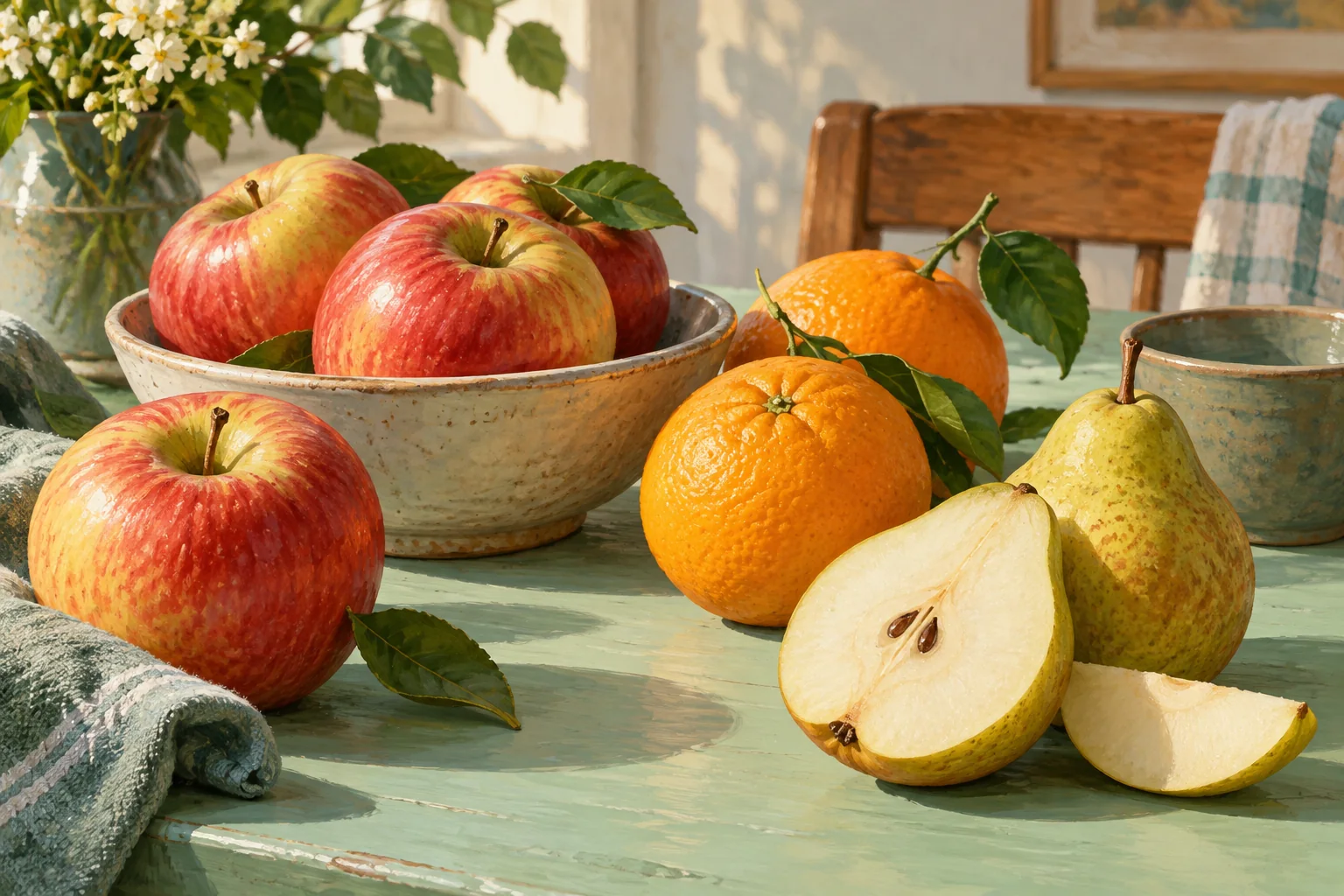
An apple looks like an ordinary snack until a diabetes diagnosis makes its sugar content feel like a warning label. Is the fruit still a sensible choice, or should it be replaced with something that tastes less sweet?
The useful answer starts with the whole food and the amount. A diagnosis does not turn every piece of fruit into a forbidden item. It also does not make the carbohydrate in a large portion irrelevant. The goal is a workable eating pattern, rather than a list built around sweetness alone.
Restricting fruit did not improve the main outcome
Researchers at a West Jutland outpatient clinic tested this question directly. Both groups received consultations with a dietitian. The difference was advice to eat more or less fruit, using written guidance on standardised portions.
Reported fruit intake moved in the intended directions. HbA1c, a measure of longer-term glucose exposure, fell in both groups. The difference between groups was not statistically clear. Weight and waist also fell without a clear advantage from restricting fruit.
More fruit was not the only thing changing
This was a real-life nutrition-care trial, not a laboratory diet where every meal and medicine stayed fixed. Participants could change other foods when they changed fruit intake. Both groups were receiving diabetes care, and some medicine doses increased during follow-up.
More people in the higher-fruit group were already taking oral diabetes medicines at baseline. Statistical adjustment did not materially change the main result, but this imbalance remains useful context. It would be misleading to credit fruit alone for the HbA1c improvement seen within that group.
The trial also finished recruitment earlier than planned because time and funding were limited. Sixty-three people provide a useful comparison, but not proof that every intake level has the same effect. A result showing no clear difference is not a guarantee of identical responses.
A piece of fruit is not one fixed serving
The researchers standardised a portion around its carbohydrate content. A whole large banana was therefore not interchangeable with a whole small apple simply because each counted as one object. That detail explains why the study’s phrase “two pieces” should not become a universal instruction.
Your own usual fruit may be mango, berries, guava, oranges or something else. The evidence does not require buying Danish varieties. It does require remembering that the portion and the rest of the meal affect the comparison. A fruit bowl, a large smoothie and a small whole fruit are different eating occasions.
Fruit, diabetes and the question being tested
Food form
The trial encouraged fresh whole fruit, not juice, dried fruit or canned fruit.
Amount
The groups reported different intakes; this was not an unlimited-fruit experiment.
Finding
Restricting fruit did not clearly improve HbA1c relative to higher-fruit advice.
Personal care
Your portions, medicines and glucose targets still need individual context.
Keep whole fruit separate from juice
Participants were encouraged to choose fresh whole fruit and minimise juice, dried fruit and canned fruit. The trial therefore cannot answer what would happen if fruit advice were replaced with several glasses of juice. Nor can it declare all canned or dried products unsuitable.
Keeping that boundary avoids a common headline jump: evidence about whole fruit becomes reassurance about every product made from fruit. Read the food form as carefully as the fruit name, and compare what you would actually eat rather than an idealised serving.
A practical conversation, rather than a ban
If you have type 2 diabetes, take your usual fruit choices and portions to your diabetes team. Ask how they fit your food plan and any monitoring instructions. Do not adjust medicines on the basis of this article or treat a single after-meal reading as a verdict on all fruit.
A food journal can make that conversation more concrete by showing the amount, time and other foods. It cannot diagnose a glucose problem or prescribe a carbohydrate allowance. The study reported no competing interests; its main paper does not name a funding sponsor. Its message is still useful: a blanket restriction on whole fruit did not earn an advantage in this trial, while individual care remained part of the setting.
Sources & further reading
Study years differ from this article’s publication date. We reviewed full primary papers and relevant supporting material; access limitations are kept out of efficacy claims. Original illustrations and diagrams; no publisher figures reproduced. Educational writing, not clinical review.
Published 11 October 2026 · Sources checked 11 October 2026. Suggest a correction.