 PoshanSense
Is gluten-free healthier if you do not have coeliac disease?
A gluten-free label is not a general health upgrade. A Danish feeding study and long-term US evidence explain why the replacement foods matter.
Complementary human studies · Published 2017 & 2018
The gluten-free shelf can make a simple shopping decision feel like a health test. If one loaf has a special label and another does not, is the first one better for everyone? The useful question is what you need from that food, and whether you have a medical reason for the restriction.
Start with the reason for the swap
Coeliac disease is a different situation from choosing a diet because it sounds healthier. This article is about people without that diagnosis; it is not permission for someone with coeliac disease to reintroduce gluten. Wheat allergy and other investigated symptoms also need their own assessment.
If you are considering coeliac testing, speak to a healthcare professional before starting an exclusion diet. NIDDK explains that removing gluten beforehand can affect test results. Feeling better after changing lunch is information worth discussing, but it does not establish a diagnosis.
Why a Danish result is easy to overread
In the Danish crossover study, the lower-gluten pattern changed parts of the gut microbiome, reduced breath hydrogen and improved reported bloating compared with the higher-gluten pattern. Those are interesting findings. They are not the same as showing that gluten damages healthy guts.
The participants changed actual foods. The total fibre amount was broadly similar, but its composition differed. The authors considered those differences a likely explanation for several effects. A lower-gluten meal can introduce a different set of fibres for gut microbes to use, even when the total grams look comparable.
This also was a low-gluten comparison, not a test of a completely gluten-free diet. The food patterns supplied approximately 2 versus 18 grams of gluten daily. Those numbers describe the experiment, not a target to copy. Blood-glucose and lipid measures did not show clear between-pattern improvements.
The primary question concerned the microbiome, with many additional measurements. A change in bacteria is not automatically a change towards better health, and a short trial cannot establish fewer heart attacks or longer life. Its strongest contribution is to explain why a food swap has several possible causes.
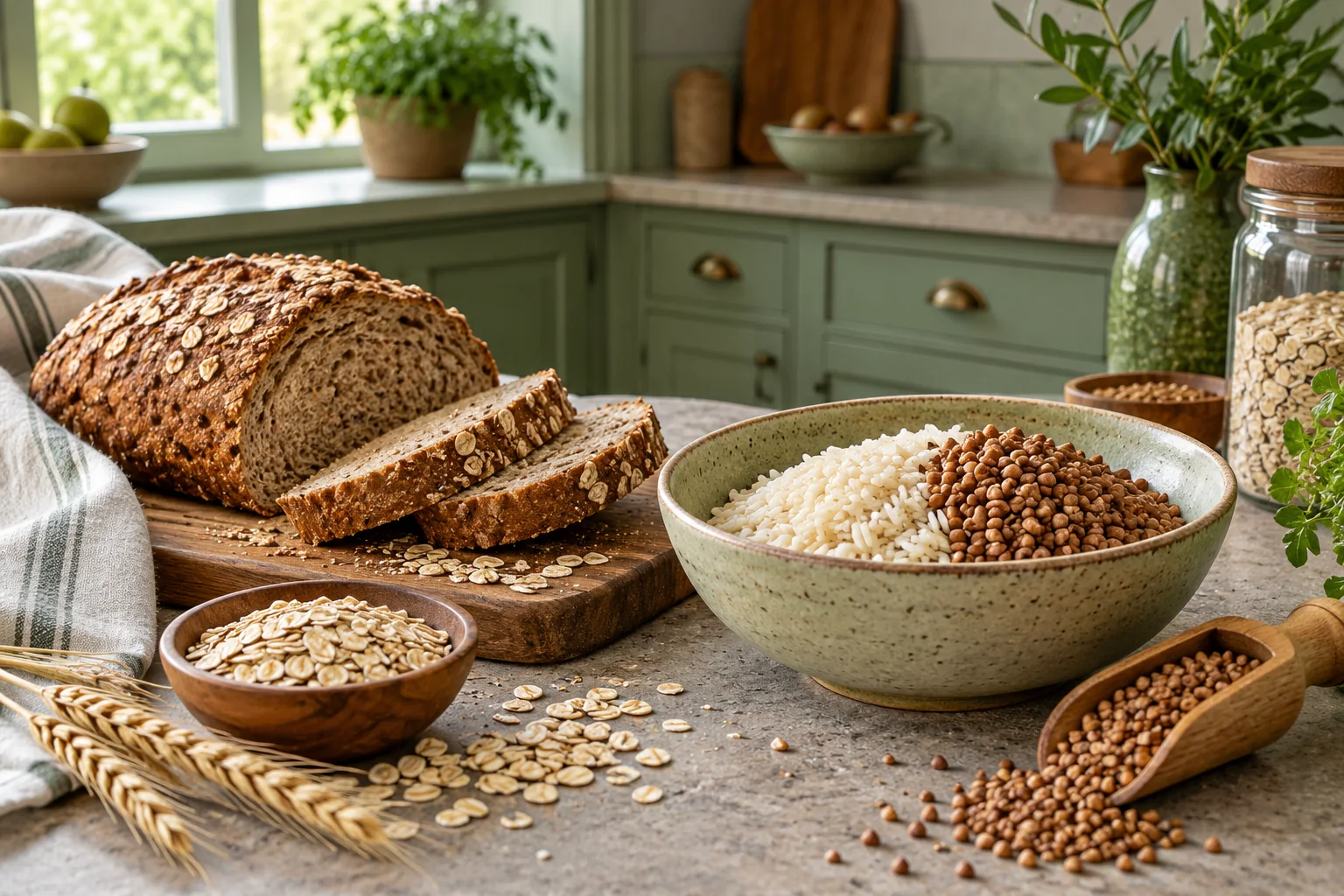
A gluten swap changes more than gluten
Original food
Bread or pasta supplies more than one ingredient and nutrient.
Replacement food
Rice, oats, pulses or a packaged alternative change the meal differently.
Possible changes
Fibre types, whole grains and portions can change alongside gluten.
Fair conclusion
A changed symptom or microbiome does not identify gluten as the cause.
Longer-term evidence does not create a gluten-free health halo
A 2017 US analysis followed 64,714 women and 45,303 men without known coeliac disease or previous coronary disease at baseline. Estimated gluten intake was not significantly associated with overall coronary-heart-disease risk after adjustment for other factors.
Because this was observation, it cannot prove that every gluten-containing diet is beneficial or every gluten-free diet is harmful. It does challenge the idea that avoiding gluten is an established heart-protection strategy. The authors also cautioned that avoiding gluten can mean eating fewer whole grains.
Compare the foods you will actually eat
A bowl of rice and lentils, gluten-free packaged biscuits and a wholegrain sandwich are three different meals. Calling two of them gluten-free does not make their fibre, protein, portions or added ingredients equivalent. A special label answers one question about the product, not every question about nutrition.
For everyday shopping, compare the serving you use, fibre and the ingredients that matter to you. If you replace a familiar staple, look at the replacement meal as a whole. A restriction that leaves fewer enjoyable or affordable foods deserves a clear reason.
This applies across countries without pretending the studies covered every cuisine. Danish trial foods and US health-professional diets are not identical to Indian, African or other local meals. The broadly useful lesson is to distinguish a medically necessary restriction from a general claim, then examine what takes the food's place.
The practical answer
Without a diagnosed reason, gluten-free is an option rather than a proven upgrade. You can choose foods you enjoy while paying attention to variety, whole grains and meal adequacy. Persistent symptoms are a reason to investigate, rather than to keep extending a list of excluded foods.
Evidence context: the Danish study reports Innovation Fund Denmark and Novo Nordisk Foundation support, supplied study foods and no competing interests. The US analysis reports public and foundation research support, with no relevant financial relationships declared. Neither report establishes an identical effect in every population.
Sources & further reading
- Denmark · lower-gluten food patterns (2018)
- 2017 US gluten intake and coronary-heart-disease cohorts
- NIDDK: testing before starting a gluten-free diet
Study years differ from this article’s publication date. We reviewed full primary papers and relevant supporting material; access limitations are kept out of efficacy claims. Original illustrations and diagrams; no publisher figures reproduced. Educational writing, not clinical review.
Published 11 October 2026 · Sources checked 11 October 2026. Suggest a correction.