 PoshanSense
Is organic food healthier—and worth the extra cost?
Organic diets can reduce some measured pesticide exposure. That is different from proving better long-term health or making an expensive food automatically nutritious.
Complementary human studies · Published 2014 · 2019
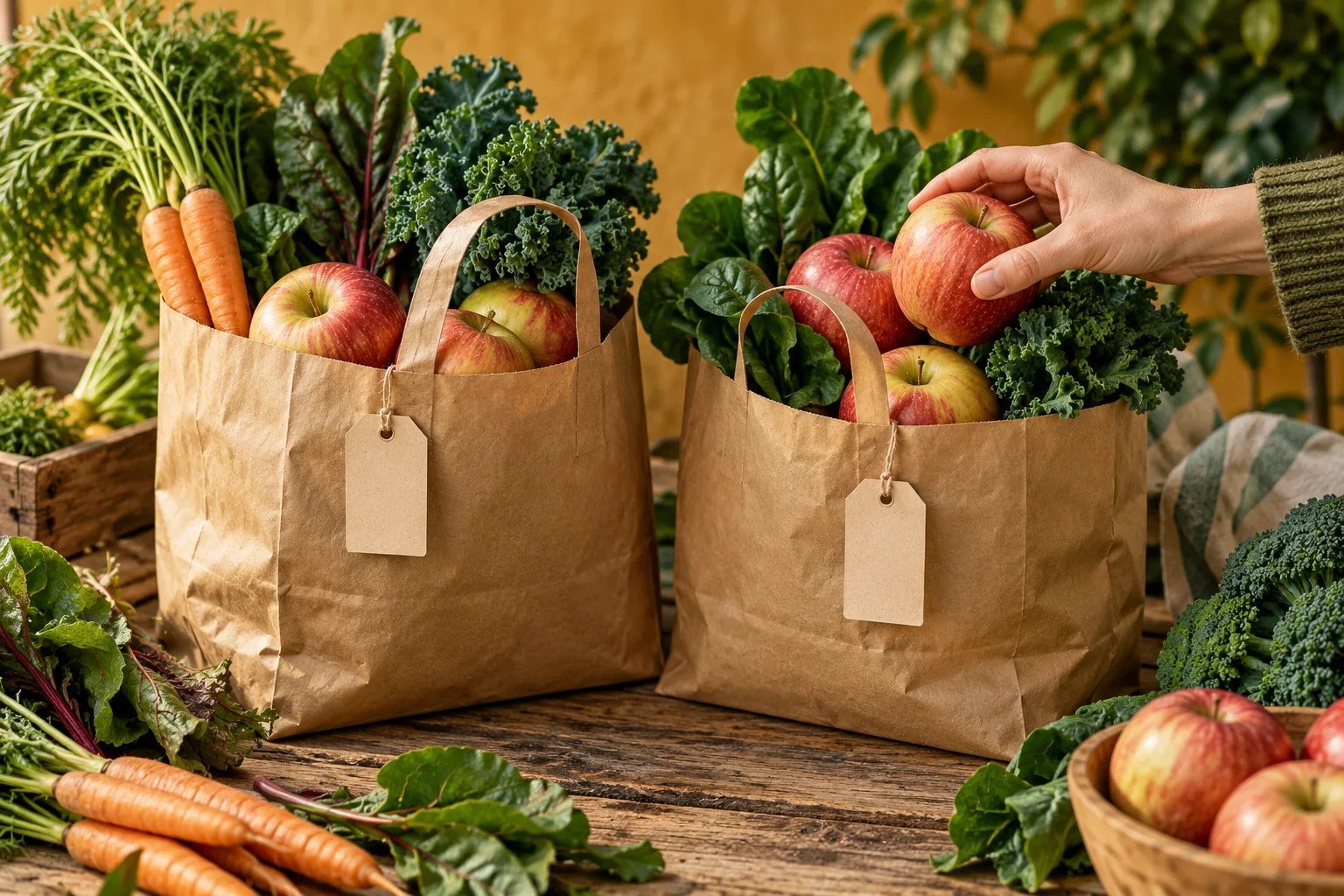
Two apples, two prices, one question: does the organic one buy better health? The answer depends on what “better” means. Lower exposure to some pesticide residues is one outcome. Fewer illnesses years later is another. The research is stronger for the first than for a clear, general claim about the second.
What the label can—and cannot—tell you
Organic production is a way of producing food under relevant standards. It is not the same as a personalised nutritional assessment. An organic biscuit is still a biscuit, and a conventionally grown vegetable does not become nutritionally pointless because another version has a certification.
Environmental or farming preferences are legitimate reasons someone might choose organic products. They should not be disguised as a settled medical promise. This article focuses on human health evidence rather than ranking farming systems or telling you how to spend your money.
The clearest finding concerns exposure
The systematic review found that organic-diet interventions often reduced measured urinary pesticide metabolites. That supports a difference in exposure under the conditions tested. A metabolite measurement is not itself a diagnosis of harm in the comparison group, or proof of a future health benefit in the organic group.
Most intervention work was too short or used measurements too indirect to settle long-term disease outcomes. Some observational studies found favourable associations, but their participants also differed in overall food choices and lifestyle. The review did not conclude that long-term health superiority was established.
Different questions at the checkout
Production
What standards and practices does the label describe?
Exposure
Were measured pesticide metabolites different?
Health
Was a meaningful long-term outcome demonstrated?
Why organic consumers are hard to compare
If frequent organic shoppers also eat more vegetables, have different incomes or engage in other health-related routines, a later health difference cannot simply be credited to the label. Researchers can adjust for recorded factors, but they cannot perfectly reconstruct every relevant difference.
The large UK cohort of women did not find a convincing reduction in overall cancer incidence among frequent organic consumers. A finding for one cancer subgroup does not turn the overall result into proof that organic food prevents cancer. Multiple outcomes and inconsistent patterns require restraint.
These studies also overlap: the UK cohort was included in the review. They are two ways of looking at an evidence base, not two independent confirmations of a benefit. Counting the same participants twice makes a conclusion sound stronger without adding new information.
How to make the shopping decision more useful
Separate three questions: what food am I buying, how was it produced, and what extra cost am I accepting? The answers can point in different directions. You might value a particular production standard while recognizing that its health advantage has not been proved.
Compare like with like. An apple with another apple is a sensible price comparison; an expensive organic snack with an ordinary meal is not a test of farming methods. Portion and overall diet also remain relevant. No certification turns unlimited servings into a research-backed health strategy.
A budget decision should not create fear of affordable food. The available studies do not support telling readers that they must buy organic products to eat meaningfully. They also do not prove that exposure differences never matter. Uncertainty is not a reason to invent certainty in either direction.
So is the premium worth it?
That is a personal value and budget question, rather than a conclusion a short-term exposure study can settle. If you choose organic for production preferences or to reduce some measured exposures, describe that reason honestly. If your goal is proven improvement in long-term health, the evidence is not yet strong enough to promise it.
The useful answer is to keep the label in context. Choose the foods you want to eat consistently, read the ordinary nutrition information, and judge the premium without treating it as an insurance policy. Paying more can buy a different production choice; it does not automatically buy a demonstrated health outcome.
Sources & further reading
- Human health outcomes of organic versus conventional food
- Organic consumption and cancer incidence in UK women
Study years differ from this article’s publication date. We reviewed full primary papers and relevant supporting material; access limitations are kept out of efficacy claims. Original illustrations and diagrams; no publisher figures reproduced. Educational writing, not clinical review.
Published 11 October 2026 · Sources checked 11 October 2026. Suggest a correction.