 PoshanSense
Can potatoes fit a weight-loss diet? The whole menu matters more
A US controlled-feeding trial found weight loss on both potato- and bean-based menus. It did not show potatoes alone burn fat or validate a potato-only diet.
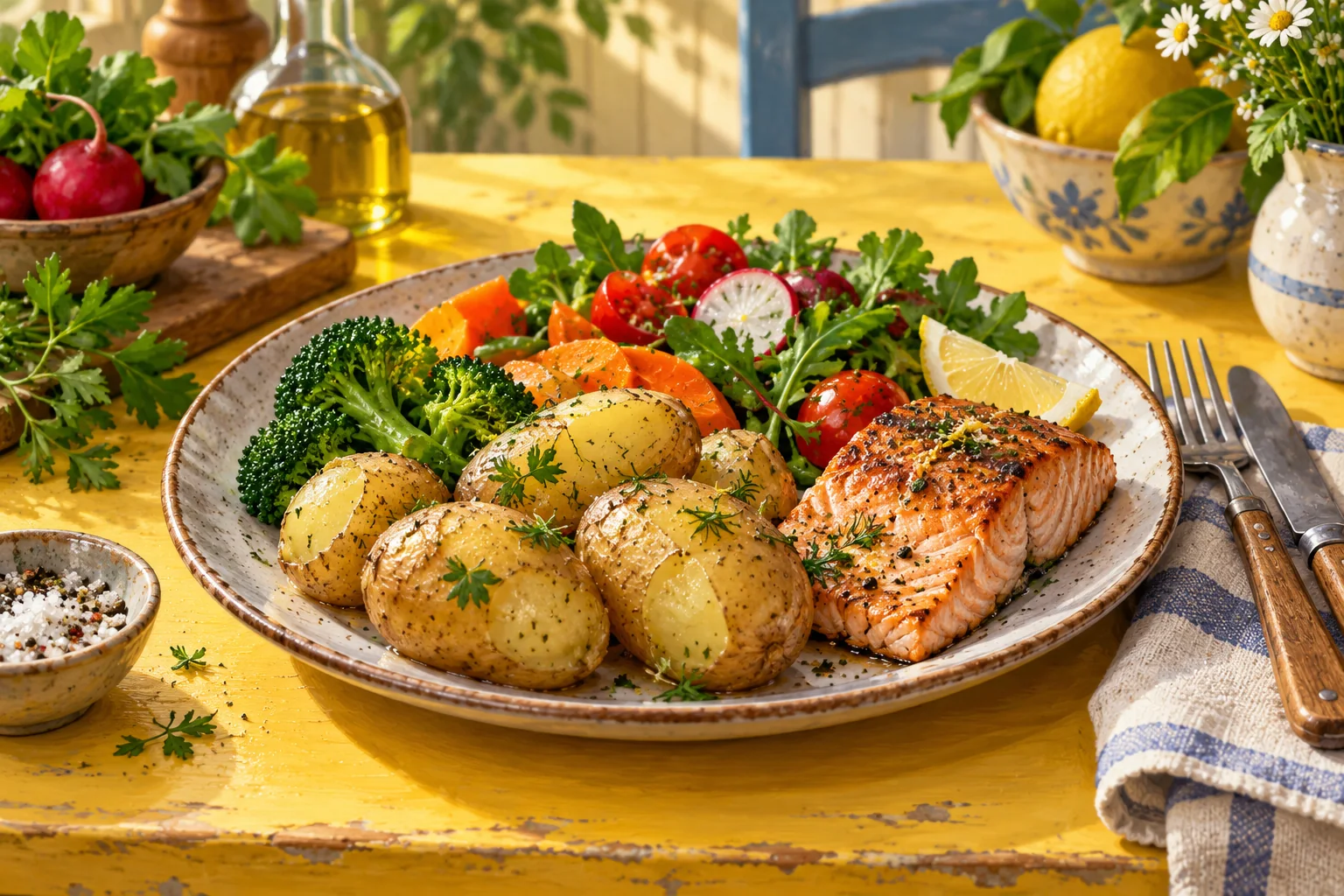
Research explained · Published 2022
If potatoes have been banished from your shopping list as “fattening”, a controlled-feeding experiment provides a useful challenge. The result is not that potatoes have a secret fat-burning property. It is that a familiar starchy food can belong in a structured menu that produces weight loss.
What did the experiment find?
In a US randomized trial, participants received potato- or bean-based mixed menus for eight weeks. Both groups lost weight. Percentage weight loss did not clearly differ between the groups.
The trial's main purpose was to compare glucose responses, not to test a potato weight-loss product. The two diets met the predefined glucose-response equivalence condition, but neither showed a clear reduction from baseline in that primary response.
The menu did a lot of work
The foods were provided, meals were planned and participants received regular support. Both menus were designed to have low energy density: relatively few calories per gram of food. Macronutrients and fibre were broadly matched.
These were mixed meals, not plain potatoes eaten indefinitely. The potato preparation included boiling with skin, refrigeration and incorporation into dishes. Other foods, including protein foods and vegetables, remained in the menus.
Participants ate roughly 87–88% of the food provided. That matters because the amount actually consumed may have contributed to weight loss. The result cannot be attributed solely to an ingredient on the menu.
A potato trial is not a potato-only diet
Menus
Both groups received structured mixed meals.
Weight
Both lost weight over eight weeks.
Comparison
No clear difference in percentage weight loss between menus.
Limit
No usual-diet arm to isolate the ingredient’s effect.
What was missing from the comparison?
There was no usual-diet group. We cannot tell how either structured menu compared with participants simply continuing their previous eating, or which part of the programme accounted for the change.
The groups also differed in baseline BMI. The study was small, predominantly women, and lasted only eight weeks. It cannot establish long-term maintenance or a universal outcome across countries and lifestyles.
Some insulin-resistance results depended on whether all randomized participants or only completers were analysed. That is another reason not to promote potatoes as a diabetes treatment from this trial.
Preparation changes the question
A boiled potato within a mixed meal is different from a large serving of fried potatoes with rich additions. This experiment did not test every way potatoes are eaten or show that the amount of oil and other ingredients no longer matters.
Nor does the preparation establish a guaranteed resistant-starch benefit for every reheated meal. The diet combined many elements. Our cooling-and-reheating explainer examines that narrower mechanism separately.
Can this help an ordinary shopping decision?
Yes, by weakening an unnecessarily absolute rule. You do not need to assume that a potato makes a weight-management meal impossible. You still need to consider the portion, preparation, what accompanies it and the overall eating pattern.
A menu that you can afford, enjoy and sustain is a practical consideration that an eight-week food-provision study cannot solve for you. The experiment gives evidence of possibility, not a personal forecast or an instruction to copy its research routine.
Do not confuse the weight and diabetes questions
Our potato-and-diabetes explainer covers long-term observational studies, which use a different design and outcome. Their answers can vary by preparation and substitution. A short feeding trial showing weight loss does not cancel those questions, and a cohort association does not prove every potato meal is harmful.
The direct answer is encouraging and limited: potatoes can fit. The whole menu, actual intake and comparison explain much more than a simple “good carb” or “bad carb” label.
Evidence context: funded by the Alliance for Potato Research and Education and US NIH support; the industry funder was reported to have no role in design, analysis or writing. Authors declared no financial conflicts; one author's current pharmaceutical employment was noted. Educational information; not clinically reviewed.
Sources & further reading
Study years differ from this article’s publication date. We reviewed full primary papers and relevant supporting material; access limitations are kept out of efficacy claims. Original illustrations and diagrams; no publisher figures reproduced. Educational writing, not clinical review.
Published 11 October 2026 · Sources checked 11 October 2026. Suggest a correction.