 PoshanSense
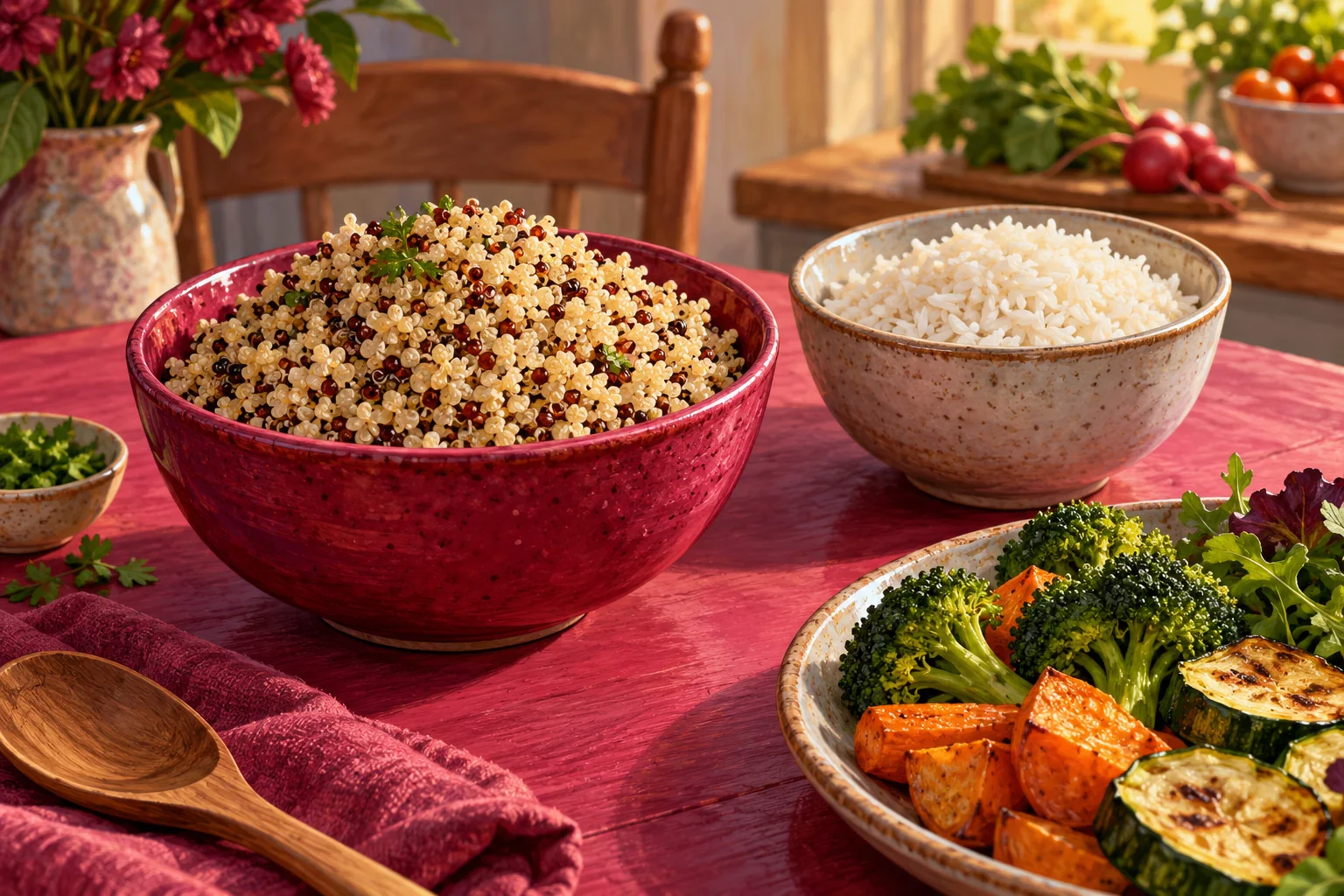
Is quinoa better for blood sugar than rice?
Studies in China and Spain tested quinoa-based eating patterns. Why promising glucose findings do not make quinoa a diabetes treatment.
Research explained · Published 2022–2023
Quinoa often arrives with a “superfood” introduction. If rice is already part of your meals, the real question is whether changing the grain helps, and whether the benefit is worth the cost and adjustment. That is a better starting point than treating a fashionable ingredient as medicine.
The studies give a reason to investigate, with enough uncertainty to keep the answer practical. They suggest that changing a staple-food pattern can affect glucose measures. They do not show that any bowl of quinoa produces a predictable response or that familiar grains must disappear.
What improved in the larger study?
In the Chinese trial, people assigned to the quinoa pattern had better end-of-study two-hour glucose and HbA1c measures than controls. The two-hour value came from a standard oral glucose tolerance test. It was not glucose measured after an ordinary mixed lunch of rice, vegetables and lentils.
The intervention was substantial: quinoa replaced refined staples across the diet, rather than being sprinkled over the same meals. Body-weight measures also differed. That leaves several possible contributors to the improvement. The trial cannot cleanly isolate a special quinoa compound from changes in food composition, eating habits and weight.
The paper's diabetes-progression counts and associated statistical reporting are not fully consistent. We therefore do not use it to promise a percentage reduction in diabetes risk. Its lipid results also do not justify a blanket claim that quinoa improved every cholesterol measure. The glucose findings are interesting enough without expanding them beyond the reliable comparisons.
What did the Spanish pilot add?
A 2022 Barcelona pilot followed nine older adults with prediabetes. Everyone first spent four weeks on their usual diet, then four on a quinoa-based pattern. Sensors helped researchers analyse breakfast glucose curves.
Glucose curves were lower during the quinoa phase, but this was a fixed-order experiment, not a randomised sequence. The supplied foods included quinoa-based breads and other products, with changes in carbohydrate and fat composition. Participants also lost some weight. Nine people and multiple simultaneous changes make this an early signal, rather than a final answer.
The pilot did not measure the number developing diabetes over years. Even the HbA1c comparison spanned both phases, so it cannot be attributed entirely to the quinoa period. Combining the studies means considering their separate strengths and weaknesses, not adding their participant numbers into one imaginary head-to-head trial.
A staple swap is more than a grain name
China
A year-long quinoa pattern improved some glucose measures.
Spain
Nine people showed a breakfast-curve signal in a fixed-order pilot.
Meal context
Portion and accompanying foods remain part of the response.
No guarantee
Neither study establishes a universal diabetes-prevention benefit.
How does this translate to dinner?
Quinoa is one possible staple, not a requirement for eating well. A smaller portion of rice with legumes and vegetables is a different meal from a large plain serving; the same is true for quinoa. Food names alone do not describe the amount of carbohydrate in the plate or the complete meal.
If you enjoy quinoa and it fits your budget, using it as a replacement is different from adding it on top of the usual quantity of food. If it is expensive or unfamiliar, these studies do not establish that affordable local whole grains or other balanced staple choices are inferior.
For someone with diabetes or prediabetes, the choice belongs within their existing care plan. Do not change medicines or assume that switching grains removes the need for appropriate monitoring and follow-up. An article cannot predict your individual glucose response.
Keep the evidence and the promise the same size
The Chinese study reported Guangzhou public and institutional support and no commercial conflict. The Spanish paper acknowledged research institutions, a diabetes-innovation chair and support involving glucose-sensor supply; authors declared no conflicts. Both reports provide context, but neither resolves the design limitations.
The useful answer is a qualified yes to investigating staple replacement, and a no to the miracle claim. Quinoa may be a workable food choice. The evidence does not make it a universal rice substitute, a glucose-free food or a treatment that prevents diabetes.
Sources & further reading
Study years differ from this article’s publication date. We reviewed full primary papers and relevant supporting material; access limitations are kept out of efficacy claims. Original illustrations and diagrams; no publisher figures reproduced. Educational writing, not clinical review.
Published 11 October 2026 · Sources checked 11 October 2026. Suggest a correction.