 PoshanSense
Can soup feel more filling than the same food and water?
A UK experiment blended the same meal into soup and tracked hunger and stomach emptying. Why the result does not mean every soup causes weight loss.
Research explained · Published 2012 & 2021
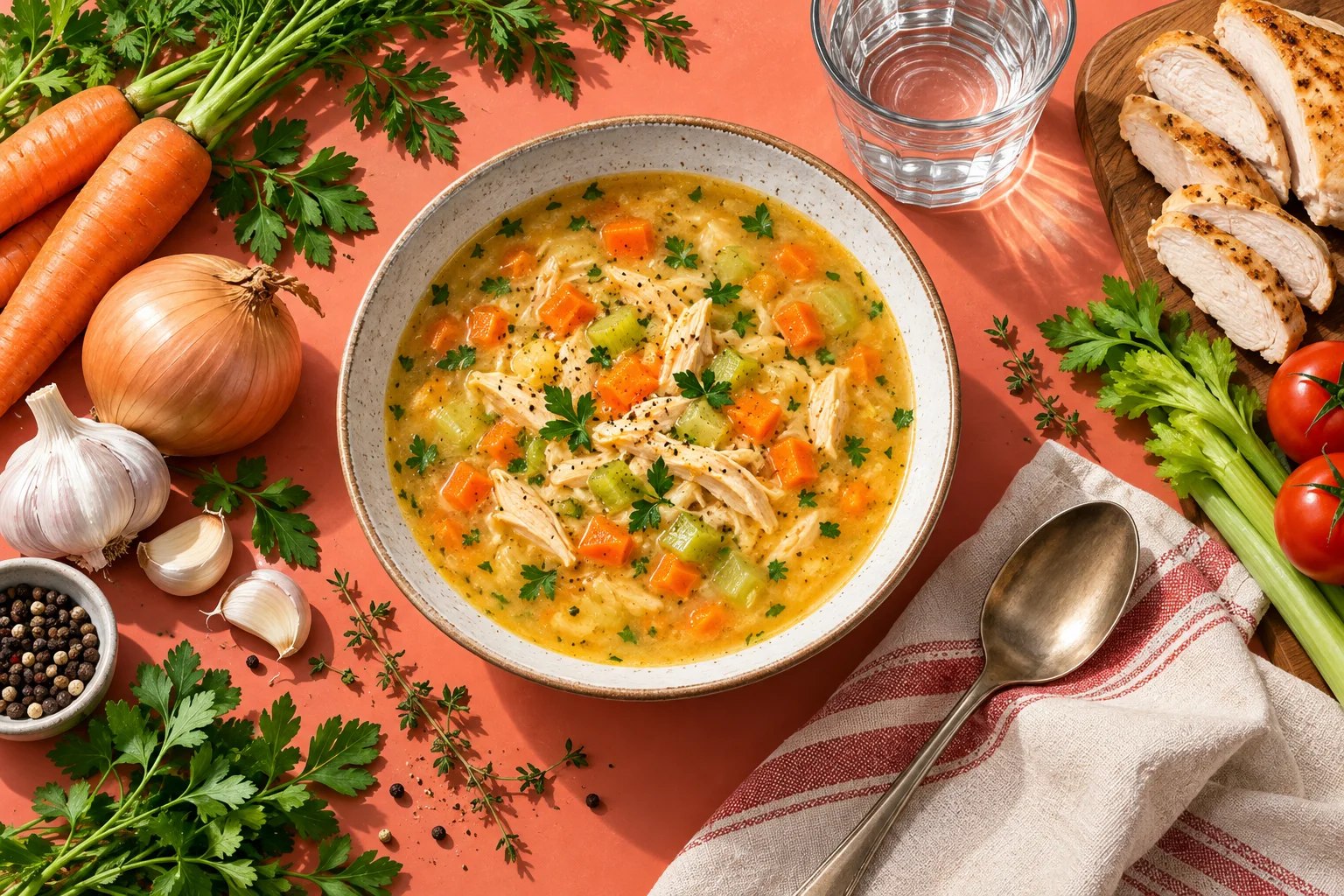
Soup can seem like a paradox. It contains plenty of water, yet sometimes feels more satisfying than solid food with a glass beside it. Is that just comfort, or can blending a meal change what happens after eating?
A small experiment addressed the question in an unusually direct way: keep the food and water the same, then change whether they arrive separately or blended together. It offers a useful answer about food form, without turning every bowl of soup into a weight-loss strategy.
The same meal was served two ways
In a Nottingham study, a meal of chicken, vegetables, breaded mushrooms and water was either served as separate components or blended into soup. Healthy volunteers ate both forms on different visits.
Reported hunger was lower after the soup. However, fullness and desire-to-eat measures did not clearly differ. “More filling” is therefore a convenient everyday description, but the precise research finding is that one appetite measure changed, not that every aspect of appetite improved.
What the stomach images add
The imaging part involved a separate group of volunteers, rather than the same people whose hunger ratings supplied the main appetite comparison. Images showed different stomach-emptying patterns, consistent with water being retained differently when blended into the food.
This helps explain a plausible mechanism. But it does not establish a person-by-person link between an image and a hunger score. Nor did the researchers directly measure the hormones sometimes invoked in explanations of soup’s effect.
One stomach-emptying time comparison was not statistically clear, even though the broader pattern differed. Picking a precise number of extra minutes would make the conclusion sound more exact than the data support. The interesting point is the food-form effect, not a stopwatch rule for every recipe.
Less hunger does not automatically mean less eating
The UK study did not weigh a later freely eaten meal, follow daily intake or measure weight change. People can report different hunger yet eat similar amounts, especially when later food is appealing or portions are determined by habit.
A Spanish experiment illustrates that gap. Twenty-four adults tried energy- and volume-matched portions including gazpacho, hummus, ajoblanco and bread. Gazpacho produced more favourable appetite ratings in several comparisons, but the pizza eaten three hours later did not clearly differ between conditions.
That was not a replication of the blended-versus-separate UK meal. The ingredients differed between Spanish foods. It is useful complementary evidence because it shows why appetite ratings and the amount subsequently eaten should be reported separately.
Same ingredients does not mean identical digestion
Separate
The solid meal and water were consumed separately.
Blended
The same ingredients and water were made into soup.
Measured
Hunger and stomach imaging were studied in separate groups.
Not established
Less hunger did not establish lower later intake or weight loss.
A bowl still needs to be understood as a meal
A small broth, a blended vegetable soup and a substantial soup with beans or other additions are different foods. The research cannot assign all of them the same effect. Bread, toppings and anything eaten alongside the bowl also change the meal being compared.
If soup is convenient and satisfying for you, it can be a useful choice. There is no need to force every meal through a blender or assume drinking water separately is somehow wrong. The experiment studied a specific food combination under controlled conditions.
The UK work received an educational grant connected with a BBC programme and reported no author conflicts. The Spanish study reported public funding and no conflicts. Those details belong alongside the small samples and short observations, not in place of them.
The practical lesson is that food form can matter while ingredients and servings still count. Notice whether a particular soup works in your routine, and log the complete meal. Feeling comfortably satisfied is valuable in itself; it does not need to be advertised as guaranteed calorie compensation or body-fat loss.
Sources & further reading
- United Kingdom · the same meal, blended or separate (2012)
- Spanish comparison including gazpacho and a following meal
Study years differ from this article’s publication date. We reviewed full primary papers and relevant supporting material; access limitations are kept out of efficacy claims. Original illustrations and diagrams; no publisher figures reproduced. Educational writing, not clinical review.
Published 11 October 2026 · Sources checked 11 October 2026. Suggest a correction.