 PoshanSense
Are walnuts good for memory as we age?
A two-year trial in Spain and the US did not find a clear overall cognitive benefit from walnuts. What the brain-food label leaves out.
Research explained · Published 2020
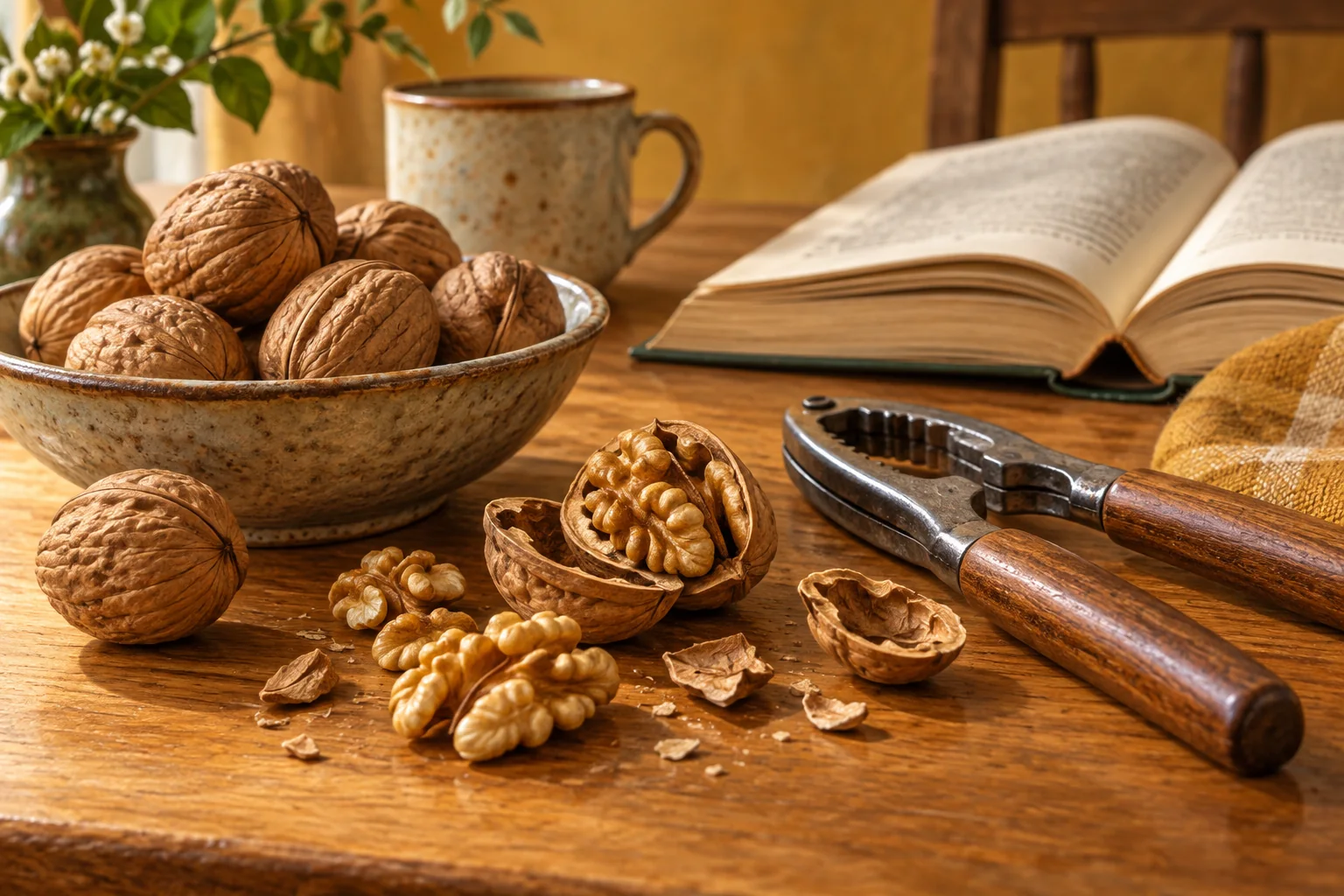
Walnuts look a little like a brain. That visual coincidence makes a memorable marketing story, but the useful question is whether people assigned to eat them actually maintain memory better.
The most direct trial gave a modest answer
The Walnuts and Healthy Aging trial tested that question over two years in Spain and the United States. Its primary global cognition result did not clearly favour walnuts. Memory, language and other cognitive-domain results were also not uniformly better.
That does not strip walnuts of their place as food. It does mean the label “brain food” is more confident than the main result. A food can be useful in a diet without delivering every advertised benefit.
Why did some headlines sound positive?
The researchers examined results separately by study centre after looking at the overall findings. The Barcelona analysis suggested a possible benefit. Participants there differed from those in Loma Linda in factors including education and baseline performance, making the observation worth investigating.
However, an exploratory subgroup is easier to find by chance than a result specified before the study begins. It cannot override the null main answer or establish that nationality determines who benefits. A new study designed to test that possibility would provide stronger evidence.
What the walnut trial can—and cannot—say
Two countries
Older adults in Barcelona and Loma Linda took part.
Main answer
No clear overall advantage in global cognition.
Exploratory signal
A Spanish centre analysis was favourable but not confirmatory.
Boundary
This was not a dementia-treatment or prevention trial.
Two years matters—but it is not a lifetime
The trial was longer and larger than many single-food experiments. That strengthens the relevance of its overall result. Even so, the participants were generally healthy older adults, and the study did not demonstrate a reduction in dementia diagnoses.
Cognitive test performance and a clinical condition are different outcomes. A test can remain stable for many reasons, while preventing a disease requires evidence on that disease. Neither a clever-looking nut nor a laboratory score closes that gap.
Keep the food decision practical
Walnuts may suit a snack, porridge topping or salad. The everyday question is whether you enjoy them, can tolerate them and how they fit your usual portions. Nut allergies remain a clear reason to avoid them; dental comfort and digestion can affect the form people find manageable.
The trial supplied walnuts and supported participants in following the intervention. That does not translate into a personal instruction to copy its amount. Adding food on top of everything else is also different from replacing another snack.
What about other nuts?
This experiment does not rank walnuts against almonds, peanuts or every locally available nut. It also does not establish that someone who dislikes walnuts is missing a unique protection for their brain. Choosing between foods can involve cost, taste and the rest of the eating pattern.
Questions about cholesterol involve different outcomes and evidence, which we discuss separately. A positive result for one health marker would not prove a memory benefit, and a null memory result would not automatically cancel other nutritional uses.
A reasonable promise to keep
Think of walnuts as food rather than a memory prescription. If they make a varied diet more enjoyable, that is a useful role. Claims that a daily handful prevents dementia need stronger evidence than this trial provides.
New or worsening memory difficulties deserve assessment, not a shopping experiment. The research helps judge a product claim; it cannot diagnose the person reading it.
Evidence context: the California Walnut Commission supported the trial; additional Spanish public research support was reported. Several authors disclosed Commission research, advisory or presentation relationships. The funder was reported to have no role in design or analysis. Educational information; not clinically reviewed.
Sources & further reading
Study years differ from this article’s publication date. We reviewed full primary papers and relevant supporting material; access limitations are kept out of efficacy claims. Original illustrations and diagrams; no publisher figures reproduced. Educational writing, not clinical review.
Published 11 October 2026 · Sources checked 11 October 2026. Suggest a correction.